Stories that teach gratitude to kids
Help your child learn gratitude through the power of storytelling. Tips, story ideas, and discussion questions for parents and teachers.
✦ Key Takeaways
- •Stories are effective because they make abstract values concrete.
- •Research suggests that gratitude supports social-emotional growth, stronger relationships, and positive mental health.
- •The best gratitude stories for kids are simple, relatable, and emotionally honest.
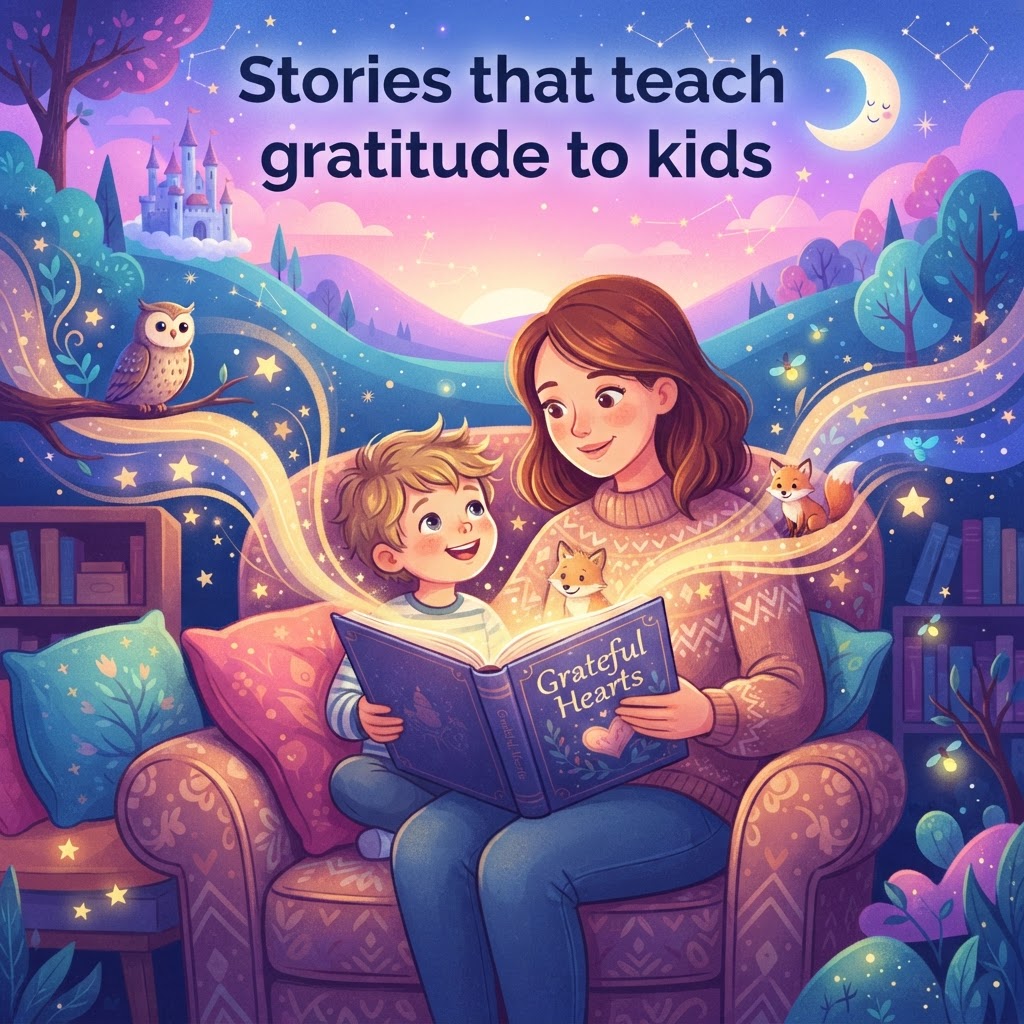
When children hear a story about a character who receives help, notices small joys, or learns to say “thank you,” they do more than follow a plot. They practice seeing the world through a grateful lens. That is why gratitude stories for kids can be such a powerful tool for parents, caregivers, and teachers.
If you are teaching gratitude to children, stories give you a gentle, age-appropriate way to explore feelings, relationships, and everyday blessings. In this guide, you’ll learn why stories work so well, what research says about gratitude in childhood, five story ideas you can use tonight, and how to create personalized gratitude bedtime stories with InstaTales.
Why are stories such a powerful way to teach gratitude to children?
Stories are effective because they make abstract values concrete. Instead of telling a child, “Be grateful,” a story shows what gratitude looks like in real life.
Young children learn best through examples, repetition, and emotion. A story helps them connect a feeling to an action: a bunny thanks a friend for sharing, a child notices the work behind a meal, or a dragon learns that gifts can be time and love, not just toys. These moments are easier to remember than lectures.
Stories also create emotional safety. Children can explore hard feelings like disappointment, jealousy, or entitlement through a character first. That distance helps them reflect without feeling corrected or judged.
This is one reason values-based storytelling works so well across topics. If your child also enjoys stories about compassion and friendship, you might also like stories that build empathy and stories about kindness.
What does child development research say about gratitude in childhood?
Research suggests that gratitude supports social-emotional growth, stronger relationships, and positive mental health. Children can learn gratitude over time when adults model it, name it, and practice it consistently.
According to CASEL, core social-emotional skills include self-awareness, social awareness, and relationship skills. Gratitude touches all three. A child notices something good, recognizes another person’s effort, and responds with appreciation.
The Harvard Center on the Developing Child also emphasizes that children build important emotional and thinking skills through warm, repeated interactions with caring adults. A gratitude conversation after a story is one of those small but meaningful interactions.
Researchers such as Jeffrey Froh, a leading scholar on gratitude in youth, have found that gratitude practices can support well-being, optimism, and prosocial behavior in children and adolescents. Resources from Greater Good in Education likewise highlight that gratitude can be taught through reflection, discussion, and daily routines.
In practical terms, this means moral stories about gratitude are most effective when they are followed by simple talk, modeling, and real-life practice.
What kinds of gratitude stories for kids work best?
The best gratitude stories for kids are simple, relatable, and emotionally honest. They show that gratitude is not forced cheerfulness; it is learning to notice kindness, effort, comfort, and connection.
Look for stories that include:
- Everyday situations children recognize
- A small problem or disappointment
- A caring relationship
- A clear moment of noticing help, beauty, or effort
- A gentle resolution, not a heavy moral lecture
For toddlers, repetition and familiar routines work best. For preschoolers and early elementary children, stories with a clear choice or lesson are ideal. Older children often respond well to stories that include mixed feelings, such as wanting more while also learning to appreciate what they have.
Which five story scenarios can help children understand gratitude?
These five scenarios work especially well because they connect gratitude to daily life. Each one can become a bedtime story, classroom read-aloud, or personalized InstaTales prompt.
1. What happens when a child learns how many people help make one meal?
This story teaches that gratitude can grow from noticing effort. A child sits down to eat and imagines the farmer, truck driver, shop worker, and parent who helped bring dinner to the table.
Discussion questions:
- Who helped make the meal possible?
- What part of the story surprised you most?
- How can we show thanks for food and the people who prepare it?
2. What can a story about a broken toy teach about appreciation?
This scenario teaches children to value people over possessions. A child feels upset when a favorite toy breaks, but a grandparent or friend helps repair it and reminds them of the memories attached to it.
Discussion questions:
- Was it okay for the character to feel sad first?
- What mattered more in the end: the toy or the person helping?
- What is something you already have that you feel thankful for today?
3. How can a rainy-day adventure become a gratitude lesson?
This story shows children that gratitude can exist alongside disappointment. A family picnic gets canceled בגלל rain, but the day turns into blanket forts, warm soup, and laughter at home.
Discussion questions:
- What went wrong at first?
- What good things happened after the plan changed?
- Have you ever had a day that turned out differently but still became special?
4. Why is a story about sharing help a strong example of gratitude?
A child who receives help from a friend, sibling, or teacher learns that gratitude often begins with receiving care. The story can show a character struggling with shoes, homework, or a scary first day, then feeling supported.
Discussion questions:
- How did the helper make the character feel safe or calm?
- How can we thank someone who helps us?
- When has someone helped you recently?
5. What can a birthday story teach about thankfulness beyond gifts?
A birthday story can move the focus from “What did I get?” to “Who celebrated me?” The character notices decorations made by hand, time spent together, and loving messages from family and friends.
Discussion questions:
- What were the best parts of the celebration besides presents?
- How did other people show love?
- What kind of gift cannot be wrapped in paper?
These kinds of gratitude bedtime stories work because they tie thankfulness to real moments children already understand.
How can parents and teachers talk about gratitude after a story?
A short conversation after the story is where much of the learning happens. You do not need a long lesson; two or three thoughtful questions are enough.
Try a simple pattern:
- Notice: What good thing happened in the story?
- Name: Who helped, cared, shared, or worked hard?
- Connect: Has anything like that happened to you?
- Act: How could we show gratitude tomorrow?
Keep the tone curious, not corrective. If a child says, “I would still be mad,” that is okay. Gratitude is not about denying real feelings. It is about helping children expand the picture so they can hold disappointment and appreciation at the same time.
For classroom use, gratitude stories also pair well with drawing, thank-you notes, or partner sharing. Teachers looking for easy literacy and SEL connections can explore InstaTales for teachers for personalized reading activities.
How can you prompt InstaTales to create gratitude-themed stories?
The best prompts are specific, age-appropriate, and rooted in your child’s world. When you create your own personalized bedtime story, include the child’s age, favorite characters, a simple gratitude theme, and the kind of ending you want.
Here are a few prompt ideas:
- “Write a gentle bedtime story for a 4-year-old about a little fox who learns to appreciate the people who help make breakfast.”
- “Create a story for a 6-year-old about a child whose picnic is canceled by rain but discovers reasons to feel thankful at home.”
- “Write a personalized story for my 8-year-old about gratitude after a birthday party, focusing on family love more than presents.”
- “Create a calm story about a shy bear who feels grateful when a new friend helps on the first day of school.”
You can also guide the emotional focus:
- Include a small disappointment first
- Show one act of kindness clearly
- End with a simple thank-you moment
- Use cozy bedtime language
- Add discussion questions at the end
If a story really resonates, save it in your story library so your child can revisit it. Re-reading matters. The same story, heard several times, often leads to deeper reflection and stronger emotional learning.
How can families make gratitude storytelling part of everyday life?
The easiest way to build gratitude is to make it small and repeatable. A short story, one question, and one real-life action can be enough.
You might try:
- One gratitude story at bedtime twice a week
- A “who helped us today?” question at dinner
- A thank-you drawing or note after reading
- A weekend routine of choosing one favorite story to revisit
The goal is not perfect manners on demand. The goal is helping children notice goodness, recognize care, and respond warmly over time. That is the heart of teaching gratitude to children.
Frequently Asked Questions
At what age can children start learning gratitude through stories?
Children can begin learning gratitude in toddlerhood through simple stories about help, love, and daily routines. As they grow, they can handle more nuanced stories about effort, perspective, and appreciation.
What makes a good gratitude bedtime story?
A good gratitude bedtime story includes a relatable problem, a caring relationship, and a clear moment of appreciation. It should feel warm and natural, not like a lecture.
How often should I use gratitude stories with my child?
Two or three times a week is plenty for most families. Consistency matters more than frequency, especially when you pair stories with short follow-up conversations.
Can gratitude stories help in the classroom?
Yes. Gratitude stories support social-emotional learning, discussion skills, and perspective-taking. They also work well with writing, art, and class reflection activities.
What if my child resists talking about gratitude?
That is normal. Start with observation instead of pressure by asking, “Who helped in the story?” or “What changed for the character?” Gentle questions usually work better than asking a child to feel thankful on cue.
Can personalized AI stories really support values learning?
They can, especially when adults guide the theme and discuss the story afterward. Personalized storytelling helps children see themselves in the lesson, which often makes the message more memorable.
Get a new bedtime story every week
Free, personalized, and delivered to your inbox. No spam, ever.
Ready to Create a Personalized Bedtime Story?
Use our free AI bedtime story generator to create a personalized illustrated story for your child in 30 seconds — no credit card needed.
Popular story types:
Maya Rodriguez
Lead Content Editor & Early Literacy Specialist
Maya is a former early childhood educator and literacy specialist with over a decade of experience helping children develop a love of reading. She leads content at InstaTales, where she writes about the science of storytelling, child development, and how families can use personalized AI stories to build literacy and emotional resilience.
instatales.ai