Stories that teach empathy to kids
Help your child learn empathy through the power of storytelling. Tips, story ideas, and discussion questions for parents and teachers.
✦ Key Takeaways
- •Stories are effective because they let children “step into” someone else’s experience in a safe, age-appropriate way.
- •Empathy bedtime stories work well because bedtime is calm, predictable, and emotionally safe.
- •The most helpful moral stories about empathy use familiar situations children can imagine themselves in.
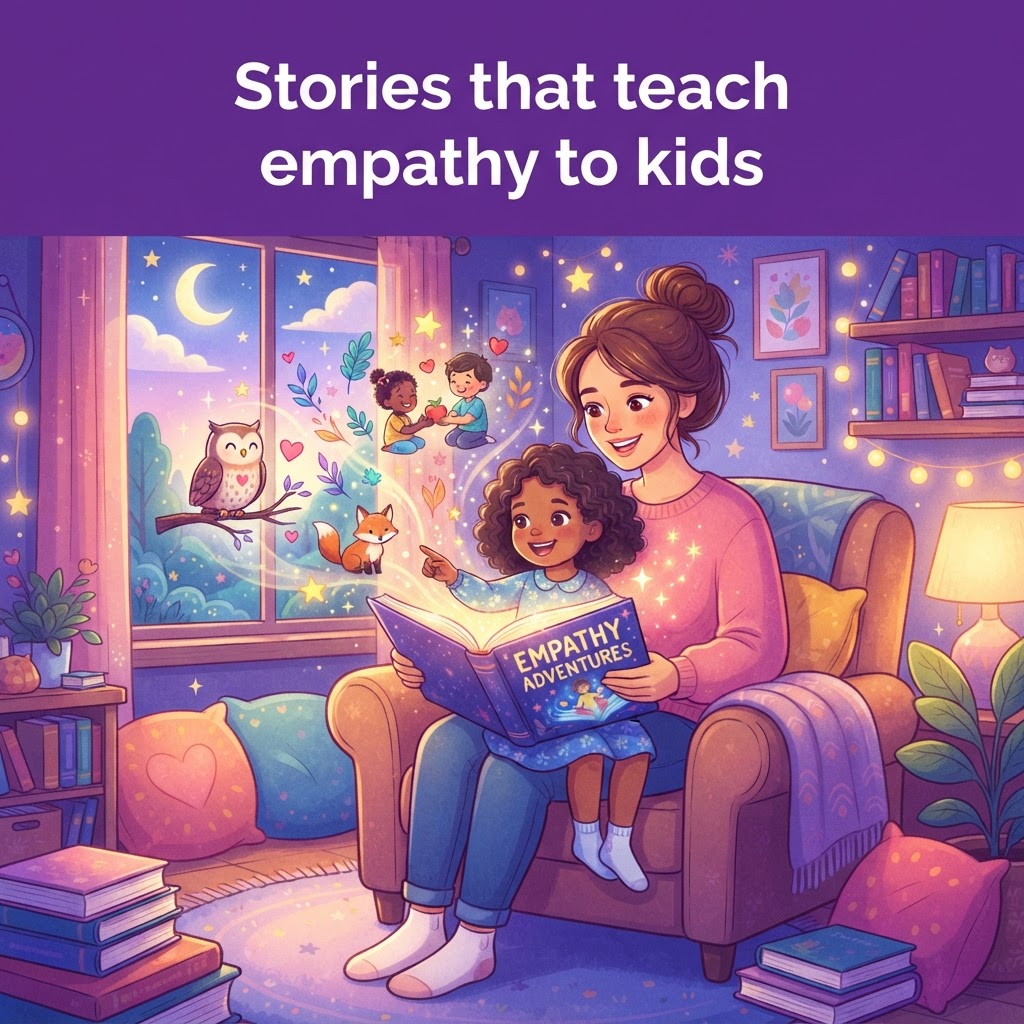
Helping a child care about other people’s feelings starts with one simple habit: reading and talking about stories together. The best empathy stories for kids do more than entertain—they help children notice emotions, imagine another person’s point of view, and think about kind responses in everyday life.
Why are stories such a powerful way to teach empathy to children?
Stories are effective because they let children “step into” someone else’s experience in a safe, age-appropriate way. When a child listens to a character feel left out, worried, proud, or embarrassed, they practice perspective-taking, which is a core part of empathy.
This matters for healthy development. The CASEL framework for social and emotional learning identifies social awareness and relationship skills as essential life skills. In simple terms, children need repeated chances to recognize feelings in others and decide how to respond.
Storytelling supports that learning in three important ways:
- It slows situations down. Real-life emotions move fast. Stories give children time to notice what happened.
- It makes feelings visible. Characters can say, think, or show emotions that children might otherwise miss.
- It invites discussion. A short question after a story can turn a nice tale into a meaningful lesson.
Research from the Harvard Center on the Developing Child also emphasizes that warm, responsive conversations build social understanding. That means the learning does not come only from the story itself. It comes from what happens after: “How do you think she felt?” “What could he do next?”
If you are already reading stories about kindness, you are on the right track. Kindness and empathy are closely connected, but empathy goes one step deeper: children first learn to understand another person’s feelings, then act with care.
What makes empathy bedtime stories especially effective for young children?
Empathy bedtime stories work well because bedtime is calm, predictable, and emotionally safe. Children are often more open to gentle reflection when they are relaxed and connected to a trusted adult.
At bedtime, the goal is not a lecture. It is a soft, simple conversation that helps a child process feelings. A short story about a worried bunny, a lonely classmate, or a frustrated sibling can help children name emotions without feeling defensive.
Bedtime stories are especially useful because they allow for:
- Repetition, which helps children remember emotional lessons
- Co-regulation, where a calm adult helps a child think clearly about feelings
- Connection, which makes the lesson feel warm rather than corrective
This is one reason values-based stories often work better at night than in the middle of a conflict. If your child also enjoys bedtime stories about courage, empathy stories fit naturally into that same routine of gentle reflection before sleep.
What are five empathy story scenarios that help children practice perspective-taking?
The most helpful moral stories about empathy use familiar situations children can imagine themselves in. Here are five strong story setups, plus discussion questions that support teaching empathy to children at home or in the classroom.
1. What if a child notices a classmate sitting alone at recess?
This scenario teaches children to notice exclusion and consider how loneliness feels. The empathetic action might be inviting the classmate to play, smiling, or simply sitting beside them.
Discussion questions:
- How do you think the child sitting alone felt?
- What small thing could the main character do first?
- Have you ever felt left out? What helped?
2. What if a sibling breaks a favorite toy by accident?
This scenario helps children separate intention from impact. A character can feel upset and still understand that the other child feels guilty, scared, or sorry.
Discussion questions:
- Was the sibling trying to be mean, or was it an accident?
- How might both children be feeling at the same time?
- What would be a fair and caring way to solve the problem?
3. What if a new child joins the class and speaks very little?
This story builds empathy across differences. It helps children imagine how confusing or lonely a new environment can feel, especially when language is a barrier.
Discussion questions:
- What might feel hard about being new?
- What could the class do without needing many words?
- How can kindness look different from person to person?
4. What if a pet or forest animal is scared during a storm?
Younger children often connect deeply with animal characters. A frightened kitten, rabbit, or bird can help them understand fear and caring behavior in a gentle, non-threatening way.
Discussion questions:
- What clues showed that the animal was scared?
- What helped the animal feel safe again?
- How can we tell when someone needs comfort, even if they do not say it?
5. What if a friend wins the prize and the main character feels disappointed?
Empathy is not only about sadness. It also includes holding space for someone else’s joy, even when we are struggling with our own feelings.
Discussion questions:
- Can the character feel disappointed and still be happy for a friend?
- What could they say that feels honest and kind?
- Why is it sometimes hard to celebrate someone else?
These scenarios work because they are concrete, emotional, and realistic. They also connect well with other values children are learning, such as sharing, honesty, and patience.
How can you prompt InstaTales to create empathy stories for kids?
The best prompts are specific, age-matched, and centered on one emotional goal. If you want to create your own personalized bedtime story(/), include the child’s age, favorite characters, the empathy skill you want to practice, and the type of ending you want.
A simple prompt formula is:
- Main character: child’s name, age, or favorite animal
- Situation: one small social problem
- Empathy goal: noticing feelings, apologizing, including others, or listening
- Tone: gentle, playful, bedtime calm
- Ending: comforting and hopeful
Here are a few ready-to-use prompt ideas:
- “Write an empathy bedtime story for a 4-year-old about a bunny who notices a friend feeling left out and learns how to invite them to play.”
- “Create a story for a 6-year-old about a child whose little brother breaks a toy by accident. Focus on understanding both feelings and solving the problem kindly.”
- “Write a personalized story for an 8-year-old about a new student at school. Include perspective-taking, courage, and a warm ending.”
To get even better results, ask for:
- simple emotional vocabulary for ages 3-5
- more dialogue and problem-solving for ages 6-8
- deeper perspective-taking for ages 8-10
When you find a story your child loves, save it in your story library so you can reread it later. Re-reading matters because repeated exposure helps children remember both the plot and the emotional lesson.
How can parents and teachers tell whether teaching empathy through stories is working?
You can usually see progress in small, everyday moments before you hear a child explain empathy perfectly. The clearest sign is not memorizing a moral—it is beginning to notice and respond to other people’s feelings more often.
Look for changes like these:
- your child asks, “Are they okay?”
- they name emotions in characters or real people
- they suggest helping, inviting, or comforting
- they pause before reacting during conflicts
- they connect the story to real life
For teachers, this can show up during partner work, playground conflicts, or class discussions. If you use stories in a school setting, InstaTales for teachers can support social-emotional learning with personalized reading prompts and discussion-friendly story themes.
If progress feels slow, that is normal. According to early childhood experts at Zero to Three, young children build social-emotional skills gradually through repeated relationships and experiences. Empathy grows through many small conversations, not one perfect story.
Frequently Asked Questions
What age should children start hearing empathy stories?
Children can start hearing simple empathy stories in toddlerhood. For ages 1-3, keep the language concrete and focus on basic feelings like sad, happy, scared, and lonely.
How long should an empathy bedtime story be?
Short is usually best, especially at bedtime. Aim for 3-7 minutes for younger children and 5-10 minutes for older children, followed by one or two gentle questions.
Are animal stories good for teaching empathy?
Yes, animal characters can be very effective. They create emotional distance, which helps children explore feelings safely without feeling judged or singled out.
What if my child does not answer the discussion questions?
That is okay. Keep the questions light, model your own thinking out loud, and revisit the story another day. Listening is still learning.
Can empathy stories help in classrooms too?
Absolutely. Stories are a strong tool for group discussion, conflict repair, and social-emotional learning routines. They work especially well in morning meetings, literacy blocks, and calm-down corners.
Ready to Create a Personalized Bedtime Story?
Use our free AI bedtime story generator to create a personalized illustrated story for your child in 30 seconds — no credit card needed.
Popular story types:
Maya Rodriguez
Lead Content Editor & Early Literacy Specialist
Maya is a former early childhood educator and literacy specialist with over a decade of experience helping children develop a love of reading. She leads content at InstaTales, where she writes about the science of storytelling, child development, and how families can use personalized AI stories to build literacy and emotional resilience.
instatales.ai