Dinosaurs Stories for Kids That Teach Science
Make science fun with stories that teach kids about dinosaurs — imagination meets real science in these engaging tales.
✦ Key Takeaways
- •Dinosaur stories work because they make science easier to remember.
- •The best dinosaur story ideas are simple, accurate, and focused on one big idea at a time.
- •InstaTales makes it easy to turn dinosaur facts into personalized learning stories.
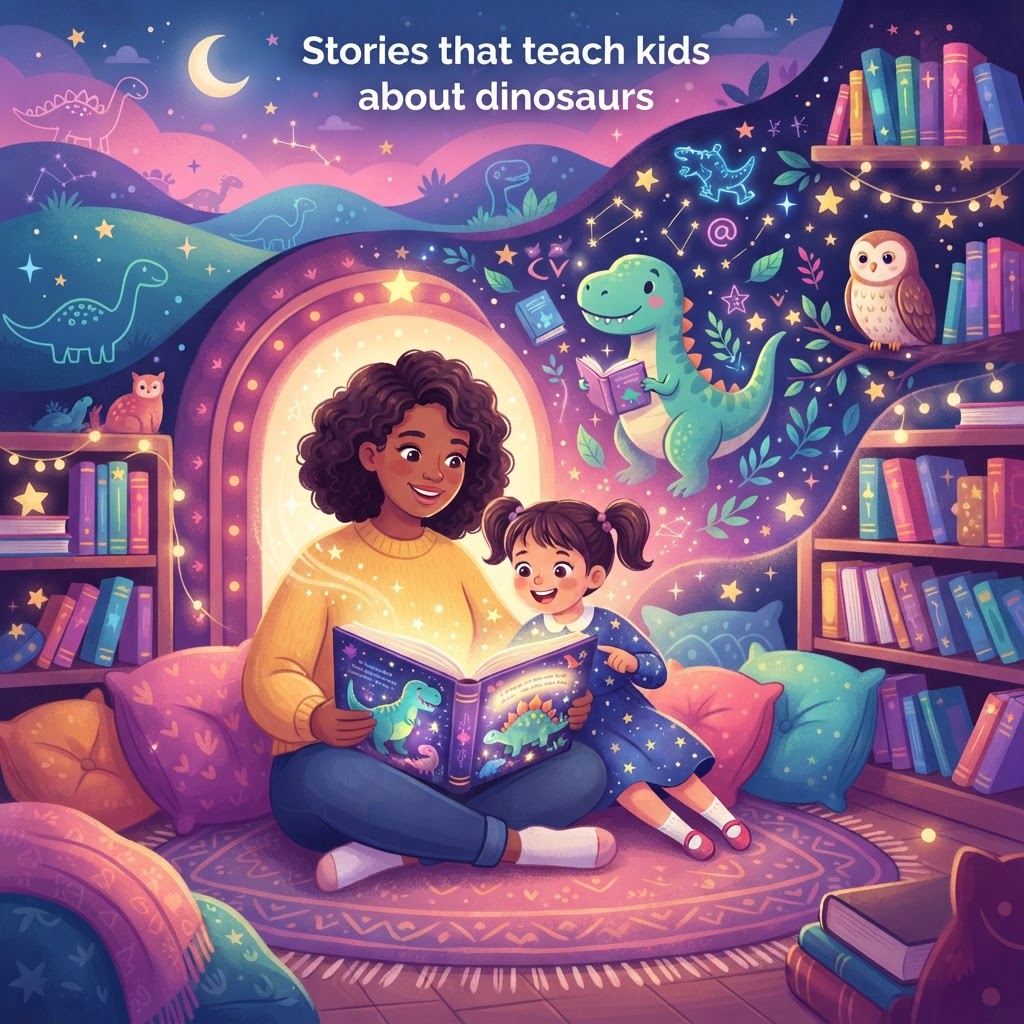
If your child loves roaring giants, tiny fossils, and big questions, dinosaurs stories for kids can turn that excitement into real learning. The best dinosaur tales blend imagination with accurate science, so children enjoy the adventure while quietly building knowledge about prehistoric life, habitats, and how scientists study the past.
For families and teachers, this is where story-based learning shines. A child who might not sit down for a fact sheet will often remember a Triceratops friend, a feathered Velociraptor, or a baby Maiasaura caring for its nest. That makes teaching dinosaurs to children feel playful, memorable, and age-appropriate.
Why are dinosaur stories such a powerful way to teach science?
Dinosaur stories work because they make science easier to remember. Young children learn best when new information is tied to emotion, repetition, and conversation, and stories naturally provide all three.
Research on dialogic reading by Grover Whitehurst and colleagues showed that back-and-forth story talk supports vocabulary and comprehension. The American Academy of Pediatrics also recommends reading aloud from infancy because it strengthens language, attention, and parent-child connection. In practice, that means a story about a nesting dinosaur can teach both science facts and thinking skills.
Stories also help children handle scale and time. Dinosaurs are fascinating, but “millions of years ago” is abstract. A narrative gives children a concrete way in: one dinosaur, one problem, one journey, and a few carefully chosen facts. If your child enjoys other science themes too, these animal science stories can build the same kind of curiosity.
Which dinosaur story ideas work best for young children?
The best dinosaur story ideas are simple, accurate, and focused on one big idea at a time. Below are six kids dinosaurs stories you can adapt for bedtime, homeschool, or classroom use.
1. The Triceratops Garden Rescue
- Story concept: A gentle Triceratops helps protect a fern garden after a windy storm scatters seeds across the valley. Along the way, the child hero learns how plant-eating dinosaurs found food and stayed safe.
- Real science facts: Triceratops was a herbivore. It had three horns and a large frill, which may have helped with defense and display.
- AI prompt: “Write an educational bedtime story for a 4-year-old about a friendly Triceratops and a child helping restore a prehistoric garden. Include the facts that Triceratops ate plants and had three horns and a frill. Keep the tone calm, warm, and bedtime-friendly.”
2. The Velociraptor Feather Festival
- Story concept: A small Velociraptor wants to join a forest dance, but its feathers are messy after the rain. The story follows a fun clean-up mission and introduces the idea that some dinosaurs looked very different from movie versions.
- Real science facts: Velociraptor was much smaller than many films show. Scientists have strong evidence that it had feathers.
- AI prompt: “Create a playful educational story for a 6-year-old about a feathered Velociraptor getting ready for a dinosaur festival. Include that Velociraptor was small and had feathers. Add gentle humor and one simple science question at the end.”
3. Brachiosaurus and the High-Leaf Picnic
- Story concept: A hungry Brachiosaurus invites friends to a picnic in the tallest trees, but only it can reach the highest leaves. The plot teaches how body shape helps animals find food.
- Real science facts: Brachiosaurus was a large plant-eating sauropod. Its long neck helped it reach vegetation high above the ground.
- AI prompt: “Write a soothing bedtime story about a Brachiosaurus sharing tree-top leaves with dinosaur friends. Include the facts that Brachiosaurus was a plant-eater and used its long neck to reach high plants. Make it ideal for ages 3-5.”
4. T. Rex Crosses the River
- Story concept: A young T. rex must cross a muddy river to find its family before sunset. The story can focus on courage, observation, and how predators used their senses.
- Real science facts: Tyrannosaurus rex had very strong jaws and large teeth. It lived during the Late Cretaceous period, near the end of the age of dinosaurs.
- AI prompt: “Generate an educational adventure story for a 7-year-old about a young T. rex crossing a river safely. Include that T. rex had powerful jaws and lived in the Late Cretaceous. Keep it exciting but not scary.”
5. Maiasaura’s Busy Nest
- Story concept: A baby Maiasaura waits in the nest while parents bring food and care for the hatchlings. This makes an excellent story for talking about growth, families, and how paleontologists study behavior from fossils.
- Real science facts: Fossil evidence suggests Maiasaura nested in groups. It is well known for evidence of parental care.
- AI prompt: “Write a gentle educational story for a 5-year-old about a baby Maiasaura in a busy nesting ground. Include that Maiasaura lived in colonies and cared for its young. Use simple language and a cozy ending.”
6. The Parasaurolophus Echo Song
- Story concept: A Parasaurolophus gets lost in morning fog and uses sound to find the herd. The child listener learns that dinosaur bodies could make special noises and that scientists use fossils to test ideas.
- Real science facts: Parasaurolophus was a plant-eating dinosaur. Its long head crest may have helped produce sound, though scientists continue to study exactly how it worked.
- AI prompt: “Create an educational dinosaur story for a 6-year-old about a Parasaurolophus using its crest to make sounds and find its family. Include that it was a herbivore and that scientists think the crest may have helped with sound. End with a simple fact recap.”
These dinosaurs story ideas become even stronger when paired with real museum-based resources. The Smithsonian’s dinosaur learning materials, the University of California Museum of Paleontology, and the National Park Service fossil resources are excellent places to check age-appropriate facts.
How can you use InstaTales' educational story type to create dinosaur stories?
InstaTales makes it easy to turn dinosaur facts into personalized learning stories. The key is to use the educational story type so the story stays fun while still teaching accurate, child-friendly science.
Here is a simple way to do it:
- Start to create your own personalized bedtime story and choose the educational option.
- Pick one dinosaur and one learning goal, such as herbivores, feathers, fossils, or nesting behavior.
- Add your child’s name, age, and favorite tone: cozy, funny, adventurous, or classroom-ready.
- Include 1-2 real science facts in the prompt, just like the examples above.
- If you want a quicker start, use the ready-made story templates.
- Save favorites in your story library so children can revisit the same topic and build memory through repetition.
For schools or homeschool groups, InstaTales for teachers can help organize themed reading, writing extensions, and science discussions. Re-reading also matters: children often understand more on the second or third listen, especially when adults pause to ask simple questions like, “Was this dinosaur a plant-eater or a meat-eater?”
What can parents and teachers do after the story to deepen learning?
The fastest way to make dinosaur learning stick is to talk about the story right away. A short conversation, drawing activity, or pretend-play game helps children move facts from “heard once” to “remembered and understood.”
Try one of these simple follow-ups:
- Ask one recall question: “What did the Velociraptor have instead of scaly arms?”
- Ask one thinking question: “Why would a long neck help Brachiosaurus?”
- Invite a drawing: “Can you draw the nest, horns, or crest from the story?”
- Compare topics with other science reads, like stories about the human body or weather-themed science stories.
This approach matches what early childhood educators already know: children learn best through short, repeated, interactive experiences. You do not need a long lesson. Five minutes of conversation after story time is often enough.
Frequently Asked Questions
What age are dinosaur stories best for?
Dinosaur stories can work well from ages 2 to 10 when the language and facts match the child’s stage. Younger children usually enjoy simple patterns and one clear fact, while older children can handle timelines, habitats, and fossil evidence.
How accurate should dinosaur stories be?
They should be accurate in the main facts, even when the plot is imaginative. It is fine to give a dinosaur feelings or a small adventure, but details like diet, body features, and behavior should reflect real science when possible.
Are dinosaur bedtime stories too scary for some children?
Not if you choose the right tone. For bedtime, use cozy or curious stories with gentle problem-solving instead of chase scenes, loud danger, or intense predator themes.
Can dinosaur stories help reluctant readers?
Yes, often very effectively. Dinosaurs are a high-interest topic, and strong interest can increase attention, vocabulary growth, and willingness to engage with books or read-aloud time.
Can teachers use dinosaur stories in class?
Absolutely. Personalized stories can support science units, vocabulary practice, creative writing, and discussion. They also work well as differentiated reading material because the same topic can be retold at different reading levels.
Ready to Create a Personalized Bedtime Story?
Use our free AI bedtime story generator to create a personalized illustrated story for your child in 30 seconds — no credit card needed.
Popular story types:
Maya Rodriguez
Lead Content Editor & Early Literacy Specialist
Maya is a former early childhood educator and literacy specialist with over a decade of experience helping children develop a love of reading. She leads content at InstaTales, where she writes about the science of storytelling, child development, and how families can use personalized AI stories to build literacy and emotional resilience.
instatales.ai