Oceans Stories for Kids That Teach Science
Make science fun with stories that teach kids about oceans — imagination meets real science in these engaging tales.
✦ Key Takeaways
- •Ocean stories work because they connect facts to feelings, characters, and action.
- •The easiest way to make educational ocean stories is to start with one science idea and one child-friendly adventure.
- •The best ocean story ideas combine one clear science concept with a simple plot children can follow.
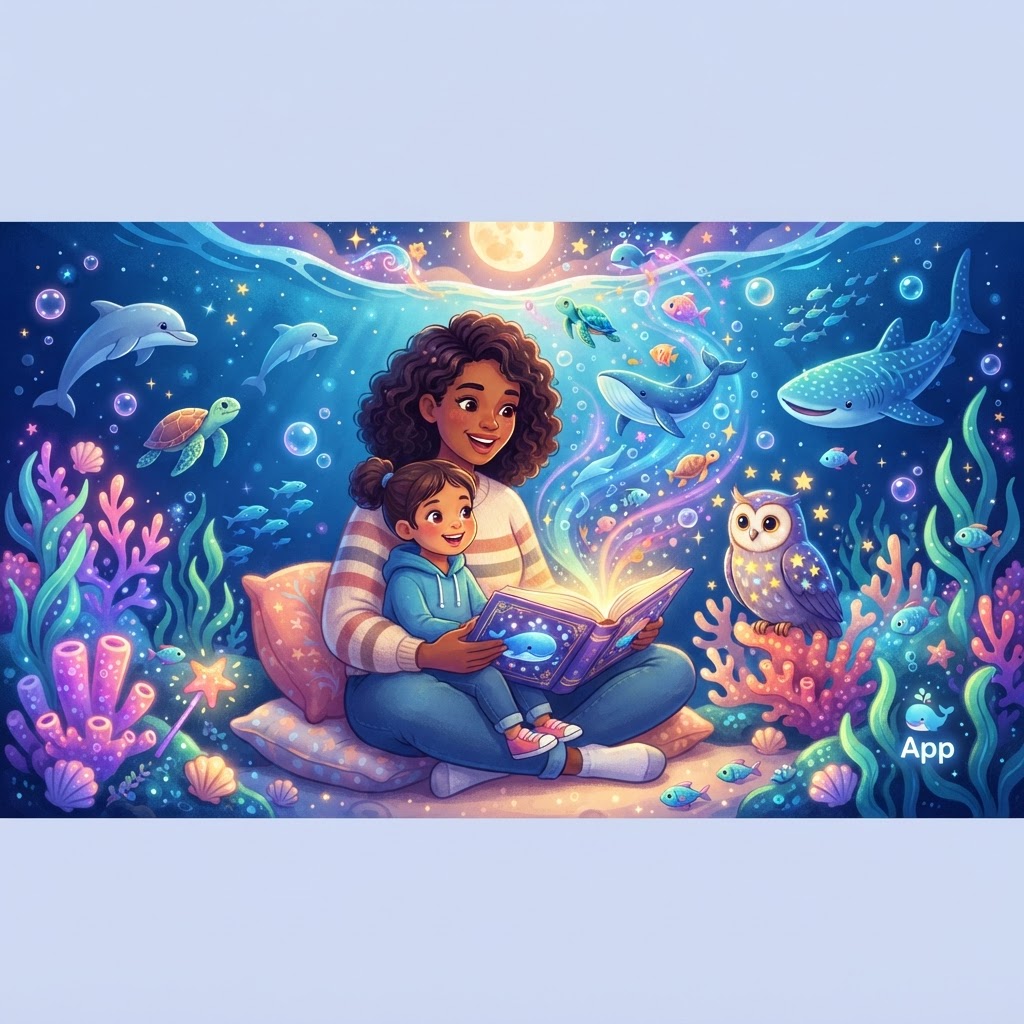
The ocean is full of built-in wonder. Waves, whales, coral reefs, and deep-sea creatures naturally spark questions, which makes oceans stories for kids a powerful way to teach real science without making it feel like a lesson.
When story and fact work together, children remember more. A child may forget a definition of a tide, but they often remember the crab who had to hurry home before the water rose. That is why teaching oceans to children through stories can be both joyful and effective.
Why are ocean stories such a powerful way to teach science?
Ocean stories work because they connect facts to feelings, characters, and action. Young children learn best when new ideas are tied to something meaningful, playful, and easy to picture.
Child development research supports this. The American Academy of Pediatrics has long encouraged shared reading because it builds language, attention, and connection. Early childhood educators, including NAEYC, also note that children learn vocabulary best through rich conversation, repetition, and real-world context. Stories give you all three.
For science learning, that matters a lot. Instead of giving children a list of ocean facts, you can help them:
- picture habitats like tide pools and reefs
- understand cause and effect, such as how currents move things
- build empathy for animals and the environment
- remember new words like coral, current, and migration
That is why kids oceans stories are so useful at bedtime, in classrooms, and during homeschooling.
How can parents and teachers use InstaTales to create educational ocean stories?
The easiest way to make educational ocean stories is to start with one science idea and one child-friendly adventure. InstaTales makes that simple with its educational story type, which helps you blend imagination with age-appropriate learning.
Here is a practical way to use it:
- Choose Educational as the story type when you create your own personalized bedtime story.
- Add your child’s age, favorite sea creature, and reading level.
- Pick one main concept: tides, coral reefs, whales, pollution, or currents.
- Ask for 1-2 real facts to be woven into the plot.
- Request simple features such as “repeat the key vocabulary,” “use a gentle bedtime tone,” or “end with a reflection question.”
- Save strong stories in your story library so you can reread them and build a themed ocean unit over time.
If you want a faster start, browse story templates and adapt one to an ocean theme. For group lessons, homeschooling, or literacy centers, InstaTales for teachers can help you turn these oceans story ideas into classroom-ready reading material.
Which ocean story ideas can help children learn science?
The best ocean story ideas combine one clear science concept with a simple plot children can follow. Below are six story starters you can use for bedtime, school, or personalized AI story creation.
1. The Tide Pool Detective
- Story concept: A curious child and a tiny hermit crab explore a tide pool before the water returns.
- Real ocean facts: Tide pools change as the tide goes in and out. Animals in tide pools must survive both underwater and exposed conditions. The Smithsonian Ocean has excellent child-friendly marine science resources.
- AI prompt: “Write a calm bedtime story for a 5-year-old about a child exploring a tide pool with a hermit crab, teaching how tides change the habitat and introducing the words tide pool and sea anemone.”
2. The Sea Turtle’s Long Journey
- Story concept: A hatchling sea turtle follows moonlight to the ocean and begins a long migration.
- Real ocean facts: Sea turtles hatch on beaches and head to the sea soon after birth. Many sea turtles travel very long distances between feeding and nesting areas.
- AI prompt: “Create an educational ocean story for a 6-year-old about a brave baby sea turtle crossing the beach and learning how turtles grow and travel across the ocean.”
3. Coral City Rescue
- Story concept: A group of reef friends works together to help their coral home stay healthy.
- Real ocean facts: Corals are living animals, not plants or rocks. When water gets too warm, corals can bleach and become stressed. NOAA explains coral bleaching clearly.
- AI prompt: “Tell a colorful story for ages 6-8 about fish and coral reef friends who learn that coral is alive and needs clean, healthy water to survive.”
4. The Whale Who Sang Across the Sea
- Story concept: A young whale worries that no one can hear her song, then learns that sound travels far underwater.
- Real ocean facts: Many whales use sound to communicate. Blue whales are the largest animals known to have lived on Earth.
- AI prompt: “Write a soothing bedtime story about a young whale discovering how whales communicate through sound, with one simple fact about blue whales for a 4-year-old.”
5. Captain Current and the River in the Sea
- Story concept: A paper boat and a friendly dolphin ride a warm ocean current to deliver a message.
- Real ocean facts: Ocean currents move water around the planet and help spread heat. They affect weather and climate patterns. NASA has a helpful overview of how the ocean shapes Earth’s climate.
- AI prompt: “Create a fun educational story for a 7-year-old about a dolphin traveling on an ocean current and learning how currents move warm and cold water.”
6. The Bottle That Wanted a New Life
- Story concept: A plastic bottle dropped near the beach wishes it could become something useful instead of drifting into the sea.
- Real ocean facts: Marine debris can hurt ocean animals when they eat it or become tangled in it. Recycling and reducing single-use plastic helps protect habitats.
- AI prompt: “Write a gentle story for a 6-year-old about a plastic bottle learning why trash does not belong in the ocean and how children can help keep beaches clean.”
If your child enjoys themed science reading, you can also pair ocean stories with related topics like weather stories for kids, since wind, storms, and currents all connect naturally.
How do you keep ocean stories accurate and age-appropriate?
The key is to teach one main fact at a time and match the language to the child’s age. Accuracy matters, but so does emotional safety, especially at bedtime.
A few practical guidelines help:
- Ages 1-3: Focus on simple labels and sounds. “Whale,” “wave,” “fish,” “splash.”
- Ages 4-6: Add one clear fact. “Coral is alive.” “Tides move in and out.”
- Ages 7-10: Introduce cause and effect. “Warm water can stress coral.” “Currents move heat around Earth.”
Try to avoid cramming in too much information. One memorable science idea per story is usually enough. You can always build a series and revisit the topic later, just as you might with stories about animals, plants, or space.
It also helps to use real vocabulary, then explain it in context. For example: “The turtle began her migration, a long journey from one place to another.” That keeps your oceans stories for kids rich without making them hard to follow.
A good final check is this question: Will my child remember the feeling of the story and one true thing about the ocean? If the answer is yes, the story is doing its job.
Ocean themes also work especially well in cross-curricular learning. A week of sea stories can lead to drawing, sorting shells, mapping journeys, or comparing habitats. That is one reason many educators use story-led science across subjects, not just during reading time.
Frequently Asked Questions
What age is best for ocean stories?
Ocean stories work well from toddlerhood through age 10. The difference is not the topic, but the depth of the science, the sentence length, and the emotional tone.
How much science should I put into one story?
One main idea and one or two supporting facts is usually best. That keeps the story clear and helps children remember what they learned.
Can InstaTales be used for school or homeschooling?
Yes. The educational story type is useful for class themes, literacy practice, science units, and take-home reading. It is especially helpful when adults want to adjust the reading level quickly.
What if my child only cares about sea animals?
That is a great starting point. Use the animal first, then build the science around it, such as habitats, migration, camouflage, or food chains.
Are AI-generated educational stories accurate?
They can be very helpful, but adults should still review key facts. The best practice is to give the AI 1-2 facts you want included and check them against trusted sources like NOAA, NASA, or Smithsonian.
How can I make bedtime stories educational without feeling like homework?
Keep the tone warm, playful, and story-first. If the child enjoys the adventure and remembers one true fact, you have already made bedtime learning successful.
Ready to Create a Personalized Bedtime Story?
Use our free AI bedtime story generator to create a personalized illustrated story for your child in 30 seconds — no credit card needed.
Popular story types:
Maya Rodriguez
Lead Content Editor & Early Literacy Specialist
Maya is a former early childhood educator and literacy specialist with over a decade of experience helping children develop a love of reading. She leads content at InstaTales, where she writes about the science of storytelling, child development, and how families can use personalized AI stories to build literacy and emotional resilience.
instatales.ai