Stories that teach sharing to kids
Help your child learn sharing through the power of storytelling. Tips, story ideas, and discussion questions for parents and teachers.
✦ Key Takeaways
- •Stories are powerful because they help children practice empathy and problem-solving in a safe, low-pressure way.
- •The best stories match a child’s developmental stage.
- •The strongest sharing stories for kids mirror the moments children actually face.
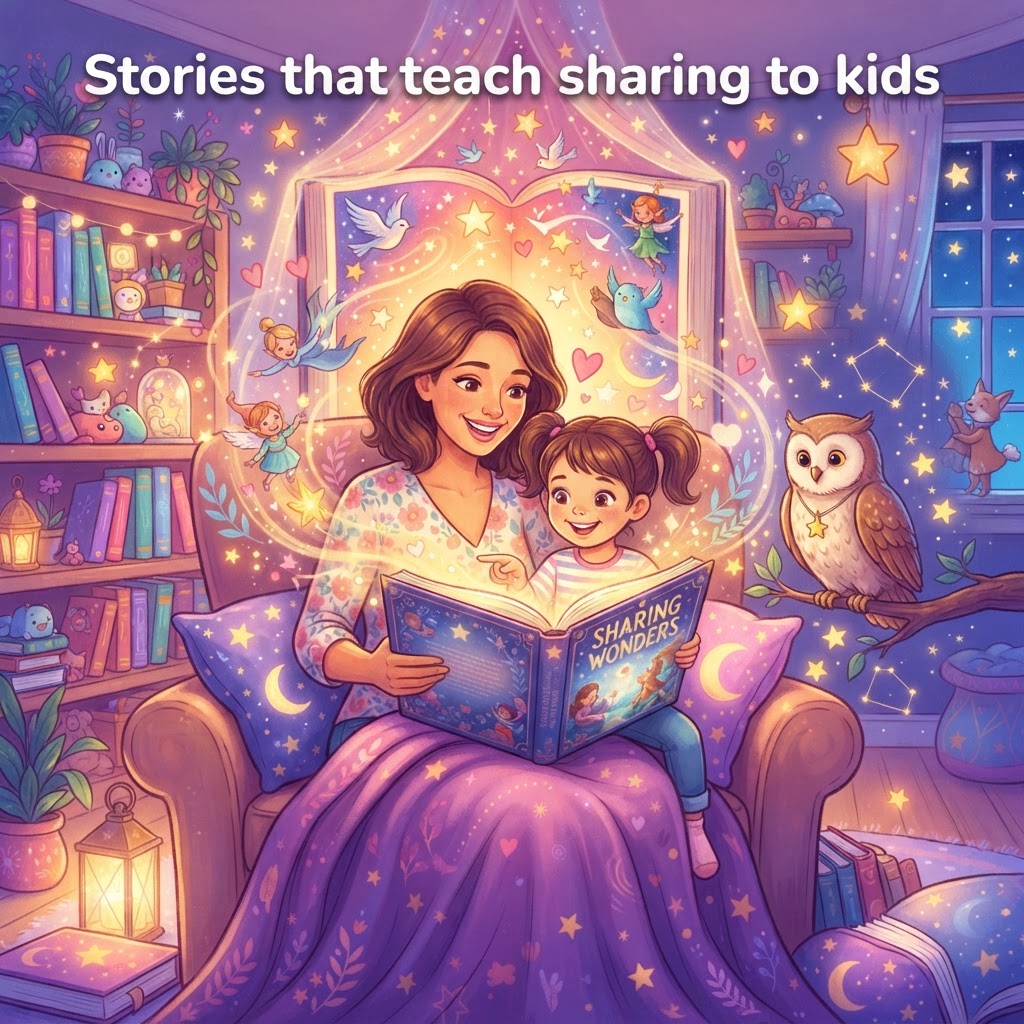
Sharing is one of those big little lessons of childhood. A child may understand “be nice” in theory, but still struggle when someone wants their favorite toy, seat, snack, or grown-up’s attention. That is why sharing stories for kids can be so effective: they let children see the feelings, choices, and consequences of sharing before the real-life moment feels high stakes.
Parents and teachers often ask how to make teaching sharing to children feel gentle rather than preachy. The answer is simple: use stories that feel relatable, discuss them briefly, and give children a chance to practice the skill in everyday life. Below, you’ll find why stories work, five strong story scenarios, discussion questions for each, and practical ways to create sharing bedtime stories with InstaTales.
Why are stories such a powerful way of teaching sharing to children?
Stories are powerful because they help children practice empathy and problem-solving in a safe, low-pressure way. Instead of being corrected in the moment, children watch a character face the same struggle and learn from the outcome.
This matters because sharing is not just a rule; it is a social-emotional skill. CASEL identifies social awareness and relationship skills as core parts of healthy child development. When children hear stories about taking turns, noticing others’ feelings, and solving conflicts fairly, they are building those exact skills.
Stories also match how children learn. Social learning research shows that children often copy what they see modeled. A calm character who hesitates, thinks, and then chooses to share gives children a script they can use later. The CDC’s child development guidance also reminds us that young children learn through repeated experiences, routines, and interactions with caring adults.
In practice, moral stories about sharing work best when they:
- show a realistic conflict
- name the child’s emotions
- avoid shaming
- offer a fair solution, not forced giving
- end with connection, not just obedience
If you’re also teaching related values, stories about kindness and honesty at bedtime can reinforce the same social skills from different angles.
What kinds of sharing stories for kids work best at different ages?
The best stories match a child’s developmental stage. Younger children need simple, concrete examples, while older children can handle fairness, compromise, and mixed feelings.
For ages 1-3, keep stories short and repetitive. Focus on one object, one feeling, and one simple solution, such as taking turns with a ball.
For ages 4-6, use everyday conflicts with clear emotional language. This is a great age for sharing bedtime stories about toys, snacks, classroom materials, and waiting for a turn.
For ages 7-10, add nuance. Children can think about fairness, boundaries, teamwork, and the difference between sharing kindly and being pressured to give up everything. The Harvard Center on the Developing Child notes that children build self-regulation and flexible thinking over time, and stories can support that growth.
A helpful rule: the closer the story is to your child’s real life, the more likely it is to stick.
Which story scenarios best demonstrate sharing for children?
The strongest sharing stories for kids mirror the moments children actually face. These five scenarios give children practical models they can use at home, school, and in friendships.
1. What happens when two children want the same toy?
This is the classic sharing conflict, and it works well because most children instantly relate to it. A strong story shows both children wanting the toy, one child feeling protective, and an adult helping them find a fair plan, like taking turns or playing together.
Discussion questions:
- How did each child feel when they wanted the same toy?
- What could the character say instead of grabbing?
- Was taking turns a fair solution? Why?
2. How can a story teach sharing food or snacks?
Food stories work best when they focus on generosity without forcing a child to ignore hunger or boundaries. For example, a character notices a friend forgot their snack and chooses to split theirs, or asks an adult for help so everyone is cared for.
Discussion questions:
- Why did the character notice their friend’s problem?
- What are different ways to help when someone has no snack?
- Is sharing the only solution, or could asking a teacher also help?
3. Why are classroom supply stories useful?
Stories about crayons, glue sticks, blocks, or markers teach that sharing is part of group life. These are especially useful for preschool and early elementary children because the problem is common, emotional, and easy to picture.
Discussion questions:
- What happened when one child kept all the supplies?
- How did the group feel when everyone got a turn?
- What could the character do next time before others get upset?
Classroom-based stories are also useful for educators using InstaTales for teachers during social-emotional learning lessons.
4. How can stories teach sharing attention, not just objects?
Many children struggle more with sharing people than things. A bedtime story about a parent helping a sibling, or a friend wanting time with the same classmate, teaches that sharing can mean waiting, trusting, and finding another way to connect.
Discussion questions:
- Why did the character feel left out?
- What helped them wait for their turn?
- How can we tell someone we want time with them in a kind way?
5. What does it look like to share time, skills, or space?
Older children benefit from stories that move beyond objects. A character might help a new student learn a game, share a spot at the table, or include someone in a team project. These stories show that sharing can be about welcome, not just possessions.
Discussion questions:
- What did the character share besides an object?
- How did inclusion change the other child’s day?
- When is sharing space or time just as important as sharing toys?
These scenarios also connect naturally with stories about courage, because sharing often takes bravery when a child feels unsure or protective.
How can parents and teachers turn sharing bedtime stories into real-life learning?
Stories teach best when adults add one small conversation and one small practice step. You do not need a long lesson; a few thoughtful prompts are enough.
Try this simple rhythm after reading:
- Name the feeling: “He didn’t want to give up the truck.”
- Name the skill: “He learned to take turns.”
- Connect it to life: “Have you ever felt like that?”
- Practice once: role-play, set a timer, or plan what to say next time
For parents, bedtime is ideal because children are calm and receptive. For teachers, a short read-aloud followed by partner talk can make teaching sharing to children feel natural and memorable.
Re-reading matters too. When children revisit the same story, they notice more. Saving favorite stories in your story library makes it easy to return to the same lesson when a sharing challenge comes up again.
How can you prompt InstaTales for personalized stories about sharing?
The best prompts are specific. Include your child’s age, favorite interests, a realistic sharing challenge, and the gentle lesson you want the story to highlight.
A strong prompt formula looks like this:
- child’s name and age
- favorite character, animal, or theme
- sharing challenge
- emotional tone
- lesson or ending
- optional discussion question
For example:
- “Write a bedtime story for a 4-year-old named Maya who loves unicorns. She struggles with sharing crayons at preschool. Make it warm, gentle, and show how taking turns helps everyone have fun.”
- “Create a story for a 6-year-old boy who loves dinosaurs and gets upset when his little brother touches his toys. Teach sharing with boundaries and family problem-solving.”
- “Write a classroom story for second graders about sharing soccer space at recess and including a new student.”
- “Create a story about a child who shares a snack with a friend, but also asks a teacher for help so both children are cared for.”
- “Write one of the moral stories about sharing where the child learns that sharing time and kindness matters as much as sharing toys.”
If you want a faster start, use story templates or create your own personalized bedtime story. And if a particular story works well, save it for re-reading in your story library.
You can also build a values series over time. Pair sharing with stories about honesty, kindness, and responsibility by exploring more resources on the InstaTales blog.
Frequently Asked Questions
At what age can children start learning about sharing?
Children begin learning the foundations of sharing in toddlerhood, but true cooperative sharing develops gradually. Young children often need lots of modeling, repetition, and adult support before the skill becomes consistent.
Are sharing bedtime stories better than direct reminders?
Often, yes. Stories feel less confrontational than correction in the moment, so children are more open to the message and better able to reflect on feelings and choices.
What if my child refuses to share after hearing stories about it?
That is normal. Storytelling supports learning, but children still need practice, clear limits, and realistic expectations. Use the story as a reference point and keep coaching calmly in everyday situations.
Should children always be expected to share everything?
No. Healthy sharing includes boundaries. Children should learn generosity and turn-taking, but they also need to know that some special belongings, personal space, and essential needs can be protected.
How can teachers use sharing stories in the classroom?
Teachers can use short read-alouds before centers, recess, or group work. Follow the story with a quick role-play or class discussion so children can apply the lesson right away.
What makes a good personalized story about sharing?
A good story includes a relatable conflict, honest emotions, a fair solution, and a warm ending. The more it reflects a child’s real world, the more likely it is to support lasting behavior.
Ready to Create a Personalized Bedtime Story?
Use our free AI bedtime story generator to create a personalized illustrated story for your child in 30 seconds — no credit card needed.
Popular story types:
Maya Rodriguez
Lead Content Editor & Early Literacy Specialist
Maya is a former early childhood educator and literacy specialist with over a decade of experience helping children develop a love of reading. She leads content at InstaTales, where she writes about the science of storytelling, child development, and how families can use personalized AI stories to build literacy and emotional resilience.
instatales.ai