First Airplane Ride Stories for Kids
Going through the first airplane ride? Stories can help your child process the transition. Here's how to use storytelling to support your child.
✦ Key Takeaways
- •The first airplane ride can feel hard because children rely on predictability, routine, and co-regulation to feel safe.
- •Stories help because they normalize, model, and process a new experience.
- •A good airplane story should be specific, reassuring, and realistic.
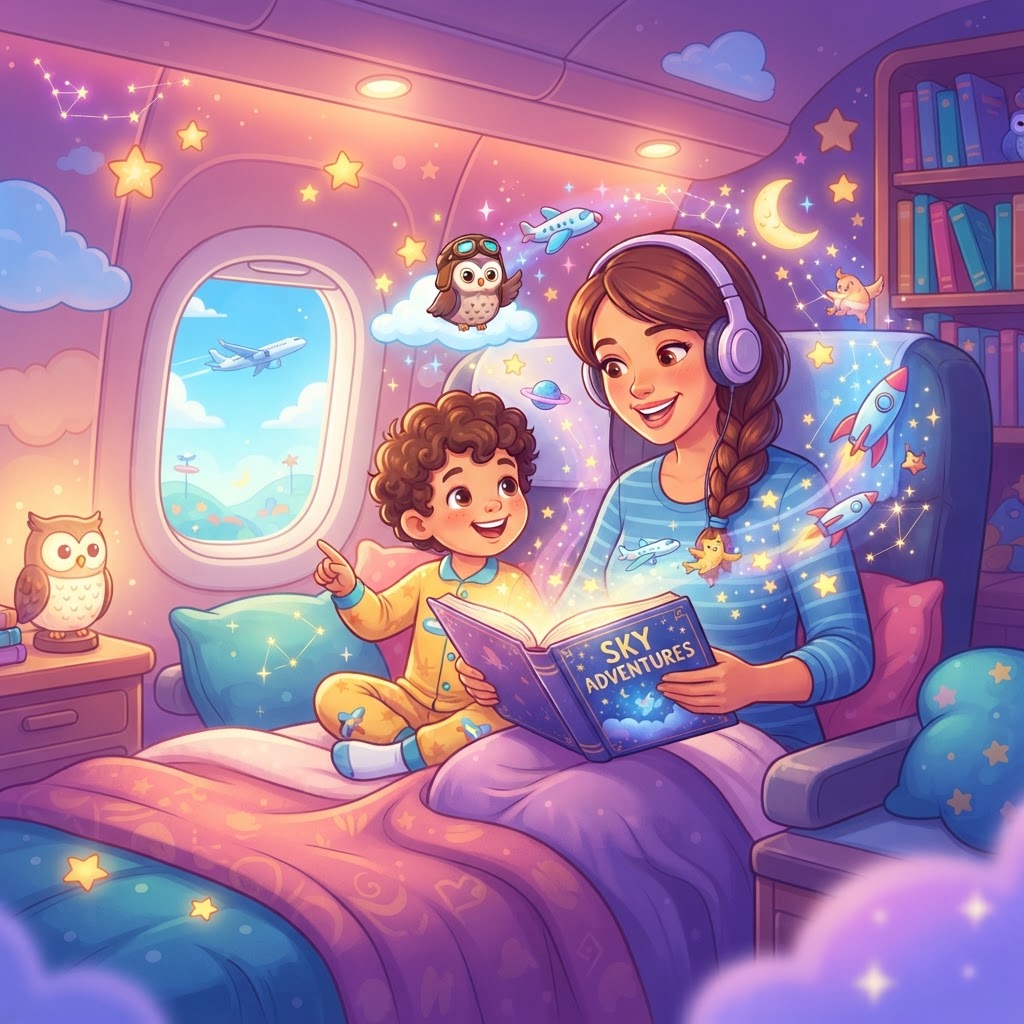
For many families, a first flight is a big milestone. It can also feel big to a child: new sounds, long lines, fast changes, and the strange feeling of takeoff all arrive at once.
That is why the first airplane ride stories for kids can be so helpful. A simple story gives children a safe way to preview what will happen, name their feelings, and imagine themselves coping well. If you are helping kids with the first airplane ride, reading together before travel can make the whole experience feel more familiar and less overwhelming.
Why can the first airplane ride feel so big for children?
The first airplane ride can feel hard because children rely on predictability, routine, and co-regulation to feel safe. A flight disrupts all three at once.
Young children do not just react to the plane itself. They react to the whole chain of unfamiliar experiences: packing, rushing, security, waiting, boarding, buckling, engine noise, ear popping, and being told to sit still. According to the Center on the Developing Child at Harvard University, supportive relationships help children manage stress and build self-regulation. In other words, your calm presence matters as much as the plan.
Development also plays a role. The CDC’s developmental guidance reminds us that toddlers and young children are still building language, emotional control, and flexible thinking. That means a child may not be able to say, “I’m anxious about the loud engine and the seatbelt sign.” They may just cling, cry, wiggle, or say “I don’t want to go.”
If your child has struggled with other transitions, that is normal too. Families often see similar patterns with starting daycare, doctor visits, or a first sleepover.
How do stories help children with the first airplane ride?
Stories help because they normalize, model, and process a new experience. They turn an unknown event into a sequence a child can picture and rehearse.
The best stories about the first airplane ride do three important jobs:
- Normalizing: They show that it is okay to feel excited, nervous, tired, or unsure.
- Modeling: They let a child watch a character pack, wait, buckle, breathe, ask questions, and cope with takeoff.
- Processing: They give children words and images for an experience they have not had yet.
This approach fits what child development specialists have long observed: children use repetition and narrative to make sense of change. Organizations like Zero to Three also emphasize that predictable routines and responsive caregiving help young children feel secure. A story can become part of that routine.
Shared reading has another benefit. When you pause and talk about the character’s feelings, you are also building emotional literacy. That matters for the first airplane ride children often need to tolerate: waiting, uncertainty, and sensory surprises.
What should the first airplane ride stories for kids include?
A good airplane story should be specific, reassuring, and realistic. Children cope better when a story prepares them for what will happen without making it sound scary.
Look for or create stories that include:
- The child’s name, age, and favorite comfort items
- A clear sequence: packing, airport, boarding, takeoff, flight, landing
- Sensory details: loud sounds, seatbelts, ears popping, small windows
- Simple coping tools: deep breaths, chewing, hugging a toy, asking for help
- A warm adult who stays close and explains what is happening
- A successful ending, even if there are small worries along the way
Try to avoid stories that promise, “Everything will be easy.” That can backfire. A better message is, “Some parts may feel new, and you can handle them with support.”
If your child likes seeing themselves in stories, it can help to create your own personalized bedtime story with familiar details. Personalized stories often work especially well for transitions because they connect the child’s real life to the new experience.
What are five helpful stories about the first airplane ride?
The most helpful story ideas match the part of flying your child is most worried about. Here are five strong options.
1. A preview story about the whole trip
This story walks through the day from start to finish. It is ideal for children who feel better when they know the plan.
Include scenes like packing a small bag, finding the gate, hearing the boarding call, fastening the seatbelt, and seeing clouds out the window. Keep the tone calm and matter-of-fact.
2. A bravery story about takeoff and loud noises
This story focuses on the scariest moment for many children: the plane moving fast and lifting off. It helps by naming the sensation before it happens.
You might say, “The engines sounded loud, and Mia squeezed Dad’s hand. She took a deep breath, counted to five, and felt the plane rise like a big bird.” This is one of the best stories about the first airplane ride for noise-sensitive kids.
3. A body story about ears popping and sitting still
Some children are less worried about fear and more bothered by physical discomfort. A body-focused story can explain that ears may feel funny and that swallowing, sipping water, or chewing can help.
It can also prepare them for the seatbelt sign in a positive way: “When the light turned on, Leo stayed buckled and snuggled his blanket until it was time to move again.”
4. A competence story about being a travel helper
This story gives the child a job. Many children feel calmer when they have a role.
Your main character might help roll a suitcase, hold a boarding pass, spot the gate number, or remember the snack bag. For some kids, competence lowers anxiety more than reassurance alone. This can also connect nicely with stories about confidence and making new friends, because both involve trying something unfamiliar.
5. A funny story about little travel mishaps
Humor reduces tension. A playful story about a teddy bear almost wearing the neck pillow as a hat or a snack bag spilling crackers can make the whole topic feel lighter.
Just keep the mishaps small and repairable. The goal is not chaos. The goal is to show that small surprises happen and adults help things get back on track.
How can you read together before and during the trip?
Reading works best when it is interactive and repetitive. One reading is helpful, but several short readings across the week before travel are even better.
Try this simple rhythm:
- Read the story 3-5 times before the trip
- Pause to ask, “What happens next?”
- Let your child point to the part that seems exciting or scary
- Practice one coping skill from the story, like belly breathing
- Bring the story along on travel day for a quick reread
During the trip, keep your tone light. You do not need to turn every page into a lesson. A quick, “This is just like your story—now we’re finding our gate,” is often enough.
If your child likes repetition, save airplane stories in your story library so you can reread the same favorite version. Familiar language is soothing, especially in busy environments.
How can you prompt InstaTales for personalized airplane-ride stories?
The best InstaTales prompts are specific about your child, the situation, and the coping goal. The more detail you give, the more useful the story will feel.
Start with the basics:
- Your child’s name and age
- What part of flying worries them most
- Favorite characters, animals, or themes
- The tone you want: calm, funny, adventurous, gentle
- One or two coping skills to model
Here are a few prompt examples you can use:
- “Write a gentle bedtime story for a 3-year-old named Ava about her first airplane ride. She feels nervous about loud noises and takeoff. Include her stuffed bunny, simple breathing, and a happy landing.”
- “Create a funny story for a 6-year-old about being a brave airport helper on his first flight. Include packing snacks, finding the gate, seatbelts, and looking at clouds.”
- “Write a reassuring story for siblings taking their first airplane ride to visit grandparents. Include waiting at the airport, ears popping, and asking a grown-up for help.”
If you want a faster start, browse story templates for transition-friendly structures. You can also explore more family transition ideas on the InstaTales blog.
Frequently Asked Questions
At what age do first airplane ride stories help most?
They can help from toddlerhood through early elementary years. Younger children benefit from simple, repetitive language, while older children often like more detail about what the airport and plane will be like.
How far in advance should I start reading airplane stories?
Start about 3 to 7 days before the trip if you can. That gives your child enough repetition to feel familiar with the sequence without building worry for too long.
Should I mention scary parts like turbulence or loud noises?
Yes, but briefly and calmly. It is better to prepare your child with simple, truthful language than to pretend every part will feel easy.
What if my child wants the same airplane story every night?
That is usually a good sign. Repetition helps children process change and build a sense of mastery over a new experience.
Can personalized AI stories really help with transitions?
They can, especially when the story reflects your child’s real worries, strengths, and comfort objects. A personalized story does not replace your support, but it can be a powerful tool for previewing and practicing a new experience.
What else can I do besides reading stories?
Pair stories with small real-world practice. Looking at photos of airplanes, packing together, role-playing seatbelts, and talking through the day’s steps can all reinforce the story and help your child feel ready.
Ready to Create a Personalized Bedtime Story?
Use our free AI bedtime story generator to create a personalized illustrated story for your child in 30 seconds — no credit card needed.
Popular story types:
Maya Rodriguez
Lead Content Editor & Early Literacy Specialist
Maya is a former early childhood educator and literacy specialist with over a decade of experience helping children develop a love of reading. She leads content at InstaTales, where she writes about the science of storytelling, child development, and how families can use personalized AI stories to build literacy and emotional resilience.
instatales.ai