6 Story-Based Nature Activities for Kids
Combine storytelling with nature activities — fun, educational activities that extend the story experience and build skills.
✦ Key Takeaways
- •Story-based nature activities work because they connect imagination, movement, and hands-on learning.
- •The easiest way is to start with one short story, one clear mission, and one outdoor space.
- •A leaf hunt becomes more meaningful when children are gathering clues for a story character.
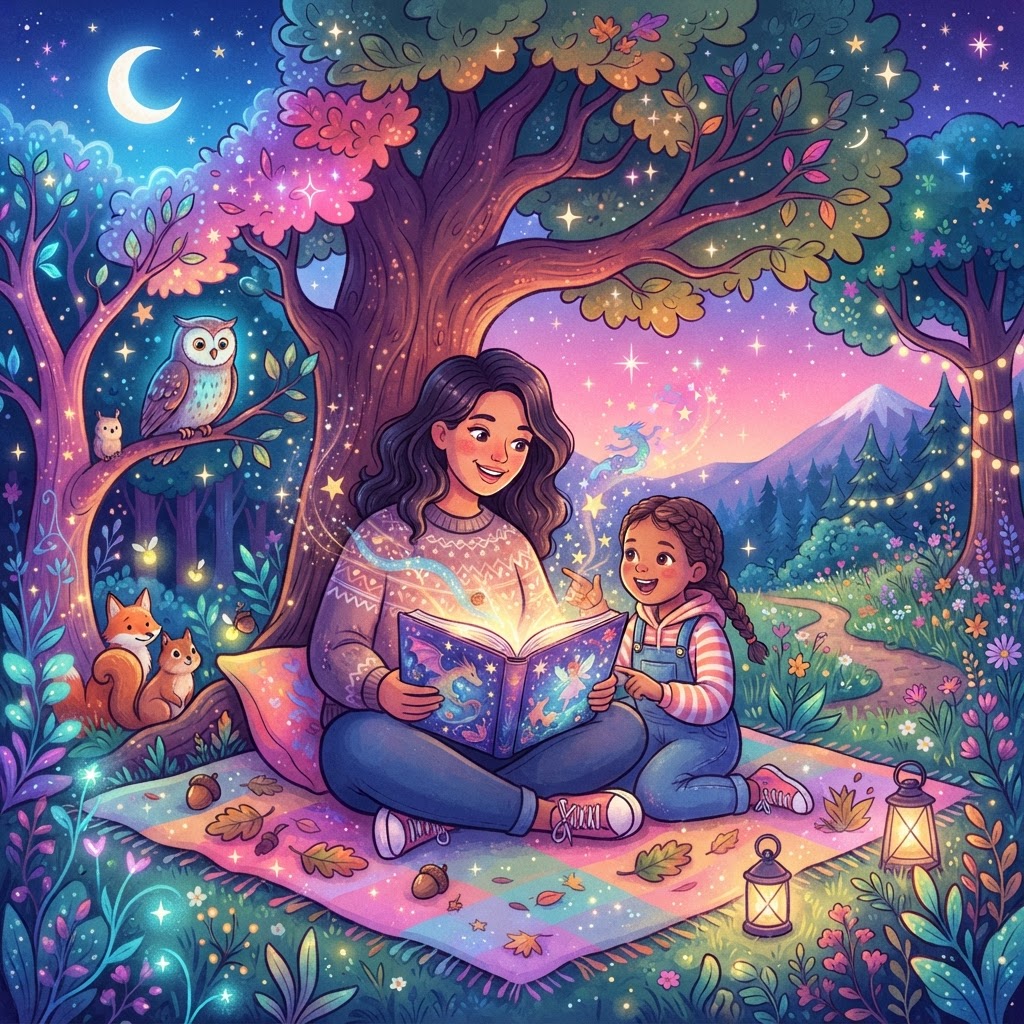
If you want nature activities for kids that feel meaningful, stories are the missing piece. A simple walk, leaf hunt, or weather check becomes more engaging when children are helping a fox find its home, collecting clues for a dragon, or mapping a fairy path.
That is what makes story-based nature activities so useful for families and classrooms. You can create your own personalized bedtime story on InstaTales, then use that story as the launch point for outdoor play, early science, language practice, and creative thinking. The ideas below are designed to be easy, low-cost, and genuinely fun for children ages 1-10.
Why are story-based nature activities so effective for kids?
Story-based nature activities work because they connect imagination, movement, and hands-on learning. When children act inside a story, they stay engaged longer and practice language, memory, observation, and problem-solving at the same time.
Early childhood experts have long noted that play supports learning. The NAEYC highlights how play-based experiences build social, language, and cognitive skills, while the Harvard Center on the Developing Child explains that rich, back-and-forth experiences help grow strong brain architecture. Outdoor exploration also supports physical development and attention, and the CDC’s developmental guidance reminds us that children learn through active, everyday experiences.
With InstaTales, you can make the story fit the child. A child who loves rabbits can explore a “missing carrot trail.” A class studying seasons can follow a “windy-day adventure.” That personal connection is what turns ordinary nature activities for kids into memorable learning.
How can you set up a story-based nature activity in minutes?
The easiest way is to start with one short story, one clear mission, and one outdoor space. You do not need a forest or a big lesson plan; a yard, park, playground edge, or school garden is enough.
Use this quick routine:
- Choose or generate a short InstaTales story with a simple problem.
- Pull out one “mission” from the plot, like finding colors, sounds, tracks, or homes.
- Gather a few basic materials before you go outside.
- Keep the activity to 10-30 minutes, depending on age.
- Save favorite stories in your story library so you can repeat and extend them later.
For teachers, this works especially well with weekly themes, literacy centers, and outdoor stations through InstaTales for teachers. If your child enjoys follow-up writing, these activities pair nicely with story-based journaling activities.
How can a leaf hunt extend your child’s story?
A leaf hunt becomes more meaningful when children are gathering clues for a story character. It builds observation, vocabulary, and sorting skills while keeping the story alive.
Story prompt
“Luna the squirrel has lost the golden leaf that unlocks the forest gate. Can you help her find leaves that match the clues?”
Materials needed
- A short InstaTales forest story
- Small bag or basket
- Paper and crayons
- Optional magnifying glass
Instructions
- Read the story first and underline 3-5 leaf clues: big, tiny, smooth, bumpy, yellow, red, spotted.
- Go outside and ask your child to collect leaves that might help the character.
- Back home or in class, sort leaves by color, size, or shape.
- Ask: “Which leaf would Luna choose, and why?”
- Extend the story by drawing the “forest gate” and placing the winning leaf beside it.
This is one of the best story-based nature activities for mixed ages because toddlers can collect, while older children can compare, classify, and describe.
How can kids build a story map from sticks and stones?
A nature map helps children retell a story using real objects. It strengthens sequencing, spatial awareness, and narrative skills.
Story prompt
“Benji the bear must cross the stream, climb the hill, and reach the berry patch before sunset.”
Materials needed
- An InstaTales adventure story
- Sticks, stones, leaves, petals, pinecones
- Flat ground, tray, or large piece of cardboard
Instructions
- After reading, ask your child to name the important places in the story.
- Use sticks for paths, stones for mountains, and leaves for trees or water.
- Build the story world on the ground together.
- Invite your child to retell the plot by moving a pebble “character” through the map.
- Change one detail: “What if the river moved?” or “What if the bear found a shortcut?”
This activity is especially useful for children who need visual support with retelling. It also works well before trying family story discussion prompts, because the map gives children something concrete to talk about.
How can a sound safari turn listening into a literacy skill?
A sound safari teaches children to listen closely and connect sounds to story events. It supports attention, auditory discrimination, and descriptive language.
Story prompt
“Milo the owl hears three mysterious sounds in the woods and must figure out who needs help.”
Materials needed
- A short InstaTales mystery or animal story
- Paper
- Pencil or crayons
- Optional clipboard
Instructions
- Read the story and ask, “What sounds might Milo hear outside?”
- Go outdoors and pause for 30-60 seconds at a time.
- Each time your child hears a sound, record it with a drawing, mark, or word: bird, wind, dog, car, crunch.
- Match each real-life sound to a possible story moment.
- End by creating a new sentence or page for the story: “Then Milo heard the leaves whispering…”
For younger children, simply copy and repeat sounds. For older children, compare loud/soft, near/far, natural/human-made. If your child likes sensory exploration, this pairs well with story-based sensory play ideas.
How can children create a tiny habitat for a story character?
Building a mini habitat helps children think like scientists and storytellers at once. They learn what living things need while deepening empathy for characters and animals.
Story prompt
“Nia the hedgehog needs a safe place to rest before the rain begins.”
Materials needed
- An InstaTales animal story
- Leaves, twigs, grass, bark, pebbles
- Small toy animal or paper character
- Tray, garden patch, or outdoor corner
Instructions
- Ask: “What does Nia need to stay safe?” Guide children toward shelter, food, water, and space.
- Gather loose natural materials only. Avoid picking living plants when possible.
- Build a small habitat for the character.
- Test it by pretending wind or rain is coming: “Will the shelter stay up?”
- Reflect together: “Would a real hedgehog live here? What would it need?”
This is one of the most educational nature activities for kids because it introduces basic ecology in a child-friendly way. It also helps children move from pretend play toward real-world understanding.
How can a weather diary keep the story going all week?
A weather diary turns one story into a multi-day learning experience. Children practice noticing patterns, using time words, and connecting weather to plot.
Story prompt
“Pip the rabbit wants to plan a picnic, but the sky keeps changing. What should Pip do each day?”
Materials needed
- A weather-themed InstaTales story
- Notebook or printable chart
- Crayons or stickers
- Optional thermometer or window view
Instructions
- Read the story on day one and introduce the character’s problem.
- Each day, observe the weather: sunny, cloudy, windy, rainy, cold, warm.
- Draw or record what the child sees.
- Add one story sentence daily: “Today Pip wore boots,” or “Today Pip stayed inside.”
- At the end of the week, reread the full weather diary as a new version of the story.
This works beautifully at home or in a classroom calendar routine. It also gives children a gentle introduction to prediction and cause-and-effect.
How can nature art create a new ending to the story?
Nature art lets children respond to a story without needing perfect writing skills. It encourages creativity, fine motor control, and narrative expression.
Story prompt
“After the storm, Aria the deer finds a hidden meadow. What does it look like?”
Materials needed
- An InstaTales story with a vivid setting
- Collected petals, grass, leaves, seeds, small sticks
- Paper or cardboard
- Glue if working indoors
Instructions
- Read the descriptive part of the story slowly.
- Ask your child to recreate the setting using natural materials.
- Encourage choices based on the text: “Which leaf looks like meadow grass?” “What could be the pond?”
- When the collage is complete, invite the child to tell or dictate a new ending.
- Save the artwork with the story in a folder or digital photo album.
This is ideal for children who love making things. It also extends reading comprehension, because children must go back to the details in the story to build their picture accurately.
How can parents and teachers make these activities safe and doable?
Keep the goal simple, the expectations flexible, and the environment safe. Children do not need a perfect craft or a long attention span for these activities to be valuable.
A few practical tips help:
- Choose one clear mission per activity.
- Use loose, safe materials and wash hands after outdoor play.
- Avoid collecting insects or disturbing nests and habitats.
- Let toddlers explore with adult support rather than pushing formal outcomes.
- Stop while the child is still interested, not exhausted.
For teachers, repeat favorite formats with different stories. For parents, reuse story structures with new characters from the InstaTales blog or your saved favorites. Repetition helps children feel competent, and competence keeps them curious.
Frequently Asked Questions
What ages are story-based nature activities best for?
These activities can work from ages 1-10 with small adjustments. Younger children do more collecting and talking, while older children can record, compare, predict, and retell in more detail.
How long should a story-based nature activity last?
For most children, 10-30 minutes is enough. You can always extend the learning later with drawing, journaling, or rereading the story.
Do I need a backyard or forest to do these activities?
No. A sidewalk, small park, schoolyard, balcony garden, or even a window-weather check can work. The story provides the structure, so the space does not need to be elaborate.
How do I use InstaTales for classroom nature activities?
Start with a shared class story tied to your theme, then give children one outdoor mission connected to the plot. Teachers can organize stories by topic and reuse them through InstaTales for teachers.
What if my child does not like structured activities?
Make the activity feel like play, not a lesson. Keep the story short, follow the child’s interests, and let them change the plot as they explore.
Can these nature activities support literacy skills too?
Yes. Children build vocabulary, sequencing, comprehension, and oral storytelling while they play. That is one reason story-based nature activities are so effective for young learners.
Ready to Create a Personalized Bedtime Story?
Use our free AI bedtime story generator to create a personalized illustrated story for your child in 30 seconds — no credit card needed.
Popular story types:
Maya Rodriguez
Lead Content Editor & Early Literacy Specialist
Maya is a former early childhood educator and literacy specialist with over a decade of experience helping children develop a love of reading. She leads content at InstaTales, where she writes about the science of storytelling, child development, and how families can use personalized AI stories to build literacy and emotional resilience.
instatales.ai