7 Story-Based Puzzle Activities for Kids
Combine storytelling with puzzle activities — fun, educational activities that extend the story experience and build skills.
✦ Key Takeaways
- •Story-based puzzles work because they connect thinking skills to meaningful context.
- •A picture-sequencing puzzle is one of the easiest and most effective story activities.
- •A character clue hunt turns listening into active problem-solving.
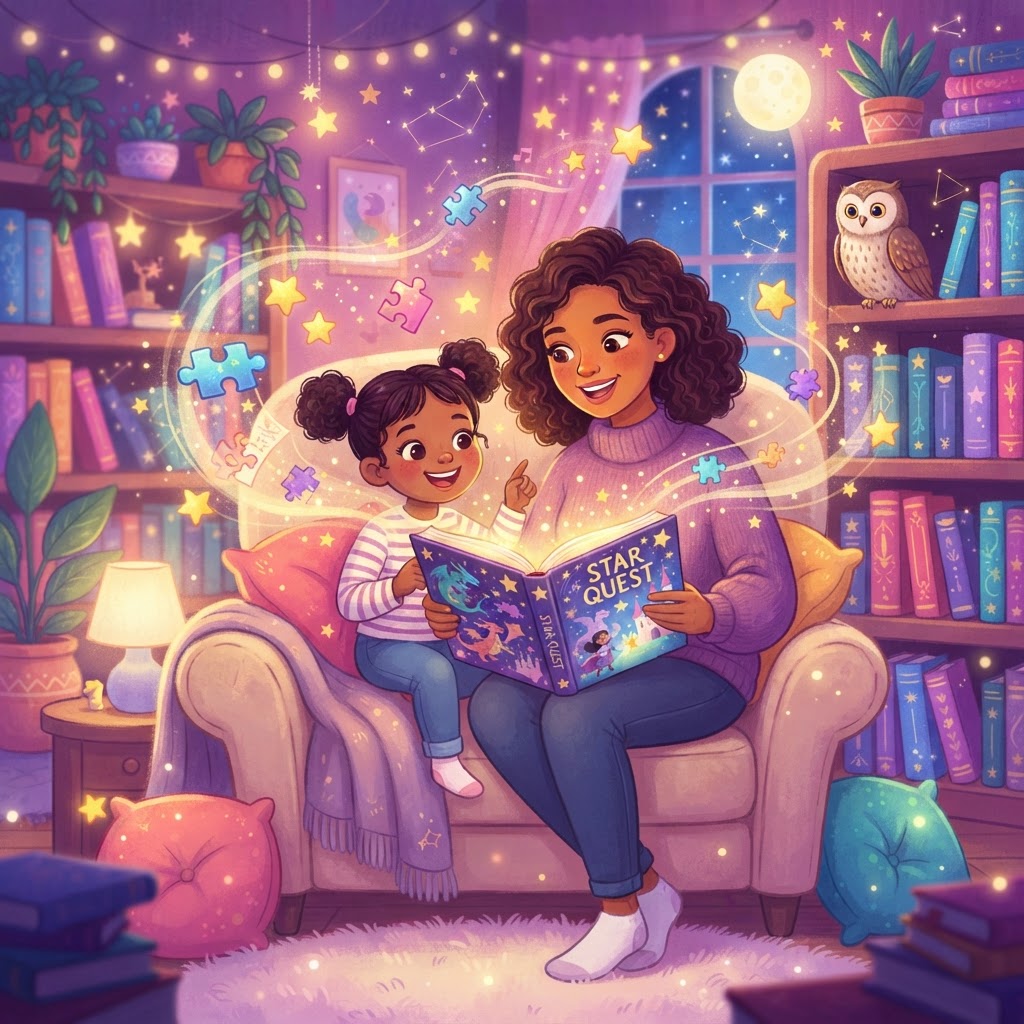
If you want puzzle-activities for kids that feel educational without feeling like homework, start with a story. When children already care about the characters and the problem in the plot, they are far more willing to sequence, sort, solve, and think deeply.
That is what makes story-based puzzle-activities so useful at home and in the classroom. You can create your own personalized bedtime story, save favorites in your story library, and reuse one story in several different ways. For classrooms, InstaTales for teachers makes it easy to build literacy-rich activities around a shared text.
Why are story-based puzzle activities so effective for kids?
Story-based puzzles work because they connect thinking skills to meaningful context. Instead of solving random clues, children solve problems that help them revisit a plot, understand characters, and remember details.
That matters for development. The Harvard Center on the Developing Child explains that children build executive function through activities that use working memory, flexible thinking, and self-control. Story puzzles naturally practice all three. The NAEYC also highlights how play-based learning supports language, problem-solving, and engagement.
In practical terms, these activities help children:
- Retell events in order
- Notice cause and effect
- Strengthen memory and attention
- Build vocabulary and inference skills
- Practice turn-taking and persistence
If you have been searching for broad ideas like puzzle-activities activities children can actually enjoy, story-based versions are often the most successful because they feel personal and purposeful.
How can you turn an InstaTales story into a picture-sequencing puzzle?
A picture-sequencing puzzle is one of the easiest and most effective story activities. It helps children understand beginning, middle, and end while strengthening comprehension.
Story prompt
Create an InstaTales story about your child finding a missing moonstone with a dragon friend and three important stops along the way.
Materials needed
- Paper or index cards
- Crayons or markers
- Printed images, stickers, or simple drawn scenes
- Optional: glue and scissors
Instructions
- Re-read the story and identify 4-6 key events.
- Draw one scene for each event, or ask the child to draw them.
- Mix up the cards.
- Invite your child to place the scenes back in order.
- Ask follow-up questions: “What happened first?” “Why did the dragon need help?” “What happened at the end?”
For younger children, use only 3 pictures. For older children, add one “tricky” extra picture that does not belong. This supports story structure skills, which literacy experts at Reading Rockets identify as essential for comprehension.
How can you make a character clue hunt from a bedtime story?
A character clue hunt turns listening into active problem-solving. Children use story details to identify who did what, where, and why.
Story prompt
Generate a story in which three characters help solve a problem: a brave rabbit, a sleepy bear, and a clever squirrel trying to save a picnic.
Materials needed
- Sticky notes or clue cards
- Small character pictures or toys
- A basket or box for “found clues”
Instructions
- After reading, write 5-8 simple clues based on the story.
- Examples: “I climbed the tree to look for the basket” or “I almost fell asleep before the plan was finished.”
- Hide the clues around the room.
- As children find each clue, ask them to match it to the correct character.
- Finish by retelling the whole story using the sorted clues.
This works especially well when the child is the main character in the story, because personal connection increases motivation. Teachers can use this as a small-group center; parents can use it as a rainy-day literacy game.
How can children build a map maze from the story setting?
A story map maze helps children visualize setting, direction, and problem-solving. It is especially good for children who like movement, drawing, and spatial puzzles.
Story prompt
Create a story about a child traveling through an enchanted forest, crossing a river, and reaching a castle to deliver a message.
Materials needed
- Large paper or poster board
- Markers
- Small toy figure, coin, or button
- Optional: tape for floor mazes
Instructions
- Re-read the story and list the main places in order.
- Draw a simple map with paths, obstacles, and landmarks from the story.
- Add dead ends or wrong turns as puzzle elements.
- Place a small marker at the start.
- Let the child solve the maze by moving through the setting in the correct order.
To extend the activity, ask the child to explain why one route works better than another. If your child enjoys construction too, pair this with these story-based building ideas for a hands-on extension.
How do you create a story jigsaw from key scenes?
A homemade story jigsaw builds visual discrimination, patience, and memory. It is simple to prepare and easy to adapt for different ages.
Story prompt
Use an InstaTales story with one especially vivid scene, such as a pirate ship in a storm, a tea party in the clouds, or a dinosaur birthday parade.
Materials needed
- Printed illustration or child’s drawing from the story
- Cardstock or cereal box cardboard
- Scissors
- Envelope or bag for pieces
Instructions
- Choose one memorable scene from the story.
- Glue it onto thicker paper or cardboard.
- Cut it into 4-12 pieces depending on age.
- Mix up the pieces and invite the child to rebuild the picture.
- Once complete, ask the child to describe what was happening in that scene.
For toddlers and preschoolers, cut simple straight pieces. For older children, make irregular shapes and ask them to narrate the scene after completing it. This turns a classic puzzle into a language activity too.
How can you use “what happens next?” cards as a logic puzzle?
Prediction cards are a great logic puzzle because they ask children to use evidence from the story, not just guesses. This strengthens inferencing and cause-and-effect thinking.
Story prompt
Generate a story where a problem unfolds step by step, such as a lost backpack, a broken bridge, or a surprise storm during a trip.
Materials needed
- Index cards
- Pencil or markers
- Optional: simple drawings on each card
Instructions
- Write 5 story moments on separate cards.
- Include 1-2 possible “next events” for each key moment.
- Ask the child to choose which event makes the most sense and explain why.
- Example: “The bridge is out. Should the characters swim, build a raft, or look for another path?”
- Discuss clues from the story that support the answer.
This activity works beautifully with re-read stories saved in your story library, because children can revisit familiar plots and notice more details each time.
How can you turn story clues into a rhyme or word puzzle?
A rhyme or word puzzle extends the story experience into early literacy. It is especially helpful for ages 4-8 who are beginning to notice sounds, word families, and repeated phrases.
Story prompt
Create a playful InstaTales story with repeating words, rhymes, or magical objects, such as “star car,” “moon spoon,” or “cat in a hat.”
Materials needed
- Small cards or sticky notes
- Marker
- Optional: picture cards
Instructions
- Pull 6-10 key words from the story.
- Create pairs for rhyme, beginning sound, or category matching.
- Ask children to find the two words that sound alike or belong together in the story world.
- For older children, remove one word from a repeated phrase and have them fill in the blank.
- Re-read the sentence aloud to check if it sounds right.
This is a nice bridge between storytelling and phonological awareness. If your child enjoys word play, these story-inspired poetry activities make a natural next step.
How can parents and teachers keep these puzzle activities simple and successful?
The best approach is to keep the setup light and the conversation rich. You do not need perfect materials; you need a story the child enjoys and one clear task.
A few practical tips:
- Start with a short story and one puzzle type
- Choose 3-6 story details, not 12
- Let children re-read the story before solving
- Offer help with questions instead of giving answers
- Stop while the child is still enjoying it
For mixed ages, give everyone the same story but different levels of challenge. A younger child can sequence 3 pictures while an older child explains motives, predicts outcomes, or writes clues.
Frequently Asked Questions
What age are story-based puzzle activities best for?
These activities work well for ages 3-10, with simple matching and sequencing for younger children and logic or word puzzles for older ones. Children ages 1-2 can still participate by pointing to pictures and naming characters with adult help.
How long should a story puzzle activity take?
Most should take 10-20 minutes. Short sessions are usually more effective because children stay engaged and end with a sense of success.
Can teachers use InstaTales stories for group activities?
Yes. Teachers can use one shared story for centers, partner work, or whole-class discussion, then adapt the puzzle level by age and skill. Personalized stories can also increase participation from reluctant readers.
Do story-based puzzles help with reading skills?
Yes. They support sequencing, vocabulary, retelling, inference, and comprehension. Because the puzzle is tied to a meaningful story, children often remember details better than they would with isolated worksheets.
What if my child does not like traditional puzzles?
Start with movement-based or dramatic versions, such as clue hunts or floor mazes. Many children who resist standard puzzles enjoy solving problems when the challenge is connected to a favorite story.
How often should we reuse the same story?
Two to four times is often ideal. Repetition helps children notice new details, deepen comprehension, and feel more confident solving the next activity.
Explore More Stories
Ready for more? - free AI bedtime story generator
Get a new bedtime story every week
Free, personalized, and delivered to your inbox. No spam, ever.
Ready to Create a Personalized Bedtime Story?
Use our free AI bedtime story generator to create a personalized illustrated story for your child in 30 seconds — no credit card needed.
Popular story types:
Maya Rodriguez
Lead Content Editor & Early Literacy Specialist
Maya is a former early childhood educator and literacy specialist with over a decade of experience helping children develop a love of reading. She leads content at InstaTales, where she writes about the science of storytelling, child development, and how families can use personalized AI stories to build literacy and emotional resilience.
instatales.ai