7 Story-Based Reading Comprehension Activities
Combine storytelling with reading comprehension activities — fun, educational activities that extend the story experience and build skills.
✦ Key Takeaways
- •Yes—story-based activities improve comprehension because they connect literacy skills to emotion, memory, and conversation.
- •A retelling map helps children remember the beginning, middle, and end of a story.
- •Character clue cards teach children to infer by using story evidence, not just memory.
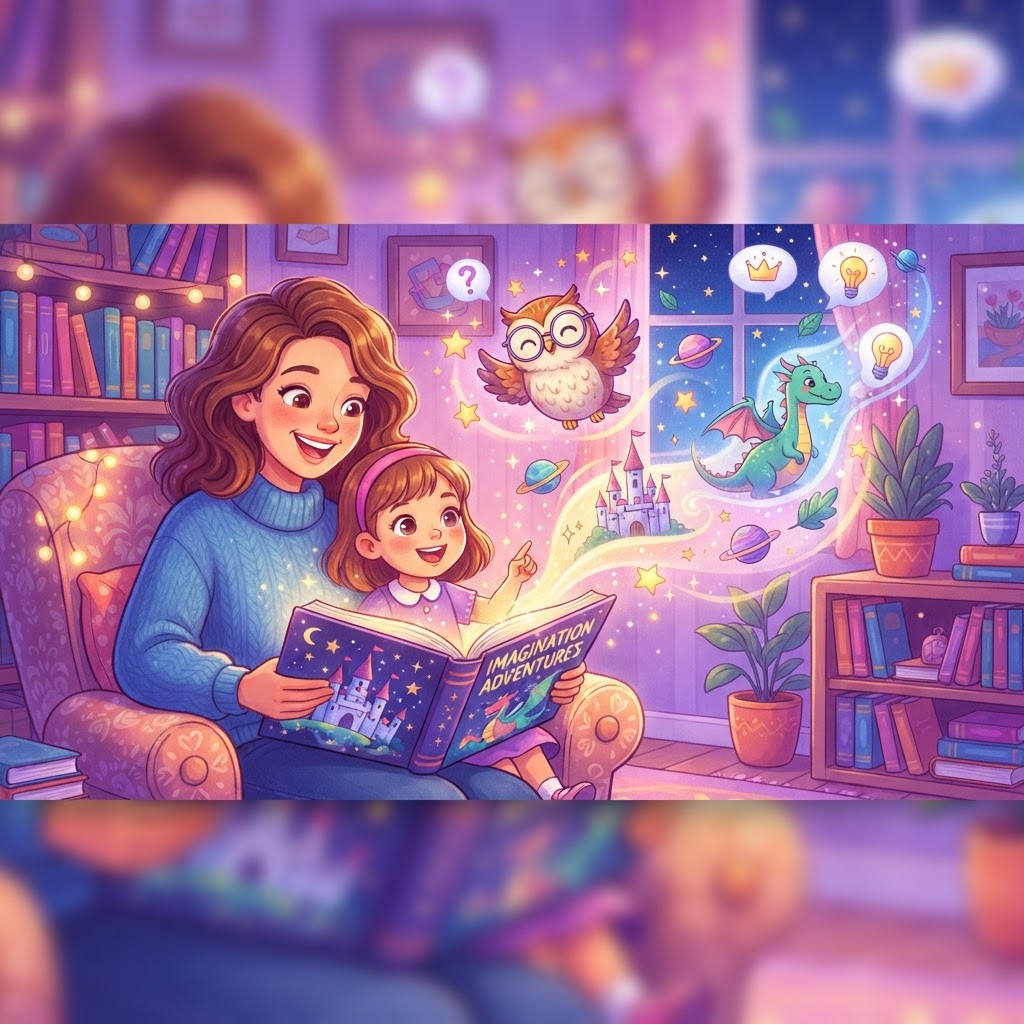
The best reading comprehension activities for kids often begin with a story they already love. When children care about the character, problem, or setting, they are far more willing to retell, predict, question, and explain what happened.
That is why story-based reading comprehension activities work so well at home and in the classroom. With InstaTales, you can create your own personalized bedtime story, use quick-start story templates, and revisit favorites in your story library to turn one meaningful story into several playful learning moments.
Why do story-based reading comprehension activities help children learn?
Yes—story-based activities improve comprehension because they connect literacy skills to emotion, memory, and conversation. Children understand more when they can talk, move, draw, and play with a story instead of only answering worksheet questions.
This approach is well supported by literacy research. Reading Rockets highlights retelling, predicting, questioning, and summarizing as key comprehension strategies. The National Association for the Education of Young Children also emphasizes playful, language-rich experiences for early literacy, and the Harvard Center on the Developing Child explains how back-and-forth conversation builds language and understanding.
With InstaTales, the advantage is simple: the story already feels personally relevant. A child is more likely to discuss a story deeply when the hero looks like them, includes their favorite animal, or takes place in a setting they chose.
How can a retelling map strengthen story understanding?
A retelling map helps children remember the beginning, middle, and end of a story. It builds sequencing, recall, vocabulary, and main-idea skills in a clear, low-pressure way.
- Story prompt: Read an InstaTales story about a child who goes on a small adventure, solves a problem, or learns a lesson.
- Materials needed: Paper, crayons or markers, and three boxes labeled Beginning, Middle, End.
- Instructions:
- Read the story once for enjoyment.
- Read it again and pause after major events.
- Ask your child to draw one important scene in each box.
- Under each picture, write a simple sentence together.
- Finish by asking the child to retell the full story using the map.
This is one of the easiest reading-comprehension-activities for kids because it works for ages 3-10. For younger children, keep it oral. For older children, add details like setting, problem, and solution.
How can character clue cards build inference skills?
Character clue cards teach children to infer by using story evidence, not just memory. That means they learn to answer, “How do you know?”—a core comprehension skill.
- Story prompt: Choose an InstaTales story with a strong character emotion, such as nervous before a performance or proud after helping a friend.
- Materials needed: Index cards or paper slips, pencil, optional emotion-face drawings.
- Instructions:
- After reading, write or say 3-5 clues from the story: “She hid behind the curtain,” “Her hands were shaking,” “She took a deep breath.”
- Ask, “How was the character feeling?”
- Have the child match clues to an emotion.
- Follow up with, “What in the story makes you think that?”
Because InstaTales stories are personalized, children often connect quickly to the main character’s feelings. That makes it easier for them to move from simple recall to deeper thinking. Teachers can also use this in small groups with InstaTales for teachers.
What makes a sequence strip activity so effective?
Sequence strips are effective because they turn abstract story order into something children can see and move. This supports comprehension, especially for children who learn best with hands-on tasks.
- Story prompt: Pick a story with 4-6 clear events, such as finding a map, meeting a helper, facing a challenge, and reaching a goal.
- Materials needed: Paper strips, scissors, crayons, tape or glue.
- Instructions:
- Write or draw one event from the story on each strip.
- Mix up the strips.
- Ask the child to place them in the correct order.
- Once finished, have them explain why each event comes first, next, and last.
If your child enjoys this format, pair it with story-based puzzle ideas for even more sequencing practice. Re-reading the same story from your saved library also helps children notice details they missed the first time.
How does stop-sketch-tell improve comprehension during reading?
Stop-sketch-tell improves comprehension by slowing the reading process just enough for children to picture meaning. It supports visualization, oral language, and active listening.
- Story prompt: Choose an InstaTales story with vivid scenes, like a moonlit forest, a dragon bakery, or a submarine classroom.
- Materials needed: Paper, crayons, clipboard or table space.
- Instructions:
- Read one short section aloud.
- Pause and say, “Draw what you see in your mind.”
- After the sketch, ask the child to explain their drawing.
- Repeat once or twice during the story.
- At the end, compare the sketches to what actually happened.
This works especially well for children who struggle to answer direct comprehension questions. Their drawing gives them a concrete way to show understanding first, then explain it with words.
How can a story detective game encourage better questions?
A story detective game teaches children to ask and answer meaningful questions about the text. Strong readers do not only respond to questions—they learn to generate them.
- Story prompt: Use any mystery, problem-solving, or adventure-based InstaTales story.
- Materials needed: A toy magnifying glass or paper badge, sticky notes, pencil.
- Instructions:
- Tell the child they are a “story detective.”
- During or after reading, ask them to find clues for these question types: Who? What? Where? Why? How?
- Let them write, dictate, or say one question for each type.
- Go back into the story to find the answer together.
This is a wonderful bridge from listening comprehension to independent reading comprehension. For active learners, follow it with story-based scavenger hunts inspired by the same story world.
Why is a “change one part” challenge useful for cause and effect?
A “change one part” challenge helps children understand cause and effect. When they change a character choice, setting, or event, they begin to see how stories are structured.
- Story prompt: Read an InstaTales story where the hero makes an important decision.
- Materials needed: None, or paper for older children to write responses.
- Instructions:
- Ask one “what if” question: “What if the character did not open the door?” or “What if the storm never came?”
- Let the child predict what would change next.
- Keep going for two or three events.
- End by comparing the new version with the original.
This activity builds flexible thinking and deeper understanding of plot. It also makes a great classroom discussion starter or writing warm-up.
How can a story-to-real-life connection activity deepen meaning?
Story-to-real-life connections deepen comprehension because children remember stories better when they connect them to their own experiences. This strengthens language, empathy, and long-term understanding.
- Story prompt: Choose an InstaTales story about friendship, bravery, trying something new, or helping others.
- Materials needed: Paper, crayons, optional sentence starters.
- Instructions:
- Ask: “What part of this story felt like your life?”
- Offer prompts such as “This reminds me of…” or “I felt like the character when…”
- Have the child draw or describe the connection.
- For older children, ask how the connection helped them understand the story better.
This is one of the most meaningful reading comprehension activities for children because it moves beyond right-or-wrong answers. If you want more extension ideas, the InstaTales blog also includes creative play tie-ins like dress-up, building, and nature-based story learning.
Frequently Asked Questions
What age are these reading comprehension activities best for?
These activities can be adapted for ages 1-10, though most work best from ages 3 and up. For younger children, keep the focus on talking, pointing, and drawing rather than writing.
How long should a story-based comprehension activity last?
For most children, 5-15 minutes is enough after reading. Short, consistent practice usually works better than long sessions, especially at bedtime or after a busy school day.
Do personalized stories really improve comprehension?
Often, yes. When children see familiar names, interests, or settings in a story, they tend to stay engaged longer and remember more details, which supports stronger comprehension discussion.
Can teachers use these activities in the classroom?
Absolutely. These story-based reading-comprehension-activities work well for read-alouds, literacy centers, partner talk, and small groups. Teachers can also build them into routines using weekly reading challenges or class storytelling through InstaTales for teachers.
What if a child cannot answer comprehension questions yet?
Start with retelling, drawing, or pointing to pictures instead of direct questions. Children often show understanding in play and conversation before they can explain it in formal answers.
How often should I repeat the same story?
Repeating a favorite story is helpful, not boring. Re-reading supports vocabulary growth, comprehension, and confidence, especially when you try a different follow-up activity each time.
Explore More Stories
Ready for more? - free AI bedtime story generator
Get a new bedtime story every week
Free, personalized, and delivered to your inbox. No spam, ever.
Ready to Create a Personalized Bedtime Story?
Use our free AI bedtime story generator to create a personalized illustrated story for your child in 30 seconds — no credit card needed.
Popular story types:
Maya Rodriguez
Lead Content Editor & Early Literacy Specialist
Maya is a former early childhood educator and literacy specialist with over a decade of experience helping children develop a love of reading. She leads content at InstaTales, where she writes about the science of storytelling, child development, and how families can use personalized AI stories to build literacy and emotional resilience.
instatales.ai