7 Story-Based Scavenger Hunts for Kids
Combine storytelling with scavenger hunts — fun, educational activities that extend the story experience and build skills.
✦ Key Takeaways
- •They work because they connect imagination with action.
- •Start with one simple story problem and build the hunt around it.
- •Use a missing-object plot and hide simple clues around one room.
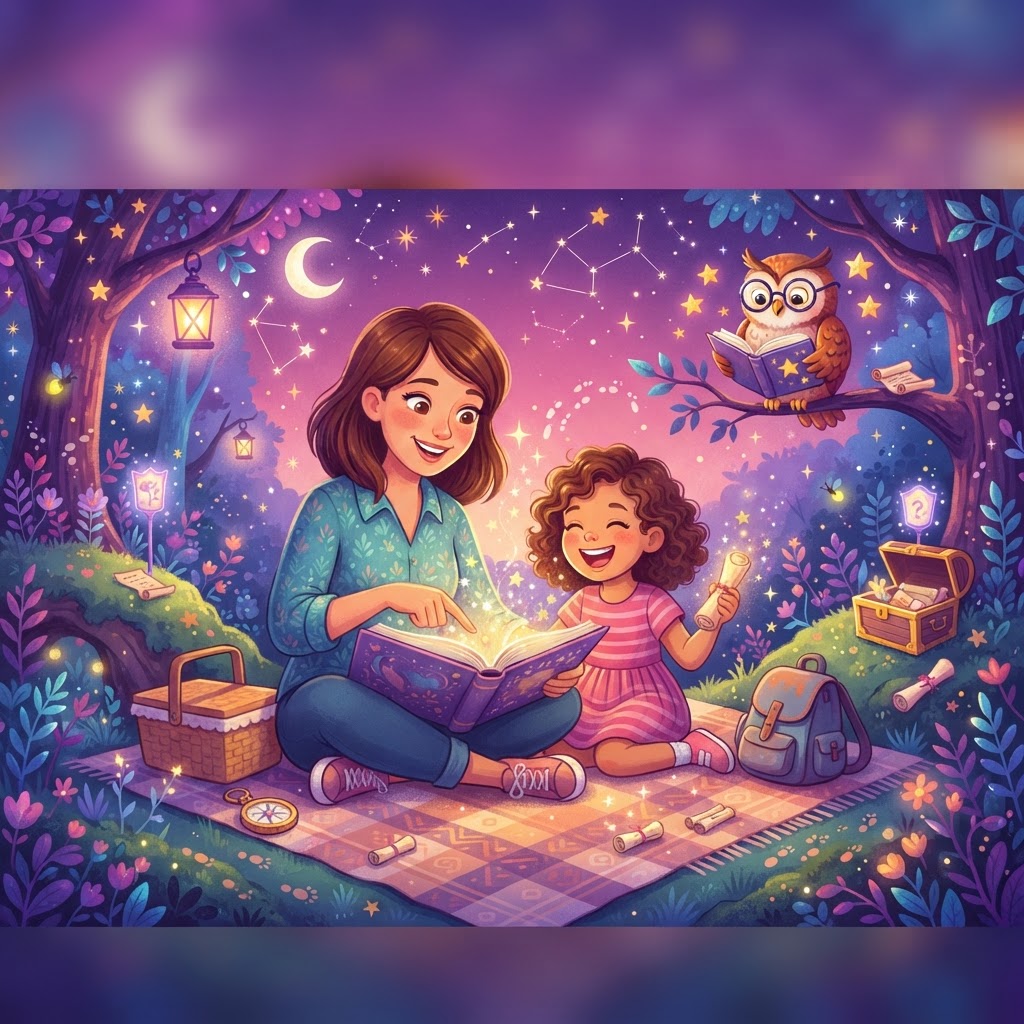
Story-based scavenger hunts for kids turn reading time into hands-on play. When children search for clues, objects, sounds, or colors from a story, they practice listening, memory, sequencing, vocabulary, and problem-solving in a way that feels like fun.
This mix of storytelling and movement is more than cute busywork. The American Academy of Pediatrics notes that play supports healthy development, and the Harvard Center on the Developing Child highlights how back-and-forth interaction strengthens language and thinking skills. With InstaTales, you can create your own personalized bedtime story and then turn that story into simple scavenger-hunts activities children will want to repeat again and again.
Why do story-based scavenger hunts work so well for children?
They work because they connect imagination with action. A child is not just hearing about a dragon, pirate, or lost puppy; they are following that character’s problem, noticing details, and solving it with their body and senses.
That matters for learning. Story-based scavenger-hunts support early literacy by helping children recall characters, settings, and events. They also support executive function skills like attention, working memory, and flexible thinking. Organizations like Reading Rockets have long emphasized that rich talk around stories helps children build vocabulary and comprehension.
For parents and teachers, the biggest win is flexibility. You can do these hunts indoors, outdoors, in a classroom, or even in a hallway with paper clues.
How can you turn an InstaTales story into a scavenger hunt in five minutes?
Start with one simple story problem and build the hunt around it. The fastest method is to pull 5-8 searchable details from the story and turn each one into a clue, item, or task.
Use this quick process:
- Generate a short story in InstaTales with a clear goal, such as “find the moon key” or “help the bunny gather colors.”
- Pick searchable elements: objects, places, shapes, colors, sounds, or character helpers.
- Hide matching items or pictures around your space.
- Read the story first, then pause at the problem and begin the hunt.
- Save favorite stories in your story library so you can reuse them with new clues later.
For classrooms, this also works as a center, transition activity, or partner task. If you teach, InstaTales for teachers can help you organize story prompts by topic, age, or skill.
How can you use a “lost item” hunt to build story recall?
Use a missing-object plot and hide simple clues around one room. This is one of the easiest story-based scavenger-hunts for kids because even toddlers understand, “We have to help find it.”
- Story prompt: “Luna the bear lost her bedtime star pillow before sleep. Can you help her find the things she saw on the way?”
- Materials needed: A pillow or toy, 4-6 clue cards or objects, basket.
- Instructions:
- Read the story aloud until Luna realizes the pillow is missing.
- Hide clues linked to the story: a moon picture, a sock, a book, a flashlight, a star cutout.
- After each find, ask, “What happened next in Luna’s story?”
- Let the final clue lead to the lost item.
- How to use InstaTales: Personalize the character with your child’s name, favorite toy, or bedroom setting. That makes recall stronger and the hunt more meaningful.
How can a color hunt support toddlers and preschoolers?
A color quest is perfect for younger children because it keeps the goal concrete and playful. It builds listening, early vocabulary, and visual discrimination without needing reading skills.
- Story prompt: “A rainbow dragon lost her colors in the house. She needs red, blue, yellow, and green before the sky gets dark.”
- Materials needed: Colored paper, toys, crayons, or household items in target colors.
- Instructions:
- Read the short story and show the dragon’s missing colors.
- Call out one color at a time and have children find matching objects.
- Put each item in the dragon’s “magic basket.”
- Finish by retelling the story using the found colors in order.
- How to use InstaTales: Ask InstaTales for a story with your child’s favorite colors, animal, or room. If your child loves outdoor play, you can extend this with story-based nature activities.
How can you turn a pirate story into a sequencing treasure hunt?
A pirate hunt is a great way to teach order and memory. Children must follow clues in the same sequence as the events in the story, which strengthens comprehension.
- Story prompt: “Captain Mira must cross the bridge, greet the parrot, find the map, and open the treasure chest before the tide comes in.”
- Materials needed: Paper clues, toy chest or box, stickers or coins, tape.
- Instructions:
- Read the story once through.
- Lay out four clue stations that match the order of events.
- At each station, ask, “Is this first, next, or last?”
- Children move to the next clue only if they place the event in the right order.
- End with a treasure box filled with small rewards or story tokens.
- How to use InstaTales: Generate stories with clear “first-next-then-finally” structure. This is especially useful for kindergarten and early elementary children who are learning sequencing words.
How can an alphabet or sound hunt make reading practice more playful?
Use story clues built around beginning sounds, rhymes, or letters. This makes early phonics practice feel like an adventure instead of a worksheet.
- Story prompt: “Finn the fox must gather things that start with the /b/ sound to build a brave explorer bag.”
- Materials needed: Letter cards, household items or pictures, small bag.
- Instructions:
- Read the story and introduce the target sound or letter.
- Hide objects such as ball, book, block, or banana picture.
- As children find each one, say the word slowly and stress the first sound.
- For older children, add simple written clues or rhyming hints.
- How to use InstaTales: Create stories that repeat the target sound often. Repetition is helpful for young learners, especially when paired with movement and oral language practice.
How can a map hunt build geography skills through stories?
A map-based hunt helps children connect story settings with direction and place. It is especially strong for ages 5-10 because it adds spatial thinking to the story experience.
- Story prompt: “Niko needs to deliver a letter from the mountain village to the river town, then to the lighthouse by the sea.”
- Materials needed: Simple hand-drawn map, clue cards, stickers, pencil.
- Instructions:
- Read the story and show the map.
- Mark 3-5 locations from the narrative.
- Hide clues in matching spots around the room or playground.
- Have children use directional words like near, far, left, right, north, or south.
- Ask them to retell the journey at the end.
- How to use InstaTales: Generate travel or adventure stories with distinct places. For more map-and-place ideas, try this guide to story-led geography fun.
How can a nature clue hunt deepen observation and vocabulary?
A nature hunt works best when the story sends children outside to notice details. It builds science language, attention, and calm observation skills.
- Story prompt: “A tiny forest elf needs help finding a smooth stone, a feather, something that smells good, and a leaf bigger than her hand.”
- Materials needed: Collection bag, clipboard, crayons, optional magnifying glass.
- Instructions:
- Read the story before going outside.
- Give children a short list of story-linked items or textures to find.
- Encourage descriptive words: rough, soft, curved, bright, dry.
- Back inside, sort or draw the items and connect them to the story ending.
- How to use InstaTales: Ask for a gentle nature story set in your local season. Teachers can also use this for outdoor literacy stations or paired discussion.
How can you use a classroom mystery hunt for teamwork?
A classroom mystery hunt turns a story into a shared problem that children solve together. It is ideal for building cooperation, turn-taking, and oral language.
- Story prompt: “The class pet’s welcome badge has disappeared, and only the story clues can help the team find it.”
- Materials needed: Hidden badge or object, team clue cards, chart paper.
- Instructions:
- Read the mystery setup aloud.
- Split children into pairs or small groups.
- Give each group one clue type: picture clue, riddle clue, location clue, or character clue.
- Bring the class back together after each step so they combine information.
- Celebrate by retelling how the team solved the problem.
- How to use InstaTales: Create a story featuring your class mascot, current theme, or social-emotional goal. If children like making props after the hunt, extend the lesson later with building or art from the InstaTales blog.
How can parents and teachers keep scavenger hunts fun and low-stress?
Keep the hunt short, clear, and success-friendly. Most children do best with 4-8 clues, a visible goal, and lots of adult narration.
A few practical tips help:
- Match the hunt length to age and energy level.
- Use pictures instead of text for non-readers.
- Offer hints quickly if frustration rises.
- Focus on retelling and noticing, not competition.
- End with a calm payoff, such as drawing the story scene or rereading the tale.
That last step matters. Re-reading the same story after the hunt helps children connect action back to language, which is where much of the learning happens.
Frequently Asked Questions
What age are story-based scavenger hunts best for?
They work well from ages 1-10 when you adjust the challenge level. Toddlers do best with colors, pictures, and simple objects, while older children can handle maps, riddles, and sequencing clues.
How long should a scavenger hunt last?
For most children, 10-20 minutes is ideal. Shorter hunts usually keep energy high and reduce frustration, especially before bedtime or during classroom transitions.
Can I use these scavenger hunts in a classroom?
Yes. They work well for literacy centers, small-group work, partner tasks, and whole-class problem solving. Just keep directions simple and assign roles so every child has a way to participate.
What if my child cannot read yet?
Use picture clues, spoken directions, colors, and object matching. Pre-readers still gain strong language and comprehension benefits from listening, searching, and retelling.
How do I make a scavenger hunt calm enough for bedtime?
Choose a gentle story, use only a few clues, and keep the hunt in one room. End with the final item tucked into bed with the child, then reread the story in a quiet voice.
How often should we repeat the same hunt?
Repeating a favorite hunt is helpful, not boring. Young children often learn more on the second and third round because they can focus less on the rules and more on the story details.
Ready to Create a Personalized Bedtime Story?
Use our free AI bedtime story generator to create a personalized illustrated story for your child in 30 seconds — no credit card needed.
Popular story types:
Maya Rodriguez
Lead Content Editor & Early Literacy Specialist
Maya is a former early childhood educator and literacy specialist with over a decade of experience helping children develop a love of reading. She leads content at InstaTales, where she writes about the science of storytelling, child development, and how families can use personalized AI stories to build literacy and emotional resilience.
instatales.ai