Thai Stories for Kids: Benefits, Ideas & Tips
Delightful Thai stories for kids — perfect for bilingual families, language learners, and heritage language preservation.
✦ Key Takeaways
- •Thai stories for kids are valuable because they build language, belonging, and connection at the same time.
- •Stories in Thai support language learning by giving children words in a meaningful context.
- •Thai children stories strengthen cultural identity by giving children a felt sense of home.
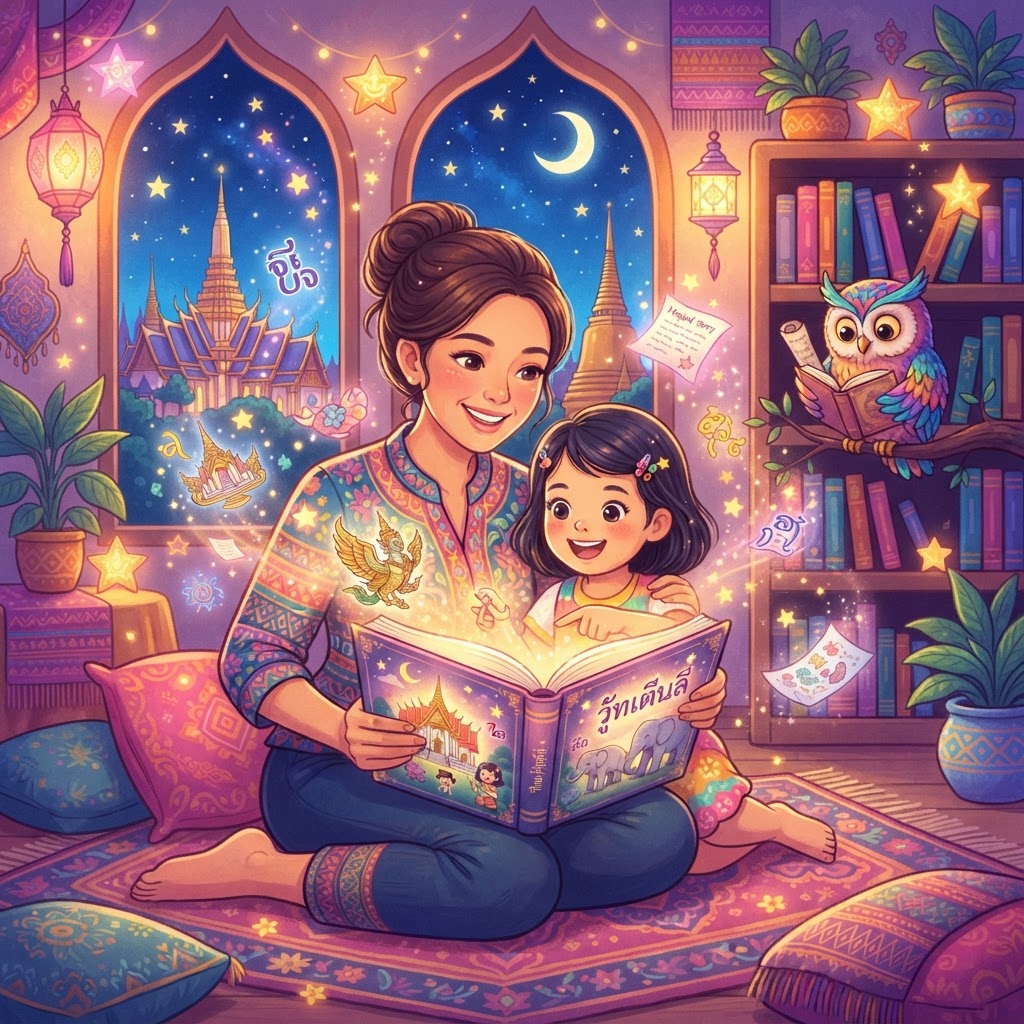
Thai stories for kids can do a lot in a few quiet minutes. They help children hear the sounds of Thai, grow their vocabulary, and feel close to family, culture, and routine. For bilingual families, heritage learners, and parents raising curious language learners, gentle stories in Thai can turn bedtime into both a bonding ritual and a learning moment.
The good news is that Thai storytelling does not need to be formal or perfect. A simple read-aloud about a child, a grandparent, a pet, or a rainy evening can be enough. If your family is exploring more than one heritage language, you may also enjoy guides to Hebrew story time and Turkish read-alouds.
Why are Thai stories for kids so valuable?
Thai stories for kids are valuable because they build language, belonging, and connection at the same time. A child who hears Thai regularly in stories is not just learning words; they are learning who speaks those words, when they are used, and why they matter.
Shared reading has strong developmental benefits. The American Academy of Pediatrics recommends reading aloud from infancy because it supports early language, attention, and parent-child bonding. That matters even more when a family wants to keep Thai present at home.
Thai bedtime stories are especially useful because they are calm, repetitive, and easy to revisit. Over time, children begin to anticipate phrases, remember key words, and join in. That repeated exposure is one of the most effective ways to build confidence in a home or heritage language.
How do stories in Thai support language learning?
Stories in Thai support language learning by giving children words in a meaningful context. Instead of memorizing isolated vocabulary, children hear Thai connected to feelings, actions, pictures, and familiar routines.
This helps in several ways:
- Vocabulary grows faster when words appear in clear story situations.
- Listening comprehension improves because children hear sentence patterns again and again.
- Pronunciation becomes more familiar through rhythm, tone, and repetition.
- Confidence increases when children can predict what comes next.
For young children, short and repetitive stories work best. Use phrases your child can echo, such as greetings, family words, animal names, colors, and bedtime expressions. It is also fine to mix Thai and English at first. Many bilingual families naturally move between languages, and that does not reduce learning.
The National Association for the Education of Young Children notes that supporting a child’s home language strengthens learning overall. In practice, that means Thai children stories are not a distraction from school readiness. They are part of it.
How do Thai children stories strengthen cultural identity?
Thai children stories strengthen cultural identity by giving children a felt sense of home. They help kids see that their family’s language, traditions, and daily life belong in books and bedtime routines.
That cultural connection can be simple and modern. Stories do not need to be grand folktales to matter. A child may feel seen when a story includes:
- a wai greeting
- a grandparent visit
- mango sticky rice or warm rice soup
- Songkran splashing and kindness
- school mornings in the rainy season
- family nicknames and familiar Thai names
For children growing up outside Thailand, these details can be deeply grounding. They preserve heritage language while also giving children a positive emotional link to Thai identity. When a child hears stories that sound like their family, they learn that Thai is not only for translation or correction. It is a language of comfort, imagination, and love.
What does research say about bilingual storytelling?
Research says bilingual storytelling is good for children, and the old idea that two languages “confuse” kids is not supported. Children can learn more than one language at once, especially when each language is tied to warm, responsive interaction.
Researchers such as Ellen Bialystok have found that bilingual experience can support aspects of executive function, such as attention control and cognitive flexibility. Just as important, home-language support protects family communication and emotional closeness.
Parents should also know that bilingual vocabulary is often distributed across languages. A child may know some words in Thai and others in English. That is normal. It does not mean they are behind.
The Harvard Center on the Developing Child emphasizes the power of back-and-forth interaction for building early brain architecture. That is one reason Thai bedtime stories are so powerful: they invite pointing, repeating, laughing, and talking together. Even ten minutes a day can make a real difference.
What are 5 Thai story ideas kids will love?
The best Thai stories for kids are familiar, comforting, and easy to repeat. If you want engaging stories in Thai, start with simple plots and warm characters.
1. Mali and the Mango Tree
A child named Mali watches a mango tree change through the seasons and learns patience while waiting for fruit to ripen. This story works well for nature words, colors, and simple time concepts.
2. The Songkran Kindness Parade
A group of children prepares for Songkran and discovers that the best splash is one that brings joy, not chaos. This is a lovely choice for teaching manners, community, and festival vocabulary.
3. Grandpa’s Floating Market Morning
A grandchild helps a grandparent at the market, counting fruit, greeting neighbors, and choosing snacks. This idea is great for numbers, food words, and everyday conversation.
4. The Little Tuk-Tuk That Kept Going
A tiny tuk-tuk gets nervous on a busy road but learns courage one turn at a time. Children love vehicle stories, and parents can weave in direction words, feelings, and problem-solving.
5. The Moon Rabbit and the Sleepy Cloud
A gentle moon rabbit helps a cloud settle down so the whole sky can sleep. This is one of the easiest Thai bedtime stories to make soothing, repetitive, and sleep-friendly.
When choosing Thai children stories, look for plots with:
- one clear problem
- repeated phrases
- familiar settings
- a calm, positive ending
How can you use InstaTales to create Thai bedtime stories?
You can use InstaTales to make Thai bedtime stories more personal, more consistent, and easier to revisit. Personalized stories often work well because children pay closer attention when they hear their own name, interests, and family details.
A simple way to start is to create your own personalized bedtime story in Thai or in bilingual Thai-English. You can also begin with ready-made story templates if you want a faster setup.
Here are practical ways to get better results:
- Ask for short sentences for younger children.
- Include your child’s name, age, and favorite themes.
- Request repetition for key Thai phrases.
- Add Thai family details, like grandparents, foods, pets, or holidays.
- Choose a calm bedtime tone if the story is for sleep.
Once you find stories your child loves, save them in your story library so you can reread favorites. Repetition is not boring for young children; it is how language sticks.
For educators, Thai stories can also support dual-language learners in class. Personalized prompts can help teachers connect literacy practice to identity, family background, and oral language skills.
Frequently Asked Questions
What age is best for Thai stories for kids?
Children can enjoy Thai stories from infancy. Babies benefit from hearing the sounds and rhythm of Thai, while older children can engage with longer plots and simple discussions.
Do I need to speak fluent Thai to use stories in Thai at home?
No. Even if your Thai is basic, you can still read short phrases, repeat keywords, and learn alongside your child. Consistency matters more than perfection.
Are Thai bedtime stories better in Thai only or bilingual format?
Both can work well. Thai-only stories give stronger immersion, while bilingual stories help children understand meaning and reduce frustration, especially at the start.
How long should Thai children stories be?
For toddlers, aim for 3-5 minutes. For preschool and early elementary children, 5-10 minutes is often enough to build routine without losing attention.
Can stories in Thai help heritage language preservation?
Yes. Regular exposure through stories helps children hear, understand, and value Thai in everyday life. That emotional connection is a big part of long-term heritage language maintenance.
Ready to Create a Personalized Bedtime Story?
Use our free AI bedtime story generator to create a personalized illustrated story for your child in 30 seconds — no credit card needed.
Popular story types:
Maya Rodriguez
Lead Content Editor & Early Literacy Specialist
Maya is a former early childhood educator and literacy specialist with over a decade of experience helping children develop a love of reading. She leads content at InstaTales, where she writes about the science of storytelling, child development, and how families can use personalized AI stories to build literacy and emotional resilience.
instatales.ai