Future of AI Storytelling for Kids: What’s Next?
Where is AI storytelling heading? A thoughtful look at the future of personalized stories, voice technology, and interactive narratives for kids.
✦ Key Takeaways
- •The short answer is this: AI stories will become more personalized, interactive, and multimodal.
- •Voice technology is getting attention because it can make stories feel more comforting, immersive, and accessible.
- •Interactive narratives could make story time more active, but only if the interaction supports thinking rather than constant stimulation.
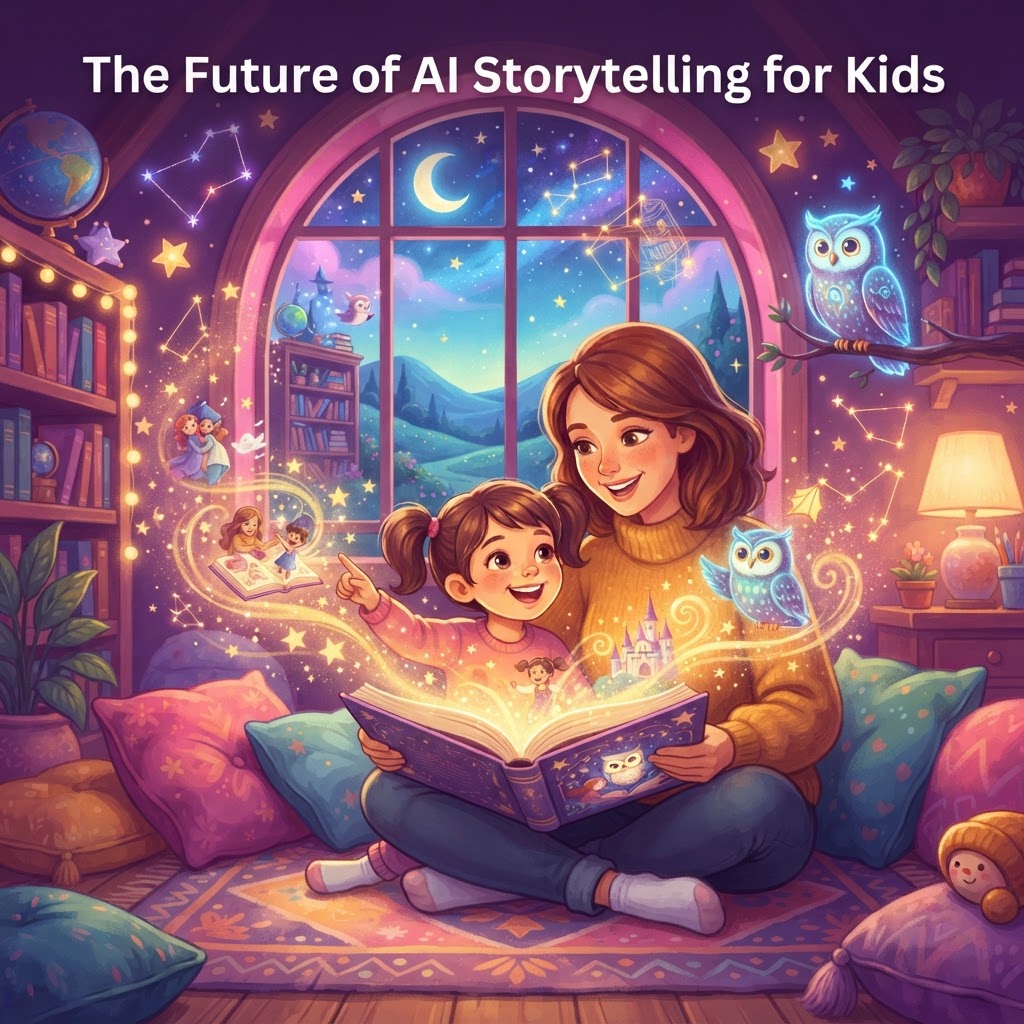
Story time is changing fast. The future of AI storytelling for children is no longer just about generating a simple bedtime tale—it is moving toward stories that can listen, respond, adapt, and even grow with a child over time.
For parents and educators, that is both exciting and complicated. The best parts of the ai stories future could make reading more personal, accessible, and engaging. The harder part is making sure next generation storytelling supports real child development instead of replacing the human connection children need most.
What will the future of AI storytelling look like for kids?
The short answer is this: AI stories will become more personalized, interactive, and multimodal. Instead of one-size-fits-all tales, children will increasingly experience stories that match their age, interests, reading level, language background, and even mood.
That matters because kids engage more deeply when stories feel relevant to them. We already see this in current personalized reading tools, and there is growing evidence that identity-based storytelling can increase attention and motivation. If you want a current example, this is one reason personalized AI stories can boost reading engagement.
In the next few years, expect AI storytelling tools to offer:
- stories that adjust vocabulary and sentence length in real time
- branching plots where children choose what happens next
- narration in familiar or expressive voices
- visual layers, including animation and augmented reality
- stronger support for bilingual and multilingual families
The opportunity is real. A child who struggles with standard reading materials may soon get a story that feels just right—challenging enough to grow, but not so hard that they give up.
Why are voice cloning and expressive narration getting so much attention?
Voice technology is getting attention because it can make stories feel more comforting, immersive, and accessible. For some children, hearing a familiar-sounding voice or a more expressive narrator can increase focus and emotional connection.
This could be especially helpful for children who enjoy routine, have emerging language skills, or need support with listening comprehension. Voice tools may also help grandparents or traveling parents stay present in story time, even when they cannot read live.
But this is where careful boundaries matter. Child development specialists often point out that a synthetic version of a parent’s voice is not the same thing as live interaction. The back-and-forth of shared reading—pausing, answering questions, laughing together—is a key part of language growth. The Harvard Center on the Developing Child describes these responsive exchanges as “serve and return,” and they are central to healthy brain development.
A thoughtful future use of voice AI would be:
- supporting story access when a caregiver is unavailable
- helping children hear clear pronunciation and expressive reading
- offering read-aloud options for children with dyslexia or other reading differences
A less healthy use would be letting voice-cloned stories replace shared human reading every night.
How could interactive narratives change story time?
Interactive narratives could make story time more active, but only if the interaction supports thinking rather than constant stimulation. The best versions will invite children to predict, choose, remember, and reflect—not just tap buttons.
This is promising because strong reading development depends on active meaning-making. In traditional read-alouds, adults ask questions like “What do you think happens next?” or “Why is the character sad?” Good AI can potentially support similar habits through guided prompts and branching choices.
That could benefit:
- reluctant readers who need extra motivation
- elementary-age children practicing comprehension
- classrooms using digital literacy tools through programs like InstaTales for teachers
- children who love imaginative play and decision-making
Still, not all interactivity is equal. If every page demands a click, swipe, or sound effect, the child’s attention may shift away from the story itself. The American Academy of Pediatrics has repeatedly emphasized that media quality matters more than novelty alone, especially for young children.
The goal is not “more features.” The goal is richer engagement with characters, language, and ideas.
What role will AR stories and visual storytelling play?
AR stories will likely become a bigger part of children’s media because they can blend imagination with physical space. In simple terms, augmented reality can make story elements appear in the room, on a page, or around the child through a device.
For some children, that can deepen understanding. A dragon flying over the bed or a rainforest growing beside the book may help visual learners connect with a narrative world. High-quality visuals can also support vocabulary learning and emotional understanding.
That said, visuals should support the story—not overwhelm it. When every story becomes a spectacle, children may have less practice building mental imagery on their own. That matters because imagination is a core literacy skill.
Parents should also remember that children do not need constant visual intensity to love stories. Sometimes the strongest storytelling comes from a well-told sentence and a child’s own mind. If you are curious how visuals fit into this space, this look at AI-generated illustrations gives useful context.
How can adaptive reading levels support literacy?
Adaptive reading levels may become one of the most genuinely useful parts of the future of AI storytelling. When used well, they can help children practice reading with text that matches their current ability while still feeling fun and personal.
This matters because children grow at very different rates. One six-year-old may still need simple repeated phrases, while another is ready for longer chapters and richer vocabulary. AI can respond to that difference faster than many static books can.
Useful adaptive features may include:
- shorter sentences for emerging readers
- more repetition for toddlers and preschoolers
- built-in word explanations for early elementary readers
- gradual increases in sentence complexity over time
- support in more than one language for bilingual families
For multilingual households, this could be especially powerful. A child might hear a story in English one night and revisit it with home-language support the next. That is one reason many families are exploring multilingual AI story tools.
Research from the National Institute of Child Health and Human Development continues to show that regular reading practice, vocabulary exposure, and read-aloud time all support literacy. Adaptive AI can help deliver more of that practice—but it works best when an adult is still nearby to encourage, explain, and enjoy the story too.
What worries child development specialists about the ai stories future?
Experts are excited about access and personalization, but they also have real concerns. The biggest worries are overuse, weak content quality, privacy risks, bias, and reduced human interaction.
Here is why those concerns matter:
- Too much passive use: If AI stories become a babysitter instead of a reading tool, children may lose valuable conversation time.
- Data privacy: Personalized systems may collect voice data, preferences, and behavioral patterns. Parents should know what is stored and why.
- Bias and stereotypes: AI systems learn from existing content, which can reproduce narrow or harmful representations.
- Emotional confusion: Young children may not fully understand the difference between a human relationship and a responsive machine.
- Shallow storytelling: Fast generation does not always equal meaningful narrative quality.
Organizations such as NAEYC stress that technology for young children should be active, engaging, meaningful, and socially interactive. That is a helpful test for any story app, platform, or device.
In other words, the ai stories future is not just about what AI can do. It is about what children actually need.
How can parents prepare for next generation storytelling at home?
Parents do not need to fear AI storytelling, but they do need a plan. The best approach is to treat AI stories as a tool for shared reading, not a replacement for family connection.
A practical starting point looks like this:
- Choose platforms that let you review stories before or during use.
- Prefer tools that match your child’s age and reading level.
- Keep co-reading in the routine, especially for younger children.
- Ask simple questions during or after the story: “What was your favorite part?” or “How did that character feel?”
- Watch for signs of overstimulation, dependence, or reduced interest in regular books.
- Check privacy settings and data policies before using voice-based features.
It also helps to build healthy habits around reuse and reflection. Re-reading familiar stories supports memory, language, and confidence. Saving favorites in your story library can make it easier for children to revisit beloved characters rather than always chasing novelty.
Most importantly, stay involved. If you ever create your own personalized bedtime story, think of it as the start of a conversation, not the end product. The real magic still happens when a child feels seen, heard, and connected.
The next generation storytelling tools will probably be smarter than anything we have now. But the children who benefit most will still be the ones with adults who guide, question, laugh, and wonder alongside them.
Frequently Asked Questions
Will AI storytelling replace bedtime reading with parents?
Probably not, and it should not. AI can support story time, but live reading and conversation are still more valuable for attachment, language, and emotional development.
Is voice cloning safe for children’s stories?
It can be useful, but families should be cautious. Parents should check consent, privacy policies, and whether the feature supports connection rather than replacing it.
Are interactive AI stories better than regular books?
Not automatically. Interactive stories can be helpful when they deepen comprehension and engagement, but traditional books remain excellent for focus, imagination, and shared reading.
At what age can children use AI story tools?
That depends on the child and the tool. Younger children benefit most when an adult uses the story with them, while older children may use adaptive reading features more independently.
Can AI stories help struggling readers?
Yes, they can. Adjustable reading levels, audio support, and personalized topics may help some children practice more willingly and successfully.
What should parents look for in the best AI story platforms?
Look for age-appropriate content, strong privacy practices, flexible reading levels, and tools that encourage co-reading. Quality matters more than flashy features.
Get a new bedtime story every week
Free, personalized, and delivered to your inbox. No spam, ever.
Ready to Create a Personalized Bedtime Story?
Use our free AI bedtime story generator to create a personalized illustrated story for your child in 30 seconds — no credit card needed.
Popular story types:
Maya Rodriguez
Lead Content Editor & Early Literacy Specialist
Maya is a former early childhood educator and literacy specialist with over a decade of experience helping children develop a love of reading. She leads content at InstaTales, where she writes about the science of storytelling, child development, and how families can use personalized AI stories to build literacy and emotional resilience.
instatales.ai