Third Grade Art Stories That Make Learning Stick
Make art engaging for third grade students with stories. Practical strategies, story ideas, and classroom activities for teachers.
✦ Key Takeaways
- •Stories help third graders remember, imagine, and explain their learning.
- •A strong story-based art lesson includes a clear art objective, a short narrative hook, and time for student choice.
- •The best third grade art activities use story elements to teach a specific art skill.
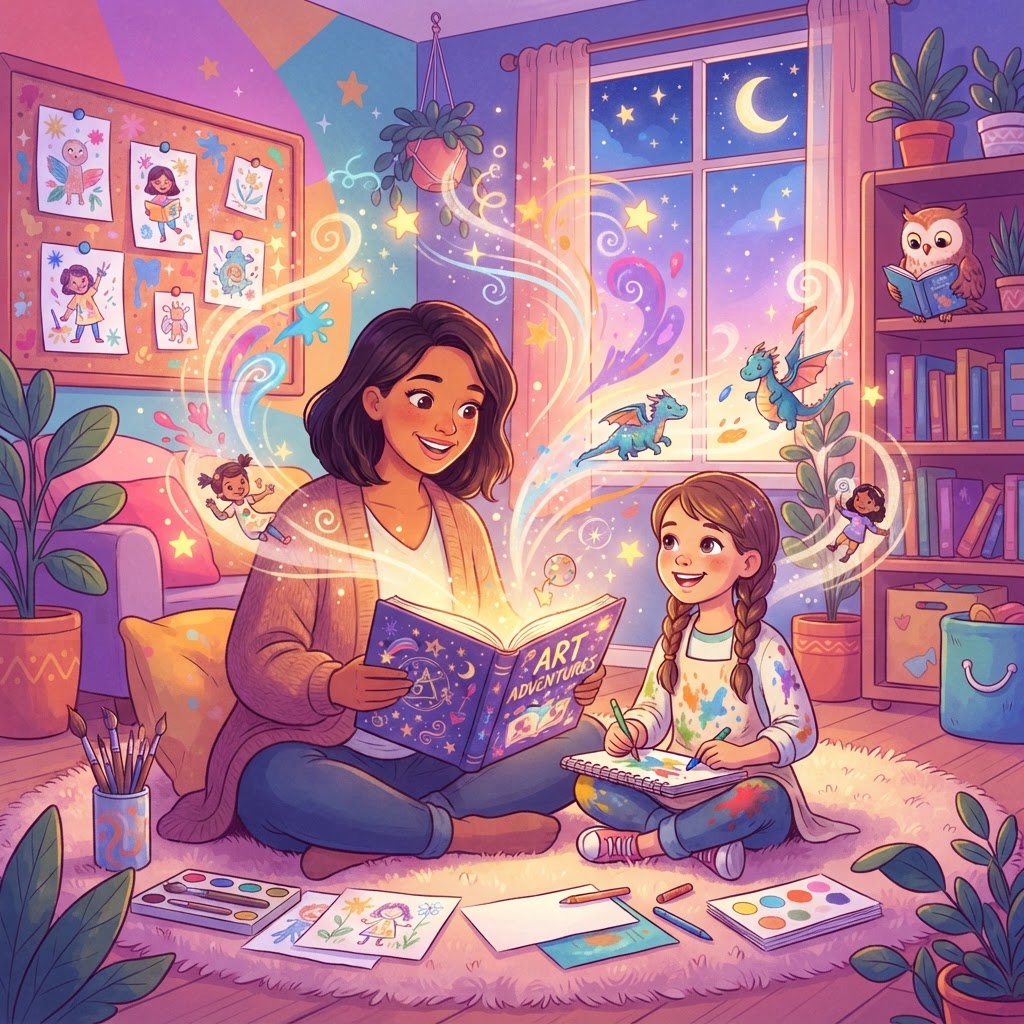
Third graders are ready for more than “make and decorate” art lessons. They can connect images to ideas, explain their choices, and use visual elements to tell meaning-rich stories. That is why third grade art stories work so well: they give students a reason to create, not just a prompt to copy.
For teachers, teaching art with stories can also make planning easier. A strong narrative gives you a built-in hook, clear vocabulary, and natural links to reading, speaking, and writing. If you already use stories across the curriculum, you may also enjoy pairing art with story-based writing instruction for third graders or third grade science lessons with stories.
Why do stories work so well in third grade art?
Stories help third graders remember, imagine, and explain their learning. In art, that means students are more likely to understand why they are using color, line, texture, or shape, not just how.
Research supports this approach. Jerome Bruner’s work on narrative suggests that children make sense of experience through story, and Allan Paivio’s dual coding theory shows that combining words and images supports memory. In practical classroom terms, when students hear a story and then create art from it, they are processing ideas in more than one way. That is especially helpful for eight- and nine-year-olds, who are still building abstract thinking.
Arts-based learning also supports engagement and reflection. Project Zero at Harvard has long highlighted how the arts deepen thinking through observation, interpretation, and discussion, while the National Art Education Association emphasizes meaning-making and student voice in visual art learning. For evidence-based teaching practices more broadly, many schools also look to the Institute of Education Sciences.
In a third grade classroom, art stories for third grade can help students:
- visualize a concept before they draw or build
- connect emotion to artistic choices
- practice sequencing, vocabulary, and oral language
- develop empathy by seeing from another perspective
- stay engaged longer during studio work
That is why stories are not an “extra.” They are a strong instructional tool for helping children create purposeful art.
What does a strong story-based third grade art lesson include?
A strong story-based art lesson includes a clear art objective, a short narrative hook, and time for student choice. The story should support the art concept, not replace it.
A simple structure works well:
- Start with a focused story: read aloud, retell, or create a quick class story.
- Name the art goal: for example, “Today we will use warm and cool colors to show mood.”
- Model one artistic decision: show how an illustrator might change lines, shapes, or colors.
- Give students room to create: let them interpret the story in their own way.
- End with reflection: ask, “Which part of the story did your art show best?”
Keep the story short enough that it leaves energy for making. Third graders do best when the narrative has a strong problem, vivid setting, or memorable character. If you want ideas that build from earlier grades, you can also look at second grade art storytelling ideas.
Which third grade art activities work best with stories?
The best third grade art activities use story elements to teach a specific art skill. Below are five reliable options that work in most classrooms.
1. Mood paintings from a character’s problem
Read a short story scene where a character feels worried, excited, brave, or calm. Then have students paint the same setting twice using different color choices to show different moods.
This activity teaches:
- warm and cool colors
- value and contrast
- emotion in visual art
Ask students to explain how their colors changed the feeling of the scene. That reflection is where much of the learning happens.
2. Setting collages with foreground, middle ground, and background
Stories are perfect for teaching space. After reading a story with a vivid location, students create a torn-paper or cut-paper collage showing the setting in layers.
This activity teaches:
- spatial awareness
- size and placement
- landscape composition
A simple prompt might be: “Show where the story begins, and make sure I can tell what is close, far away, and in between.” These art stories for third grade help students move beyond flat pictures.
3. Texture treasure maps
Create a short adventure story about a hidden treasure, a jungle path, or a mountain rescue. Students then make a map using crayon rubbings, stamped textures, or textured drawing tools to show forests, rivers, rocks, and paths.
This activity teaches:
- texture
- symbols
- visual communication
It is especially effective for active learners because the process is hands-on and exploratory. You can also extend it with map vocabulary from social studies.
4. Recycled-material character sculptures
Tell a story about a character who needs a tool, costume, or vehicle to solve a problem. Students build that character or object from cardboard, foil, paper tubes, and other clean recycled materials.
This activity teaches:
- form
- construction
- problem-solving in 3D art
The strongest results come when you ask one guiding question: “What does your sculpture need to show about the character?” That keeps the focus on meaning, not just decoration.
5. Story quilts or patterned panels
After reading a folktale, family story, or class-generated narrative, students divide the plot into squares or panels. Each section shows one event using repeated patterns, symbols, and simple shapes.
This activity teaches:
- pattern
- sequencing
- symbolic imagery
It also creates an easy display piece for the hallway. If you are building cross-curricular units, these projects pair nicely with story-centered reading lessons for third graders.
How can you differentiate art stories for third grade learners?
Differentiation works best when you adjust the entry point, not the creative goal. All students can respond to the same story, but they may need different supports to show understanding.
Try these practical moves:
- For emerging readers or multilingual learners: use picture-heavy stories, act out key verbs, and preteach 3-5 art words such as line, texture, and background.
- For students who struggle with open-ended tasks: offer two choices instead of unlimited choices, such as “paint the beginning or the ending.”
- For advanced artists: add a challenge like multiple perspectives, mixed media, or a written artist statement.
- For students with sensory needs: provide options in materials, such as markers instead of paint or paper sculpture instead of clay.
- For reluctant writers: allow oral reflection, partner talk, or sentence stems like “I used jagged lines because…”
The goal is not to simplify the lesson into a craft. The goal is to help every child access the same core idea through the right level of support.
How can InstaTales support third grade art lessons?
InstaTales can help teachers create custom stories that fit a specific art objective in minutes. Instead of searching for the perfect read-aloud, you can build one around color, texture, folk art, landscapes, or character design.
For example, you might generate a story about:
- a fox who paints with warm and cool colors
- a city made entirely of patterns
- a young explorer who follows textured clues
- a dragon whose feelings change the sky
Teachers can use InstaTales for teachers to support classroom planning, small groups, enrichment, or centers. If you want a fast starting point, browse the story templates and adapt a prompt to match your art standard. Once you create a class set of stories, save them in your story library so you can reuse them for future units, sub plans, or early finisher work.
This is also a strong option for integrated learning. A student might read a custom story, create artwork from it, and then write a short artist reflection. If you want more examples of story-based teaching across subjects, the InstaTales blog has additional classroom ideas.
Frequently Asked Questions
What are the best kinds of stories for third grade art?
The best stories have a clear character, a vivid setting, and one strong problem or feeling. Short narratives with rich imagery give students enough structure to create without overwhelming them.
How long should a story-based art lesson take?
Most lessons work well in 30-60 minutes, depending on the materials. Keep the story hook brief, teach one art objective clearly, and leave enough time for making and sharing.
Can teaching art with stories support literacy too?
Yes. Story-based art builds vocabulary, sequencing, oral language, and comprehension while students are also learning visual art concepts. That makes it a useful choice for integrated instruction.
Do third grade art stories work for students with different skill levels?
Yes, because the same story can be accessed in different ways. Teachers can vary materials, modeling, prompts, and reflection options while keeping the main art goal the same.
How do I assess story-based art activities?
Use a simple rubric that checks the art objective, connection to the story, and student explanation. A short reflection or exit ticket often reveals understanding better than the finished product alone.
Can I use InstaTales for classroom art centers?
Yes. Teachers can generate short custom stories for independent stations, partner work, or early finishers, then save and organize them for reuse. That makes planning more efficient while keeping activities fresh.
Get a new bedtime story every week
Free, personalized, and delivered to your inbox. No spam, ever.
Ready to Create a Personalized Bedtime Story?
Use our free AI bedtime story generator to create a personalized illustrated story for your child in 30 seconds — no credit card needed.
Popular story types:
Maya Rodriguez
Lead Content Editor & Early Literacy Specialist
Maya is a former early childhood educator and literacy specialist with over a decade of experience helping children develop a love of reading. She leads content at InstaTales, where she writes about the science of storytelling, child development, and how families can use personalized AI stories to build literacy and emotional resilience.
instatales.ai