Third Grade Science Stories That Make Learning Stick
Make science engaging for third grade students with stories. Practical strategies, story ideas, and classroom activities for teachers.
✦ Key Takeaways
- •Stories help third graders learn science because narrative gives facts a structure.
- •A good third grade science story is accurate, clear, and built around a real science idea.
- •The best story-based science activities for third grade combine narrative with hands-on investigation.
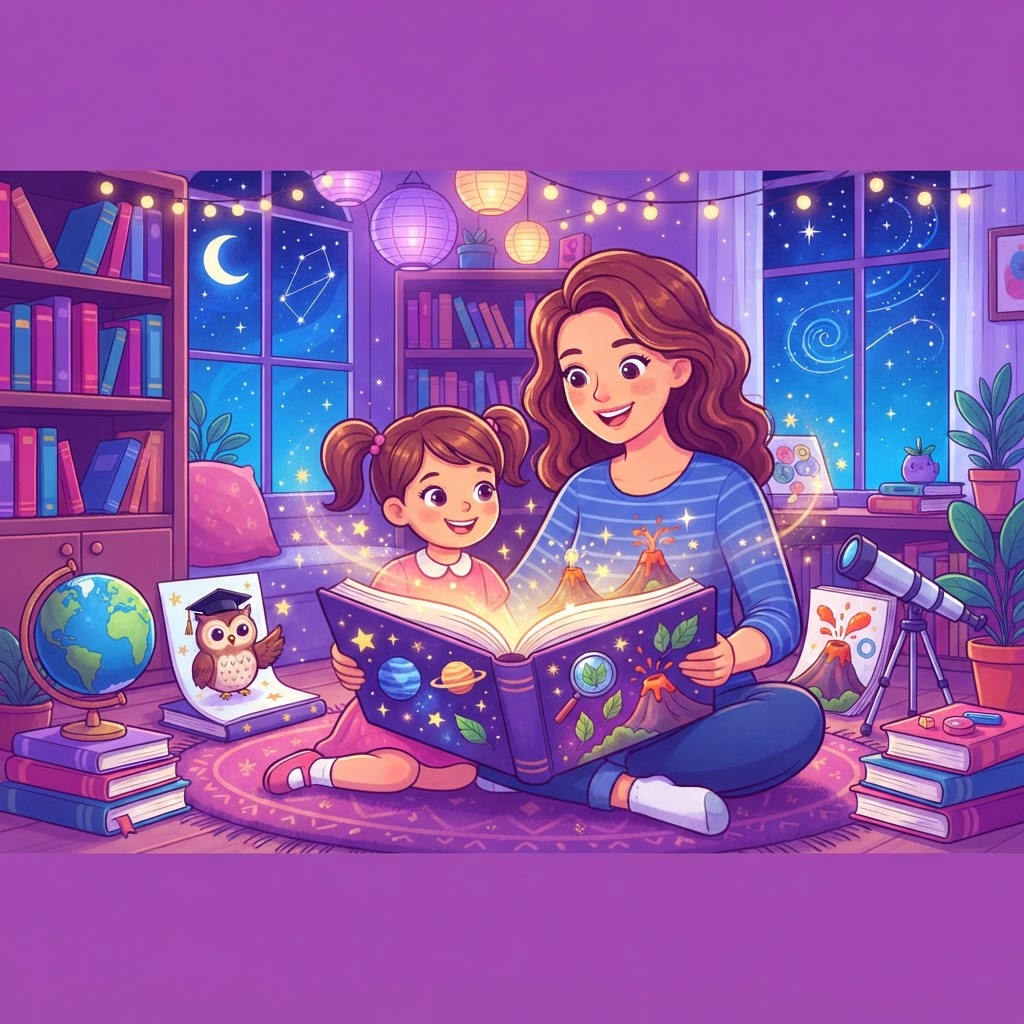
Third graders are ready for bigger scientific ideas, but they still learn best through concrete, memorable experiences. That is why third grade science stories work so well: stories turn abstract concepts like life cycles, weather patterns, force, and habitats into something children can picture, discuss, and remember.
For teachers, teaching science with stories is not about replacing experiments or standards-based lessons. It is about giving students a meaningful context for vocabulary, observations, and inquiry. When a class follows a seed on its journey to become a plant or a water droplet moving through the water cycle, science becomes easier to understand, easier to talk about, and much more engaging.
Why do stories help third graders learn science?
Stories help third graders learn science because narrative gives facts a structure. Instead of hearing isolated information, students follow a sequence of events, causes, and changes over time.
This matters in third grade. At this age, many students are developing stronger reading comprehension, better memory strategies, and a growing ability to explain their thinking. A story supports all three. Research discussed by the Harvard Graduate School of Education shows that meaningful, connected learning experiences improve understanding and recall. In science, that means students are more likely to remember concepts when they are tied to characters, problems, and outcomes.
Stories also support language development. According to the National Science Teaching Association, science learning improves when students regularly talk, read, write, and reason about ideas. Narrative naturally builds those opportunities. Students can predict what happens next, explain cause and effect, and use new science vocabulary in context.
For teachers, the big benefit is simple: science stories for third grade make content more accessible without lowering rigor. Students still investigate, observe, and collect evidence. The story just gives them a stronger entry point.
What makes a good third grade science story?
A good third grade science story is accurate, clear, and built around a real science idea. It should simplify the concept without turning science into pure fantasy or introducing misconceptions.
The strongest stories usually include:
- A relatable main character, such as a child, animal, raindrop, rock, or seed
- One clear science focus, like adaptation, erosion, magnets, or plant growth
- A problem or question that drives curiosity
- Accurate vocabulary used in context
- A sequence that mirrors a scientific process or change over time
For example, a story about a backyard bird looking for food can introduce habitats, adaptations, and food chains. A story about a flashlight beam traveling through a dark room can support lessons on light and shadows. These are ideal third grade science activities because they connect literacy with observation and discussion.
If you also use stories in literacy instruction, you may find helpful overlap with third grade reading through stories and third grade writing with story prompts. The same narrative tools that build comprehension can strengthen science understanding too.
Which story-based science activities work best in third grade?
The best story-based science activities for third grade combine narrative with hands-on investigation. Start with a story, then move students into questioning, observing, recording, and explaining.
1. Can you introduce a science unit with a concept story?
Yes, and it is one of the easiest ways to launch a unit. Begin with a short story that introduces the core phenomenon, such as a puddle disappearing, a plant bending toward sunlight, or a bridge that must hold weight.
After reading, ask:
- What happened in the story?
- What science idea might explain it?
- What do we still wonder?
This works especially well for units aligned with the Next Generation Science Standards, which emphasize phenomena, questioning, and explanation.
2. Can students act out a science process?
Yes. Role-play helps students remember sequences and systems. In third grade, this is especially useful for cycles and interactions.
Try:
- Acting out the water cycle as droplets moving through evaporation, condensation, and precipitation
- Creating a food chain drama with producers, consumers, and predators
- Modeling pollination with student “bees” and paper flowers
These science stories for third grade become active learning experiences, not just read-alouds.
3. Can a class build a story after an experiment?
Absolutely. After an investigation, ask students to turn the results into a simple explanatory story. This helps them connect evidence to scientific reasoning.
For example, after testing which materials are magnetic, students might write: “Milo the Magnet was looking for objects to pick up. He discovered that some metals stuck to him, but plastic and wood did not.” That short narrative reinforces vocabulary while keeping the science accurate.
4. Can story maps support science notebooks?
Yes, and they work very well for third graders who need structure. A story map can double as a science thinking tool.
Use these categories:
- Setting: Where does the science happen?
- Characters: What living thing, object, or force is involved?
- Problem: What needs to be explained?
- Events: What happens in order?
- Solution: What science idea explains the outcome?
This is a simple bridge between literacy and third grade science activities.
5. Can students create science stories of their own?
Yes, and student-created stories are often the most powerful option. When children explain a concept through narrative, you can quickly see what they understand and where misconceptions remain.
You might have students create:
- A comic about erosion changing a landscape
- A diary entry from a growing seed
- A short digital story about an animal surviving in its habitat
If you want younger-grade scaffolds before moving into third grade, it can help to look at second grade science story ideas for simpler models.
How can you differentiate science stories for third grade learners?
Differentiation works best when you adjust the language, output, and support level without changing the core science idea. In other words, all students can learn the same concept through story, but not every student needs the same text or task.
Here are practical ways to differentiate:
- For emerging readers: Use shorter stories, repeated sentence frames, and strong visuals.
- For multilingual learners: Preteach key vocabulary with pictures and gestures, then revisit words during and after the story.
- For advanced students: Ask for deeper cause-and-effect explanations, multiple perspectives, or a comparison between two science ideas.
- For students who need writing support: Offer comic strips, oral storytelling, labeled diagrams, or sentence starters.
- For students with attention or processing needs: Break the story into chunks and pause for quick checks, sketching, or partner talk.
This is one reason teaching science with stories is so effective. Stories are naturally flexible. One class can listen to the same core narrative while completing different follow-up tasks based on readiness and support needs.
How can teachers use InstaTales in third grade science lessons?
Teachers can use InstaTales to quickly create customized science narratives that match their unit, vocabulary, and student interests. Instead of spending hours writing from scratch, you can generate a story that fits your exact lesson goal.
For example, you might create a story about:
- a raindrop moving through the water cycle
- a rabbit adapting to its habitat
- a seed trying to find the right conditions to grow
- a young engineer testing forces and motion
With InstaTales for teachers, educators can build story-based science lessons that feel personal and standards-friendly. You can also use story templates to save planning time, then create your own personalized bedtime story or classroom story around the science concept you are teaching.
A practical classroom routine might look like this:
- Generate a short science story before the lesson
- Read it aloud as the hook
- Highlight target vocabulary
- Move into the hands-on investigation
- Have students retell or revise the story using evidence from the experiment
This approach also supports cross-curricular instruction. A science narrative can lead into writing, discussion, partner reading, or notebook work. If you want to save and revisit student favorites across a unit, storing them in your story library makes re-reading easy.
For many classrooms, the real advantage is responsiveness. If your students are especially interested in storms, insects, or space, you can create relevant science stories for third grade on demand instead of settling for generic examples.
Frequently Asked Questions
What science topics work best with third grade science stories?
Life cycles, habitats, weather, forces, light, and plant growth work especially well. These topics involve change, cause and effect, and observable processes, which fit naturally into story form.
Can stories replace experiments in science?
No. Stories work best as a support for investigation, not a substitute for it. Use them to introduce concepts, build vocabulary, and help students explain what they observed.
How long should a science story be for third graders?
For most classroom use, 300 to 700 words is enough. It should be long enough to develop the idea, but short enough to leave time for discussion and hands-on learning.
How do I keep science stories accurate?
Focus on one clear concept, use correct vocabulary, and avoid fantasy elements that confuse the science. After reading, connect the story back to real-world observation, diagrams, or experiments.
Can I use AI-generated stories for science class?
Yes, if you review them carefully for accuracy, vocabulary, and grade-level fit. Tools like InstaTales for teachers are most useful when teachers guide the prompt and connect the story directly to the lesson objective.
Get a new bedtime story every week
Free, personalized, and delivered to your inbox. No spam, ever.
Ready to Create a Personalized Bedtime Story?
Use our free AI bedtime story generator to create a personalized illustrated story for your child in 30 seconds — no credit card needed.
Popular story types:
Maya Rodriguez
Lead Content Editor & Early Literacy Specialist
Maya is a former early childhood educator and literacy specialist with over a decade of experience helping children develop a love of reading. She leads content at InstaTales, where she writes about the science of storytelling, child development, and how families can use personalized AI stories to build literacy and emotional resilience.
instatales.ai