Great Stories for 1 Year Olds: What Works Best?
Not sure what makes a story great for a 1-year-old? This guide covers the themes, length, and elements that captivate kids at this age.
✦ Key Takeaways
- •1-year-olds respond best to short, simple stories because their attention span is still developing.
- •The ideal story length for a 1-year-old is usually 2 to 5 minutes.
- •The best themes for 1 year old stories are familiar, sensory, and emotionally safe.
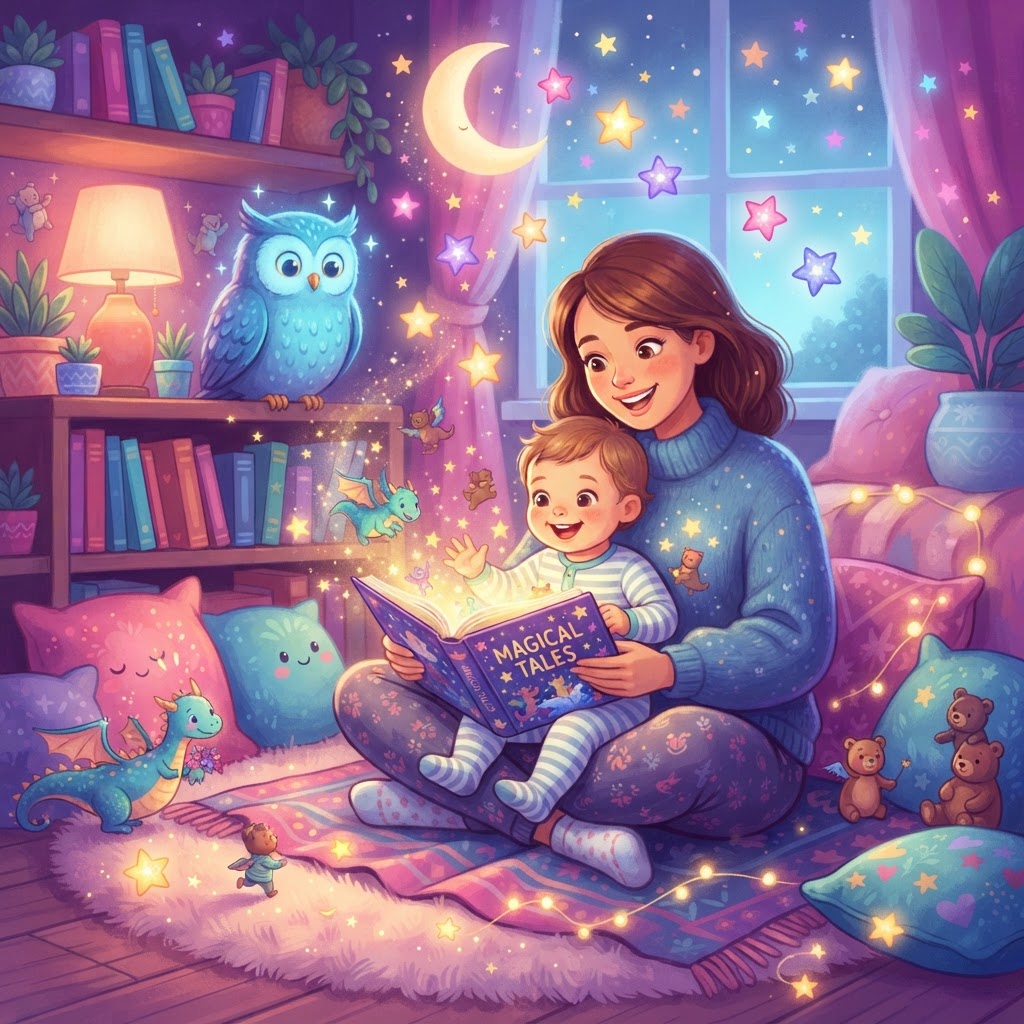
If you are wondering what makes great stories for 1 year olds, the short answer is this: the best stories are short, simple, warm, and repetitive. At age 1, children are not following long plots yet. They are learning through rhythm, familiar words, facial expressions, and the comfort of hearing a caring voice.
That is why choosing stories age 1 is less about “big adventures” and more about matching a baby’s development. The strongest 1 year old stories support attention, language growth, emotional security, and joyful parent-child connection. If you want a deeper look at what children this age can usually understand and enjoy, this development guide for 1-year-olds is a helpful companion.
Why do 1-year-olds respond best to short, simple stories?
1-year-olds respond best to short, simple stories because their attention span is still developing. They learn more from a few clear ideas repeated often than from a long, complex plot.
Around the first birthday, many children are beginning to recognize familiar words, point to pictures, imitate sounds, and enjoy turn-taking with an adult. The CDC developmental milestones and the American Academy of Pediatrics both emphasize the importance of early language exposure and responsive interaction.
In practical terms, that means a great story for this age usually has:
- One main idea
- One or two characters
- A clear, gentle sequence
- Lots of repetition
- A calm, satisfying ending
At this age, children are not judging a story by its clever twist. They are responding to pattern, sound, and connection. A line like “Night-night, bunny” repeated three times may be far more engaging than a detailed storyline about a castle.
How long should a story for a 1-year-old be?
The ideal story length for a 1-year-old is usually 2 to 5 minutes. That often means about 50 to 150 words, depending on pacing, repetition, and how much you pause to point or cuddle.
Some children will sit longer, especially if the story includes repeated phrases or familiar objects. But in general, shorter is better. A story that ends while your child is still happy is usually more effective than one that stretches past their attention.
A good rule of thumb is:
- For daytime reading: very short stories with playful sounds
- For bedtime: slightly slower stories with soothing repetition
- For active toddlers: stories broken into tiny scenes or pages
If your child starts pointing away, wriggling, or losing interest, that is not failure. It is feedback. Great stories for 1 year olds are designed to fit real toddler behavior, not perfect quiet listening.
What themes work best in 1 year old stories?
The best themes for 1 year old stories are familiar, sensory, and emotionally safe. Babies and young toddlers love stories about everyday life because those stories help them make sense of their world.
The most successful themes usually include things your child already knows:
- Bedtime
- Bath time
- Animals
- Family members
- Peekaboo and hide-and-seek
- Food
- Saying hello and goodbye
- Simple outdoor discoveries like birds, rain, or leaves
These themes work because they connect directly to lived experience. Research on early learning, including work from the Harvard Center on the Developing Child, shows that young children learn through repeated, responsive experiences with caring adults. Familiar stories create exactly that kind of learning moment.
If your child enjoys gentle discovery, you might also explore curiosity-themed bedtime ideas. If you want stories that model warmth and caring, kind bedtime stories for toddlers can also be a strong fit.
What kind of language should a story for age 1 use?
Stories for age 1 should use simple, concrete language with rhythm and repetition. The goal is not advanced vocabulary lists. The goal is meaningful words your child can hear, feel, and begin to predict.
The best language for this age often includes:
- Short sentences
- Everyday nouns like ball, dog, moon, mama, shoes
- Action words like clap, wave, bounce, sleep
- Sound words like woof, beep, splash, shh
- Repeated phrases like “Here comes Teddy” or “Time for bed”
For example, “Little Duck splashes. Splash, splash, splash” is excellent language for a 1-year-old. It is simple, sensory, and easy to repeat.
This does not mean you should avoid all rich language. You can still include a few beautiful words, especially if the meaning is obvious from context. But most of the story should stay grounded in words a young toddler can connect to action, objects, or feelings.
Which characters hold a 1-year-old’s attention best?
The best characters for 1-year-olds are gentle, easy to recognize, and emotionally clear. Simple animal friends, loving family figures, and familiar comfort objects often work better than large casts or quirky side characters.
Strong character choices for this age include:
- A sleepy bunny
- A cheerful puppy
- A baby bear and parent bear
- A toddler-like child exploring the day
- A blanket, toy, or moon with a soft personality
These characters are easy for young children to track. They also invite bonding and imitation. A baby may not follow a clever hero’s journey, but they can absolutely enjoy “Bunny yawns. Bunny snuggles. Bunny sleeps.”
The best characters also show one clear feeling at a time. Happy, curious, sleepy, surprised, and calm are easy to understand. Mixed motivations or sarcasm are not.
How much emotion should a story for a 1-year-old include?
Stories for 1-year-olds should include emotion, but it should be gentle, simple, and quickly resolved. Emotional content helps babies learn social cues, but intense fear or conflict can be overwhelming.
Good emotional content at this age looks like:
- A character feels sleepy and gets cozy
- A duckling feels sad for a moment, then finds Mama
- A toddler feels unsure, then waves hello
- A bear is excited to see the moon
This kind of storytelling builds emotional understanding without stress. Organizations like ZERO TO THREE have long emphasized that babies learn emotional regulation through warm, responsive relationships. Stories can support that process when they feel safe and predictable.
For bedtime especially, aim for stories that leave the child feeling secure. A tiny problem is fine. A frightening chase scene is usually not.
What are five great story concepts for 1-year-olds?
Great story concepts for 1-year-olds are simple, repetitive, and based on familiar experiences. The best ones invite pointing, sound play, cuddling, or a calm bedtime routine.
Here are five strong examples:
1. The sleepy bunny bedtime walk
A little bunny says goodnight to the moon, the tree, and the stars. Each page repeats a comforting phrase like, “Goodnight, soft moon.”
2. The splashy duck bath
A duckling splashes in the tub, finds a yellow boat, and gets wrapped in a warm towel. This works well because it mirrors a real routine.
3. The lost sock that was under the chair
A toddler looks for a sock in three easy places. It adds gentle suspense without real distress.
4. The puppy who says hello
A friendly puppy meets a bird, a cat, and a child, greeting each one with the same repeated pattern. This supports social language.
5. The little bear’s cozy blanket
A small bear snuggles a favorite blanket through wind, cuddles, and bedtime. This is especially soothing for evening reading.
All five ideas are clear, concrete, and emotionally safe. They also leave room for repetition, which is one of the most powerful tools in choosing stories age 1.
How can parents use InstaTales settings for age 1?
To use InstaTales well for age 1, keep the settings simple, soothing, and highly familiar. Start with a short length, one main character, and an everyday theme your child already knows.
When you create your own personalized bedtime story, try these choices:
- Age setting: 1 year
- Length: shortest or very short
- Theme: bedtime, animals, family, bath, or nature
- Tone: calm, cozy, gentle
- Characters: one main character, maybe two at most
- Conflict level: very low
- Language style: simple and repetitive
Good prompt ideas include:
- “A sleepy bunny saying goodnight to the moon”
- “A little duck enjoying bath time”
- “A baby bear finding a cozy blanket”
After you generate a story, feel free to simplify it even more when reading aloud. You can pause, point to pictures, add sound effects, or repeat favorite lines. That is not “changing the story wrong.” That is exactly how adults make 1 year old stories more engaging.
If your child loves hearing the same story again and again, save favorites in your story library. Re-reading is a strength at this age, not a problem. Repetition helps toddlers recognize words, anticipate patterns, and feel secure.
For more age-based ideas and examples, browsing the InstaTales blog can help you find themes that match your child’s interests and routines.
Frequently Asked Questions
What is the best length for a 1-year-old story?
Most 1-year-olds do best with stories that last about 2 to 5 minutes. Shorter stories are easier to enjoy and repeat, especially before naps or bedtime.
Are animal stories good for 1-year-olds?
Yes, animal stories are often excellent for this age. Simple animal characters are easy to recognize, emotionally clear, and fun to pair with sounds like “woof” or “quack.”
Should 1 year old stories have a plot?
Yes, but the plot should be very simple. A small sequence like “wake up, play, cuddle, sleep” is enough for this age.
Is repetition really important in stories for age 1?
Yes, repetition is one of the most helpful features in stories for this stage. Repeated words and phrases build attention, comfort, and early language recognition.
Can personalized AI stories work for a 1-year-old?
Yes, if they are kept short, gentle, and age-appropriate. The best personalized stories for this age focus on familiar routines, simple characters, and calm emotional tones.
Ready to Create a Personalized Bedtime Story?
Use our free AI bedtime story generator to create a personalized illustrated story for your child in 30 seconds — no credit card needed.
Popular story types:
Maya Rodriguez
Lead Content Editor & Early Literacy Specialist
Maya is a former early childhood educator and literacy specialist with over a decade of experience helping children develop a love of reading. She leads content at InstaTales, where she writes about the science of storytelling, child development, and how families can use personalized AI stories to build literacy and emotional resilience.
instatales.ai