Why Kids Love Legend Stories So Much
Ever wonder why your child loves legend stories? The psychology, benefits, and magic behind this beloved story type.
✦ Key Takeaways
- •Legend stories appeal to children because they sit in a sweet spot between reality and fantasy.
- •The psychology of legend stories is closely tied to how children think at different ages.
- •Legend stories often help children feel comforted, excited, and emotionally secure all at once.
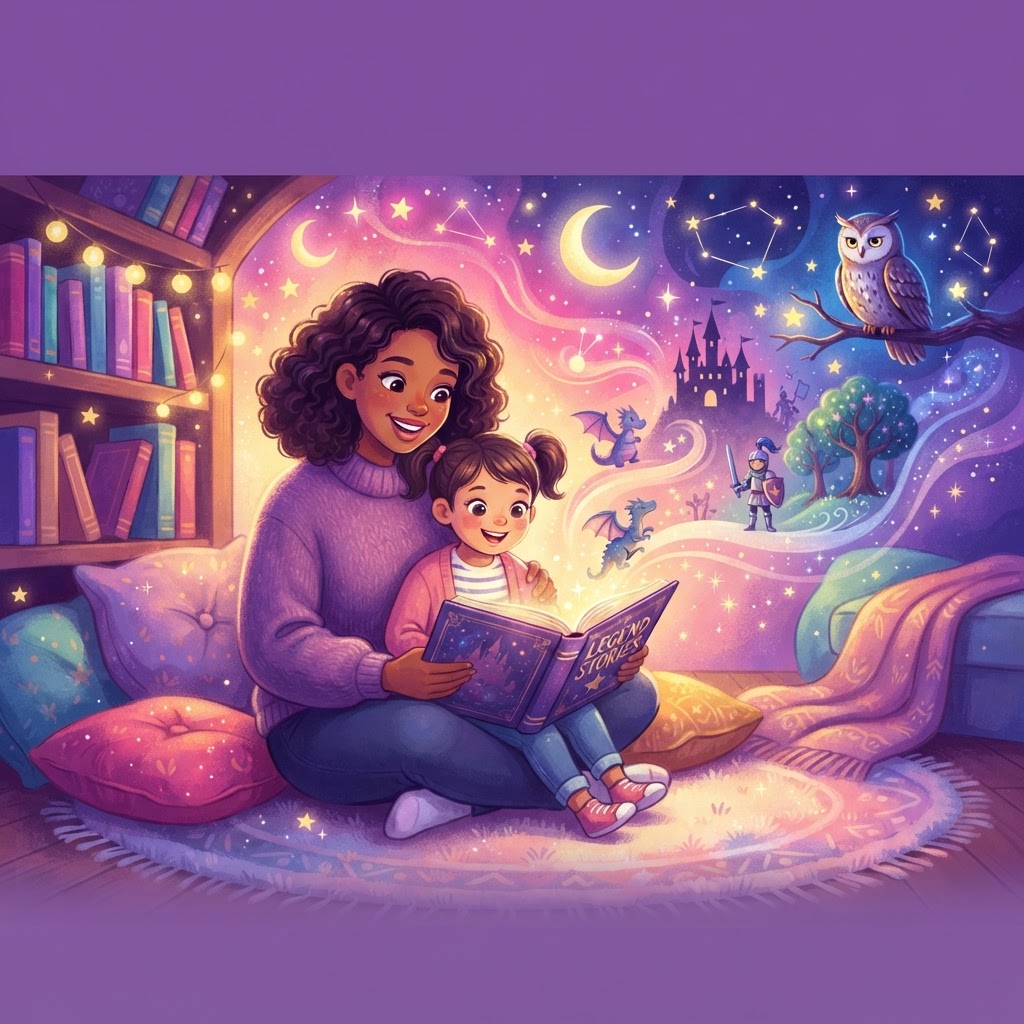
Legend stories fascinate children because they feel both possible and magical at the same time. A legend might be about a brave hero, a mysterious place, or an extraordinary event tied to the real world, and that mix is exactly what sparks young imaginations.
For parents, this raises a useful question: why do kids love legend stories so much? The answer lies in child development, emotional needs, and the way children make sense of courage, danger, and right and wrong. When used thoughtfully, legend stories can become powerful tools for bedtime, learning, and connection.
What makes legend stories so appealing to children?
Legend stories appeal to children because they sit in a sweet spot between reality and fantasy. They feel more believable than pure fantasy, but more exciting than everyday life.
A child can imagine that a hidden castle, a wise giant, or a heroic protector might have existed somewhere long ago. That “maybe this is true” feeling gives legends special power. It invites curiosity without requiring a child to fully separate fact from imagination.
This is one reason legend stories children love often become favorites for repeated reading. Legends usually include:
- A clear challenge or quest
- A memorable hero or heroine
- High stakes, but a meaningful ending
- A strong sense of place or history
Legends also often share features with myth-inspired stories, fairy tales, and fantasy adventures. But their unique appeal comes from feeling rooted in a world a child can almost reach.
How does child development explain why kids love legend stories?
The psychology of legend stories is closely tied to how children think at different ages. Young children are naturally drawn to vivid characters and dramatic events, while older children start enjoying the deeper meaning behind them.
In early childhood, many children engage in magical thinking. They are open to impossible or semi-possible events, especially when those events fit into a clear story pattern. Developmental research from the Center on the Developing Child at Harvard University shows that children learn through emotionally rich, back-and-forth experiences, and storytelling is one of the strongest forms of that learning.
By ages 5 to 8, children begin to care more about fairness, bravery, and consequences. A legend gives them a safe way to explore those ideas. By ages 8 to 10, many children also become interested in history, identity, and “what people believed long ago,” which makes legends even more compelling.
So when parents ask about legend psychology, the short answer is this: legends fit the developing child’s mind. They offer wonder for younger children and meaning for older ones.
What emotional needs do legend stories meet for children?
Legend stories often help children feel comforted, excited, and emotionally secure all at once. That may sound surprising, especially when legends include danger, but children usually enjoy that tension when it is contained within a trustworthy story structure.
A good legend says, in effect, “Something scary happened, but courage mattered. Wisdom mattered. The story had shape.” That shape is deeply reassuring for children. It helps them process big feelings in manageable ways.
Legends can support emotional development by offering:
- Comfort: familiar patterns of challenge, help, and resolution
- Excitement: suspense, mystery, and brave choices
- Security: the sense that problems can be faced
- Hope: the belief that goodness, skill, or kindness can matter
This is one reason bedtime stories work so well when they are chosen carefully. The American Academy of Pediatrics notes that shared reading supports language, relationships, and emotional growth. A legend read in a calm, connected way can help a child settle while still feeding their imagination.
If your child loves strong emotional rhythm before sleep, you may also notice overlap with the soothing pattern found in gentle lullaby-style stories.
How do legend stories help children understand right and wrong?
Legends help children explore morality because they usually present clear choices, meaningful consequences, and admirable traits. Children do not just enjoy the action; they study the values inside the action.
In many legends, the hero must choose between courage and fear, honesty and selfishness, loyalty and betrayal. These contrasts are easy for children to follow. They give kids a mental map for understanding behavior.
This matters because moral development grows through examples, discussion, and repetition. Organizations like the National Association for the Education of Young Children have long emphasized that stories help children make sense of social rules, emotions, and relationships.
Legends are especially useful because they do not feel like lectures. Instead, they let children ask:
- Why was that choice brave?
- Was the character fair?
- What would I have done?
- Did the ending feel just?
For some families, legends work well alongside fable-style stories, which often deliver a more direct moral lesson. Legends tend to be less explicit, which can make them richer for conversation.
Why do legend stories feel so exciting without overwhelming children?
Legends are exciting because they create danger with distance. Children can feel the thrill of risk while staying safe in the arms of a parent, a classroom routine, or a familiar bedtime ritual.
Most effective children’s legends include just enough uncertainty to hold attention. The hero may travel into a dark forest, face a monster, or uncover a secret. But the story also signals that meaning will emerge. That balance helps children practice emotional regulation.
Research on shared reading consistently shows that adult guidance matters. When a parent pauses, explains, or softens intense moments, the child can enjoy the stimulation without becoming flooded. This is part of why reading together is more supportive than simply handing over any dramatic story.
If you want that balance, it helps to:
- Match the story’s intensity to your child’s age and temperament
- Pause to name feelings: “That part feels tense, doesn’t it?”
- Reassure younger children when needed
- End with a calm reflection or cuddle
That mix of excitement and safety is a major reason legend stories appeal so strongly across childhood.
How can parents and teachers use legend stories effectively?
The best way to use legend stories is to make them interactive, age-appropriate, and personally meaningful. A legend becomes much more valuable when a child can respond to it, not just listen passively.
At home, try asking simple questions after the story: “Who was brave?” “What part felt mysterious?” “What would you have done?” In classrooms, legends can support history units, character education, and creative writing. Teachers can adapt them for different reading levels and discussion goals, which is why many educators use tools like InstaTales for teachers to tailor stories for their students.
Parents can also personalize a child’s experience by using story templates or choosing to create your own personalized bedtime story with familiar settings, gentler pacing, or a hero who resembles the child. This can be especially helpful for children who love the structure of legends but need less intensity or more emotional reassurance.
To make legends work well, keep these practical guidelines in mind:
- Choose simpler legends for ages 3 to 5
- Focus on courage, kindness, and problem-solving for ages 5 to 8
- Introduce cultural and historical context for ages 8 to 10
- Re-read favorites, because repetition deepens understanding
- Save beloved stories in your story library for easy revisit and comparison
When children return to the same legend again and again, they are not “stuck.” They are practicing comprehension, emotional mastery, and identity-building.
What should parents remember about why kids love legend stories?
Kids love legend stories because legends meet real developmental needs. They offer wonder, structure, emotional safety, and moral clarity in one memorable package.
From a child development perspective, legends help children imagine boldly while also organizing big ideas about bravery, danger, fairness, and belonging. From a family perspective, they create rich opportunities for closeness and conversation.
If your child keeps asking for the same hero, the same mysterious place, or the same brave ending, that is not random. It is a sign that the story is doing important work. And if you want more guidance on choosing story types for different ages and moods, you can explore more resources on the InstaTales blog.
Frequently Asked Questions
Why do children like legend stories more than realistic stories?
Many children enjoy legends because they combine real-world settings with extraordinary events. That makes the story feel believable enough to enter, but magical enough to stay exciting.
Are legend stories good for child development?
Yes, when they are age-appropriate, legend stories can support language, imagination, emotional understanding, and moral reasoning. They also create strong opportunities for parent-child discussion.
What age are legend stories best for?
Legend stories can work from preschool through age 10, but the content should match the child’s stage. Younger children usually need simpler plots and gentler tension, while older children can handle more complexity and cultural context.
Can legend stories be used at bedtime?
Yes, many legend stories work well at bedtime if they are not too intense. Choose stories with reassuring endings, a calm reading pace, and time for questions afterward.
How are legend stories different from myths and fables?
Legends usually feel tied to a real place, person, or event, even if the details are exaggerated. Myths often explain origins or gods, while fables are shorter stories built around a clear moral lesson.
How can I make legend stories feel more personal for my child?
You can personalize names, settings, or the type of adventure so the story feels familiar and engaging. Children often connect more deeply when the hero reflects their interests, worries, or everyday world.
Get a new bedtime story every week
Free, personalized, and delivered to your inbox. No spam, ever.
Ready to Create a Personalized Bedtime Story?
Use our free AI bedtime story generator to create a personalized illustrated story for your child in 30 seconds — no credit card needed.
Popular story types:
Maya Rodriguez
Lead Content Editor & Early Literacy Specialist
Maya is a former early childhood educator and literacy specialist with over a decade of experience helping children develop a love of reading. She leads content at InstaTales, where she writes about the science of storytelling, child development, and how families can use personalized AI stories to build literacy and emotional resilience.
instatales.ai