7 Winter Story Activities for Kids
Make winter cozy with these story-based activities for kids — snow stories, holiday tales, and winter adventures.
✦ Key Takeaways
- •Winter themed stories are especially helpful because they combine comfort, conversation, and imaginative play during a season when children often need more indoor engagement.
- •A snowstorm story jar makes storytelling feel hands-on and magical.
- •A mitten rescue game teaches sequencing, prediction, and problem-solving.
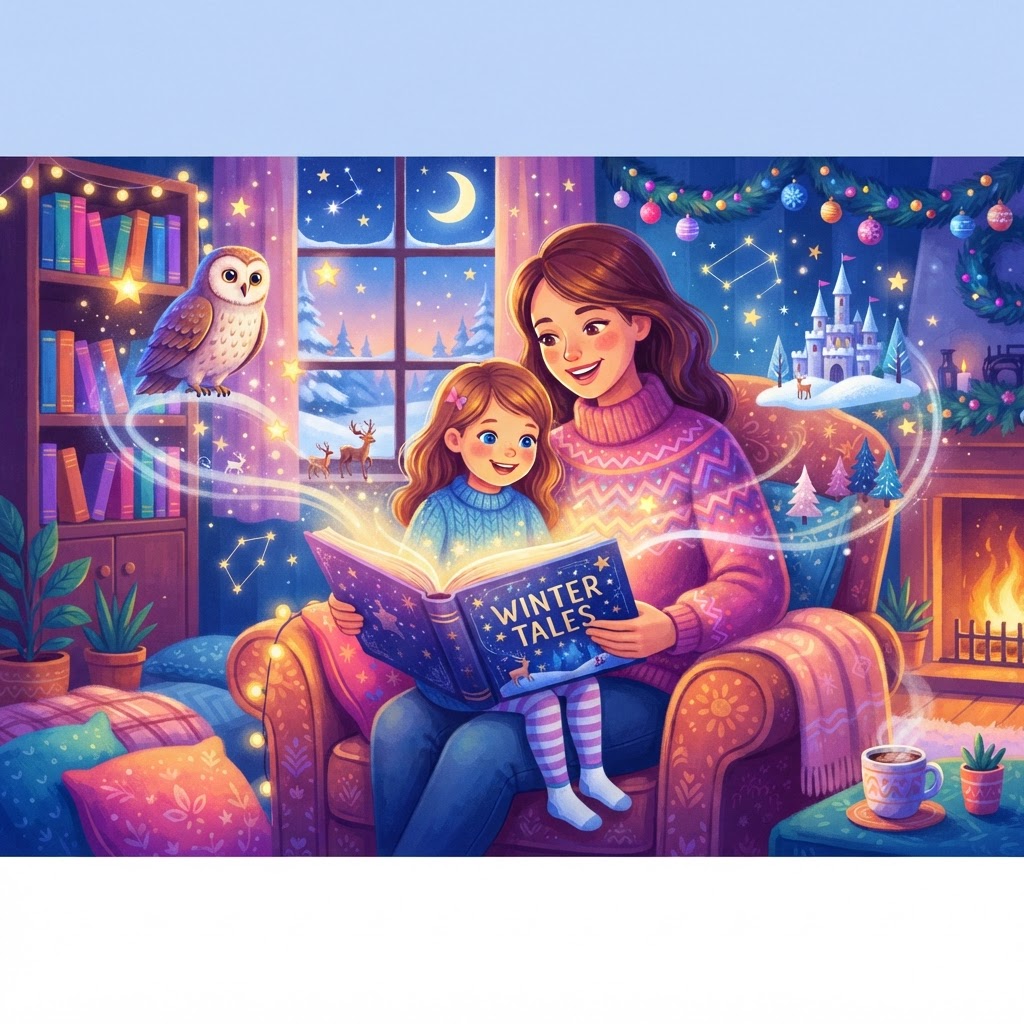
When the days get shorter and the weather keeps everyone indoors, winter story activities can turn ordinary afternoons into warm, memorable learning moments. The best winter stories for kids do more than entertain: they build vocabulary, support emotional connection, and give children a playful way to explore snow, holidays, animals, and winter adventures. If you want more cozy reading inspiration, this guide pairs well with these winter stories for kids.
Why are winter story activities so helpful for kids?
Winter themed stories are especially helpful because they combine comfort, conversation, and imaginative play during a season when children often need more indoor engagement. Story-based activities also support language growth, sequencing, and social-emotional skills.
Research on dialogic reading by psychologist Grover Whitehurst found that children learn more when adults ask questions, expand on answers, and make reading interactive. Organizations like Reading Rockets and NAEYC also emphasize that playful, language-rich interactions strengthen comprehension and early literacy. The Harvard Center on the Developing Child highlights that warm back-and-forth exchanges help build strong brain architecture, which is exactly what happens when you read, talk, and play together.
These activities work well at home, in preschool, and in early elementary classrooms. Most can be simplified for toddlers or expanded for older children by adding writing, drawing, or retelling.
How can a snowstorm story jar spark imaginative play?
A snowstorm story jar makes storytelling feel hands-on and magical. It works especially well for ages 2-6 because children can watch the “snow” move while describing what happens next.
- Story prompt: “A tiny fox wakes up to the biggest snowstorm of the year and has to find a safe, warm place for the night.”
- Materials:
- Clear jar or bottle with lid
- Water
- White glitter or paper snow
- Small waterproof winter character or picture
- Tape or glue for sealing
- Instructions:
- Fill the jar with water and add glitter or paper snow.
- Place the winter character inside or tape a picture to the outside.
- Shake the jar and ask your child what the character sees, hears, and feels.
- Pause often with prompts like, “Where should the fox go next?” or “Who could help in the snow?”
- For older kids, have them retell the full story in order: beginning, middle, and end.
This is one of the easiest winter story activities for mixed ages because younger children can point and describe, while older children can build a complete plot.
What can children learn from a mitten rescue retelling game?
A mitten rescue game teaches sequencing, prediction, and problem-solving. It is ideal for ages 3-7 and pairs beautifully with classic snow stories or animal-themed winter tales.
- Story prompt: “A lost mitten in the snow becomes a cozy hiding place for several cold animals.”
- Materials:
- One large mitten or paper mitten cutout
- Small stuffed animals or printed animal pictures
- Blanket, cotton balls, or white paper for snow
- Instructions:
- Spread out the “snow” and place the mitten in the middle.
- Introduce each animal one at a time and ask whether it will fit.
- Invite your child to retell the story as animals arrive.
- Add a twist: “What happens when the mitten slides away?” or “How do the animals work together?”
- Encourage children to change the ending and create their own version.
Retelling is powerful because it helps children organize language and remember story structure. You can also compare this activity with other seasonal favorites later in the year, like these fall story ideas.
How do winter themed stories inspire a snowy scavenger hunt?
A snowy scavenger hunt helps children connect story details to the real world. It is a strong choice for ages 4-8 because it turns listening comprehension into movement and observation.
- Story prompt: “A child explorer follows clues through a winter forest to find a missing star for the village lantern festival.”
- Materials:
- Paper clue cards
- Crayons or markers
- Small flashlight or lantern
- Optional winter props like scarf, bell, pinecone, or snowflake cutouts
- Instructions:
- Read or tell the story setup first.
- Hide 4-6 clues around the room or classroom.
- At each stop, ask a story question such as, “What would the explorer do now?”
- Let your child collect one object at each clue.
- Finish by using the found objects to retell the full adventure.
This activity works even if there is no real snow outside. For toddlers, keep it simple with picture clues; for older kids, add rhyme clues or map-making.
Can kids act out a penguin parade story at home or school?
Yes, acting out a penguin parade story is a fun way to support gross motor skills, expression, and confidence. Movement-based storytelling is especially helpful in winter, when children often need more indoor physical play.
- Story prompt: “A group of penguins must cross the ice to deliver a birthday song to a lonely polar friend.”
- Materials:
- Music
- Blue paper or blankets for “ice”
- Penguin headbands or simple paper beaks
- Optional drum or rhythm sticks
- Instructions:
- Create a path of “ice” across the floor.
- Give each child a penguin role: leader, singer, helper, or silly dancer.
- Read the story in short sections and pause for acting.
- Add challenges like hopping over cracks, sliding slowly, or helping a friend.
- End with a group song or cheer.
Children learn a lot from dramatic play. They practice taking turns, listening for cues, and using voice and body language to show character feelings.
Why is a holiday kindness story chain perfect for December?
A holiday kindness story chain helps children connect stories to empathy and action. It works well for ages 4-10 and is a gentle alternative to activities that focus only on gifts or performance.
- Story prompt: “In a snowy town, one kind act starts a chain of warmth that reaches every house before bedtime.”
- Materials:
- Strips of colored paper
- Tape or stapler
- Markers
- A read-aloud story about kindness, sharing, or winter celebration
- Instructions:
- Read a holiday or winter kindness story together.
- Ask your child to name one kind act from the story.
- Write that act on one paper strip and make the first link of a chain.
- Add a new link for each real-life kind act your child does during the week.
- Re-read the story and connect the actions to the characters’ choices.
This is a meaningful way to use winter themed stories for social-emotional learning. In classrooms, it can become a shared display that celebrates community rather than competition.
How can a bedtime northern lights art tray wind kids down?
A northern lights art tray is calming, sensory-friendly, and perfect before bed. It suits ages 3-9 and blends storytelling with quiet art in a way that helps children slow down.
- Story prompt: “A child looks up at the night sky and discovers that each color in the northern lights carries a different dream.”
- Materials:
- Black paper or tray
- Chalk, washable paint, or tissue paper in green, blue, purple, and pink
- Cotton balls
- Optional battery tea light
- Instructions:
- Tell the story slowly in a soft voice.
- Invite your child to create the sky as the colors appear in the story.
- After each color, ask a reflective question like, “What dream would the blue light bring?”
- Let your child add stars, snow, or a small sleeping house.
- Finish with a short retelling and a cozy bedtime routine.
This activity is especially good for children who get overstimulated in busy holiday weeks. Quiet art plus gentle storytelling can make bedtime feel secure and predictable.
How can you use InstaTales to create winter stories for kids?
InstaTales makes it easy to create personalized winter stories for kids that match your child’s age, interests, and attention span. Instead of searching for the perfect snow story, you can create your own personalized bedtime story with your child as the hero.
A simple approach is to start with one winter idea and customize the details:
- Choose a cozy setting like a snowy village, polar night, or cabin in the woods.
- Add your child’s name, favorite animal, or a sibling or friend.
- Pick a gentle plot such as helping a snowman, finding a lost mitten, or following winter lights.
- Keep the tone calm for bedtime, or adventurous for daytime reading.
If you want a quick start, browse the built-in story templates and adapt them for snow stories, holiday tales, or winter adventures. After reading, save favorites in your story library so children can revisit beloved characters again and again.
For teachers, personalized winter stories can also support writing prompts, oral language practice, and classroom themes. You can generate one class story and then ask students to illustrate, retell, or change the ending.
Frequently Asked Questions
What age are winter story activities best for?
Most winter story activities can be adapted for ages 1-10. For toddlers, keep stories short and sensory-based; for older children, add writing, prediction, and retelling.
How long should a winter story activity last?
For young children, 10-20 minutes is usually enough. If a child is deeply engaged, you can extend the play, but short and positive sessions tend to work best.
Do I need snow outside to do these activities?
No. Many of the best winter story activities use pretend snow, paper props, movement, and imagination, so they work anywhere.
How can I make winter stories more interactive?
Ask open-ended questions, pause for predictions, and invite children to act, draw, or retell what happens next. That back-and-forth style supports stronger language development than passive listening alone.
Can these winter themed stories work in a classroom?
Yes. These ideas work well for circle time, literacy centers, and seasonal units. Teachers can also turn them into collaborative art, partner retells, or simple writing extensions.
What makes a good winter story for kids?
A strong winter story for kids has a clear problem, cozy or adventurous seasonal details, and a satisfying ending. Children also respond well to repetition, familiar feelings, and a main character they can imagine helping.
Ready to Create a Personalized Bedtime Story?
Use our free AI bedtime story generator to create a personalized illustrated story for your child in 30 seconds — no credit card needed.
Popular story types:
Maya Rodriguez
Lead Content Editor & Early Literacy Specialist
Maya is a former early childhood educator and literacy specialist with over a decade of experience helping children develop a love of reading. She leads content at InstaTales, where she writes about the science of storytelling, child development, and how families can use personalized AI stories to build literacy and emotional resilience.
instatales.ai