Worry Stories for Children: A Parent Guide
A parent's guide to using stories to help children understand and manage worry — with story ideas, discussion prompts, and expert tips.
✦ Key Takeaways
- •Worry in children often shows up in behavior, sleep, and body complaints before children can explain it clearly.
- •Stories help by making worry visible, nameable, and manageable.
- •The best worry stories are specific, familiar, and hopeful.
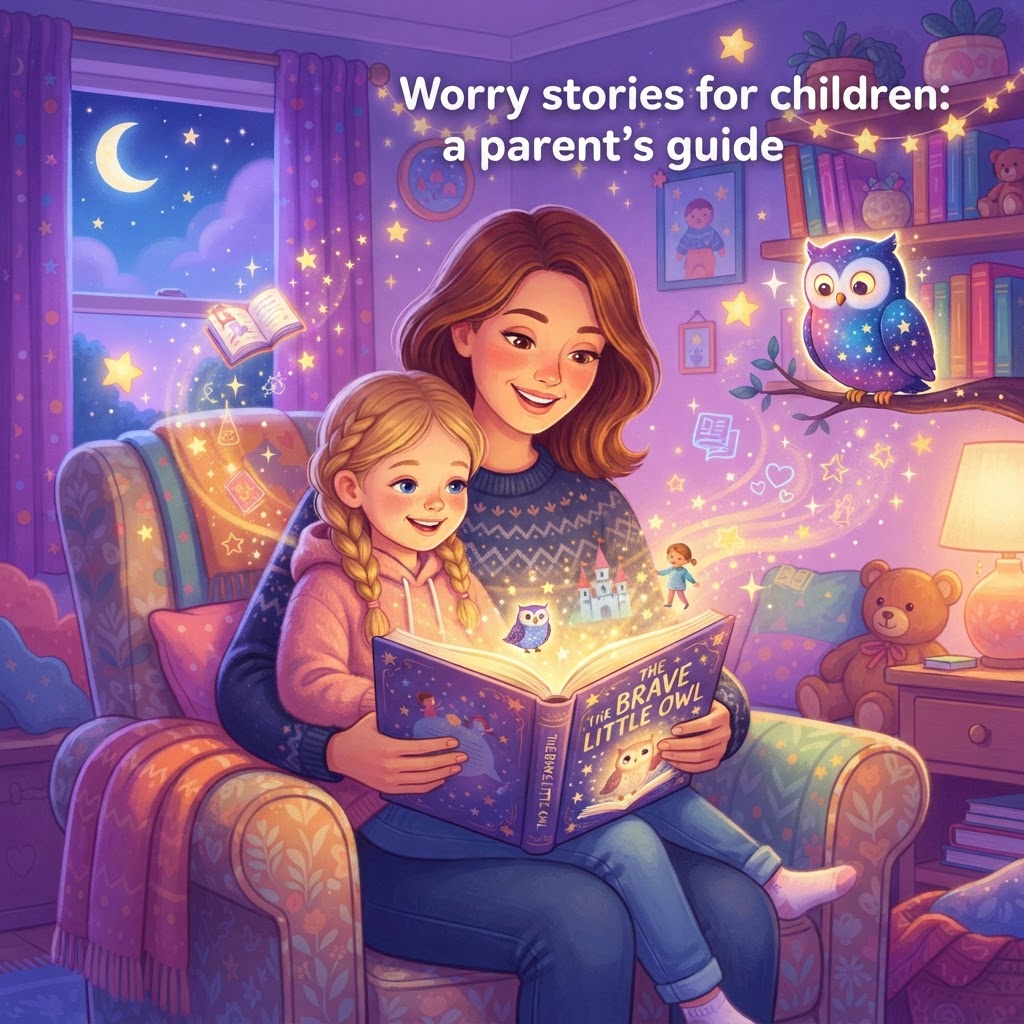
When a child asks “What if?” again and again, refuses to separate, or suddenly says their tummy hurts at bedtime, worry in children may be part of the picture. The good news is that stories can help. The right worry stories give children safe distance from big feelings, simple language for what they feel, and a gentle way to practice coping.
This practical worry kids guide will help you spot common signs of worry, use stories to support emotional growth, and know when extra help may be needed. If you want more examples after reading, you can also explore stories that help kids with worry and other resources on the InstaTales blog.
What are the signs of worry in children?
Worry in children often shows up in behavior, sleep, and body complaints before children can explain it clearly. A worried child may not say, “I feel anxious.” Instead, they may become clingy, avoid certain situations, or ask for constant reassurance.
Common signs include:
- Trouble falling asleep or fears at bedtime
- Frequent “what if” questions
- Tummy aches, headaches, or other physical complaints with no clear cause
- Avoiding school, parties, new activities, or separation
- Irritability, tears, or meltdowns over small changes
- Needing routines to stay exactly the same
- Perfectionism or fear of making mistakes
The Child Mind Institute notes that anxiety can look like anger, avoidance, or physical symptoms, not just fear. The CDC’s overview of anxiety in children also highlights that worries can affect sleep, concentration, and daily functioning.
For younger children, worry may look like regression, more tantrums, or wanting a parent close all the time. For older children, it may show up as overthinking, repeated checking, or saying they “don’t want to go” without a clear reason.
How do worry stories help children understand worry?
Stories help by making worry visible, nameable, and manageable. When a character feels nervous, makes a mistake, or faces a fear, children can recognize their own feelings without feeling put on the spot.
This matters because helping children understand worry starts with emotional vocabulary. A child who learns words like “nervous,” “uneasy,” “brave,” “calm,” and “safe” is more able to notice what is happening inside and ask for help. Shared reading also supports social-emotional learning by letting adults pause, name feelings, and talk through choices.
Stories are especially effective because they:
- Normalize the feeling: “Other children worry too.”
- Create safe distance: The problem belongs to the character first.
- Model coping tools: Deep breaths, asking for help, trying again, or using a comfort object.
- Invite conversation: Parents can ask simple follow-up questions without pressure.
If your child’s worry often overlaps with anger or overwhelm, it can also help to read about neighboring feelings, such as in this parent guide to frustration stories. Children rarely experience emotions one at a time.
Which worry story scenarios work best for children?
The best worry stories are specific, familiar, and hopeful. A useful story includes a relatable problem, a calm adult or friend, and one or two coping tools the child could actually use in real life.
A child who worries at bedtime?
Bedtime worry is very common because the day slows down and thoughts get louder. A story about a child whose mind fills with “what if” clouds can help normalize this experience.
Discussion questions:
- What was the character worried might happen?
- What helped their body feel calmer?
- What could we try tonight if your brain feels busy?
A child who fears separation?
Stories about starting nursery, school, or staying with a grandparent work well because they show that goodbyes can feel hard and still be safe. The key is to show reunion, predictability, and trust.
Discussion questions:
- What made saying goodbye hard for the character?
- Who helped them feel safe?
- What reminder could you keep with you when we are apart?
A child who worries about making mistakes?
Perfectionism often hides underneath worry. A story where a child spills paint, misses a goal, or gets an answer wrong can teach that mistakes are part of learning, not proof that something is wrong.
Discussion questions:
- What did the character think the mistake meant?
- What would you say to that character?
- When have you kept going after something felt hard?
A child who worries about new situations?
New classes, birthday parties, haircuts, sleepovers, or swimming lessons can all trigger anxiety. Stories work best when they show a child using one small brave step rather than suddenly becoming fearless.
Discussion questions:
- Which part felt new or scary?
- What was the first brave step?
- What could your first small step be?
A child who worries about other people’s safety?
Some children worry about parents getting hurt, bad weather, illness, or something going wrong while they are away. A gentle story can validate the fear while also showing the comfort of plans, routines, and trusted adults.
Discussion questions:
- What was the character trying to protect?
- What helped them feel safe enough to keep going?
- What family plan helps you know you are safe?
When you choose or create worry stories, keep the ending realistic. The goal is not “nothing bad ever happens.” The goal is “worry can be noticed, named, and handled.”
How can parents use worry stories in a safe and helpful way?
Read worry stories when your child is calm, and keep the conversation simple. Stories work best as gentle practice, not as a lecture during a meltdown.
A few expert tips:
- Read slowly and pause to name feelings.
- Ask open questions, but do not force answers.
- Link the story to one coping tool only, such as belly breathing or a bedtime phrase.
- Re-read the same story often. Repetition helps children feel secure.
- Stop if a story seems to increase fear instead of easing it.
Try using phrases like:
- “I noticed the character’s heart felt jumpy.”
- “Sometimes worry tries to keep us safe, even when we are okay.”
- “What helped the character feel a little better?”
If your child likes personalized books, you can create your own personalized bedtime story with familiar settings, favorite characters, and a gentle coping theme. That personal detail often makes the lesson feel more relevant and more comforting.
When should you seek professional help for worry in children?
Seek professional help when worry is intense, long-lasting, or gets in the way of daily life. All children worry sometimes, but persistent anxiety deserves closer attention.
Consider talking with your pediatrician or a child mental health professional if your child’s worry:
- Lasts for weeks and does not ease
- Causes major sleep problems
- Leads to school refusal or avoiding normal activities
- Triggers frequent physical complaints
- Causes panic, extreme distress, or constant reassurance-seeking
- Interferes with friendships, learning, or family life
The American Academy of Pediatrics’ HealthyChildren.org recommends seeking support when fears are out of proportion, persistent, or disruptive. Early support matters. Children do not need to “grow out of it” alone.
How can InstaTales create personalized worry stories for kids?
InstaTales can turn a child’s real-life worry into a gentle, age-appropriate story with a reassuring arc. That makes it easier to tailor support to your child’s exact fear, whether it is bedtime, separation, mistakes, or trying something new.
You might create a story about:
- A child who feels nervous before school but finds courage step by step
- A little fox whose mind gets busy at bedtime
- A child who learns that mistakes help the brain grow
- A character who carries a calming phrase or comfort object
You can start with story templates for a quick first draft, then save the stories your child loves in your story library for easy re-reading. Personalized stories are not a replacement for professional care, but they can be a powerful everyday tool for helping children understand worry.
Frequently Asked Questions
What age are worry stories best for?
Worry stories can help children from toddlerhood through the early primary years, as long as the language matches their age. Younger children do best with simple plots and repeated phrases, while older children can handle more discussion.
Can stories make my child more worried?
Sometimes a story can stir up feelings, especially if it is too intense or too close to a current fear. Choose gentle, reassuring stories and stop if your child seems more distressed after reading.
How often should we read worry stories?
Regular re-reading usually works better than a one-time conversation. Reading the same story a few times a week helps children remember the coping tools and feel more secure.
Should I talk about my child directly during the story?
Usually it helps to begin with the character, not your child. That distance feels safer, and many children will make their own connections when they are ready.
What if my child refuses to talk after the story?
That is okay. Listening still helps, and you can model simple observations like, “That character looked nervous,” without expecting a response right away.
Ready to Create a Personalized Bedtime Story?
Use our free AI bedtime story generator to create a personalized illustrated story for your child in 30 seconds — no credit card needed.
Popular story types:
Maya Rodriguez
Lead Content Editor & Early Literacy Specialist
Maya is a former early childhood educator and literacy specialist with over a decade of experience helping children develop a love of reading. She leads content at InstaTales, where she writes about the science of storytelling, child development, and how families can use personalized AI stories to build literacy and emotional resilience.
instatales.ai