10 Calming Bedtime Stories Tips for Better Sleep
Want bedtime stories to be calming? Here are 10 tips for soothing story time that helps kids sleep.
✦ Key Takeaways
- •Timing matters because a calming story works best when it is part of a predictable wind-down, not a last-minute rush.
- •The calmest stories are simple, gentle, and emotionally safe.
- •A slower pace helps lower arousal and gives children time to process language without getting activated.
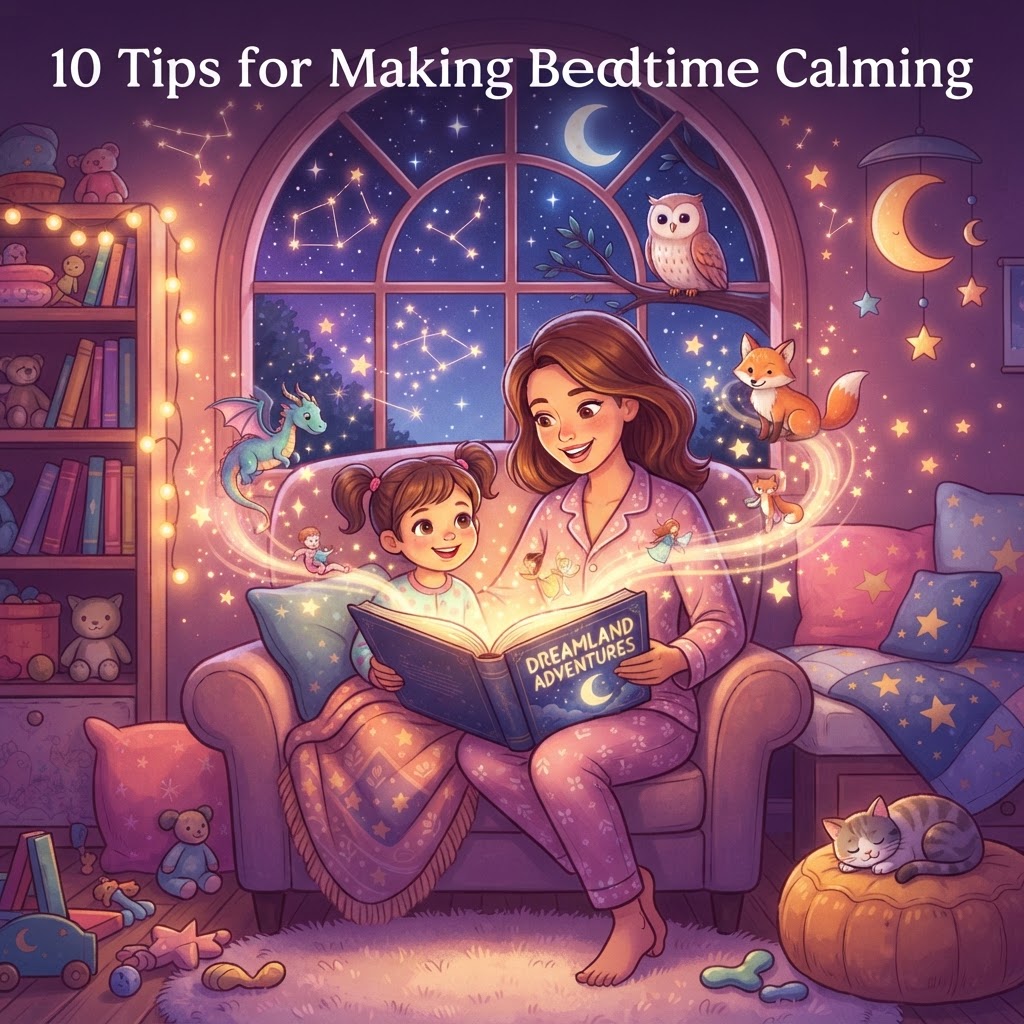
Bedtime stories can do more than entertain—they can help a child’s body and brain slow down for sleep. The best calming bedtime stories tips focus on lowering stimulation, building predictability, and creating a warm sense of safety. Research from the CDC and the American Academy of Pediatrics shows that consistent bedtime habits and calm pre-sleep routines support healthier sleep in children.
If story time has started to feel busy, silly, or overstimulating, a few small changes can make a big difference. Below are 10 practical ways to create soothing story time that feels peaceful, connected, and sleep-friendly.
Why does timing matter for calming bedtime stories?
Timing matters because a calming story works best when it is part of a predictable wind-down, not a last-minute rush. Reading at roughly the same time each night helps a child’s brain connect story time with safety, rest, and sleep.
Sleep research consistently shows that routines help children settle faster and sleep more soundly. Try starting stories 15 to 30 minutes before lights-out, after active play, baths, and toothbrushing are already done.
A simple order often works well:
- Bathroom and pajamas
- Dim lights
- One or two quiet stories
- A short cuddle or goodnight phrase
- Lights out
If evenings often feel chaotic, these story time routine tips can help you build a rhythm that sticks.
How can you choose story content that feels soothing?
The calmest stories are simple, gentle, and emotionally safe. Choose plots with soft stakes, kind characters, and reassuring endings rather than cliffhangers, peril, or high-energy humor.
For bedtime, look for stories with:
- Familiar settings like home, nature, or bedtime routines
- Slow events instead of lots of action
- Warm relationships and problem-solving
- A clear, comforting ending
This is one of the most important calming reading tips for parents: save exciting adventures for daytime. At night, children usually respond best to stories that help them feel secure, not alert.
What reading pace helps children wind down?
A slower pace helps lower arousal and gives children time to process language without getting activated. When adults rush through a book, children often stay mentally “busy” instead of settling.
Try reading a little more slowly than you would during the day. Pause at commas, let quiet moments breathe, and do not worry about dramatic performance. A gentle pace sends the message that nothing urgent is happening.
If your child asks lots of questions, answer briefly and return to the story. Long side conversations can restart wakefulness, especially for children who already struggle with settling.
How should your voice sound during soothing story time?
Your voice should be calm, warm, and steady rather than animated or loud. A soft tone can cue relaxation in the same way a lullaby does.
You do not need a “special” reading voice. In fact, one of the best soothing story time strategies is to lower your volume slightly, smooth out your rhythm, and avoid sudden sound effects. Think comfort, not performance.
This can be especially helpful for children who are sensitive to stimulation. If your child has different sensory or attention needs, you may also like these gentle tips for reading to an autistic child and these ideas for reading to a child with ADHD.
Why are repetition and predictability so calming?
Repetition is calming because children relax when they know what comes next. Familiar books, repeated phrases, and predictable plots reduce cognitive effort and increase a sense of control.
This is supported by child development research on routines and secure attachment: predictability helps children feel safe. That is why many young children want the same story again and again.
Instead of worrying about boredom, use repetition to your advantage. You might:
- Re-read a favorite book for a week
- Use the same bedtime opening line each night
- End with the same phrase, such as “Now everyone is safe, warm, and ready to sleep”
If you want to gently stretch language skills while keeping the mood calm, try bedtime books with rich but simple phrasing. Our guide to building vocabulary through stories can help you do that without making bedtime feel like a lesson.
How can you keep the story emotionally safe?
Emotionally safe stories help children settle because they do not leave worries unresolved. Even mild suspense can linger in a young child’s mind after the lights go out.
Watch for themes that may be too activating at bedtime, such as:
- Characters getting lost
- Separation from parents
- Monsters, villains, or danger
- Fast chases or loud conflict
This does not mean bedtime stories must be bland. They can still be imaginative, funny, and meaningful. The key is that the emotional tone returns to calm, connection, and reassurance by the end.
The American Academy of Pediatrics, via HealthyChildren.org, emphasizes the value of consistent, comforting bedtime routines. Stories that end in safety fit beautifully into that guidance.
What kind of environment supports calming reading?
A sleep-friendly environment makes your story more effective because the room itself tells the body it is time to rest. Even a great story can feel less calming in bright light, noise, or clutter.
Keep the setup simple:
- Use dim, warm lighting
- Lower background noise
- Put stimulating toys out of sight
- Keep screens off before and during reading
Light matters more than many families realize. Exposure to bright light in the evening can delay sleepiness, which is why sleep experts such as the National Sleep Foundation recommend a calm, screen-light-free wind-down.
How can you involve your child without making them more alert?
Involvement is helpful when it is gentle and limited. Too many choices or big questions can wake a child up just when you want them to relax.
Try calm participation instead of energetic interaction. Good options include:
- “Should we read the bunny book or the moon book?”
- “Can you find the sleeping bear?”
- “Let’s take one slow breath before we turn the page.”
Keep choices narrow and your prompts simple. This gives children a sense of agency without turning story time into playtime.
When should you stop reading and transition to sleep?
Stop while your child is calm, drowsy, and content—not after they get a second wind. Many bedtime struggles happen because story time stretches past the child’s natural sleepy window.
Look for signs that it is time to end:
- Slower blinking
- Snuggling in closer
- Less talking
- Losing track of the story
Finish with a short, predictable closing ritual. A final line like “The story is done, and now your body rests” can work well. If you often need help with emotional themes in books, our article on using stories to teach social skills includes helpful ways to keep stories supportive and grounded.
How can personalized stories stay calm and sleep-friendly?
Personalized stories can be wonderfully calming when you control the tone, pace, and ending. The trick is to create stories that feel familiar and gentle, not exciting and unpredictable.
When you create your own personalized bedtime story, aim for:
- A peaceful setting
- A child-like main character who feels safe
- One simple problem
- A slow resolution
- A cozy ending
This works especially well for children who want stories about their own day, favorite animal, or comfort object. When you find stories that truly help your child settle, save them in your story library so you can return to the same calming favorites night after night.
How can parents make calming bedtime stories a lasting habit?
The secret is consistency, not perfection. A short, peaceful story most nights is more effective than an elaborate routine you can only manage once in a while.
Try to keep the same basic pattern, even on busy evenings. One calm book, one cuddle, and one familiar goodnight phrase can still support sleep. Over time, children begin to associate reading with relaxation, closeness, and rest.
If you want more practical ideas for peaceful reading habits, browse the InstaTales blog for simple family-friendly strategies.
Frequently Asked Questions
What makes a bedtime story calming?
A calming bedtime story has a gentle tone, simple plot, and reassuring ending. It avoids intense suspense, loud humor, or emotional tension that may leave a child feeling alert.
How long should bedtime story time be?
For many young children, 10 to 20 minutes is enough. The goal is not a long performance—it is a calm transition from the day into sleep.
Is it okay to read the same story every night?
Yes. Repetition is often very soothing for children because it feels predictable and safe. Familiar books can reduce bedtime resistance and help the body settle more quickly.
Should bedtime stories be educational?
They can be, but bedtime is not the best time for active teaching. If a story builds language or emotional skills in a gentle way, that is a bonus, but calm and connection should come first.
Can personalized AI stories be used at bedtime?
Yes, if they are designed to be simple, soft, and sleep-friendly. Choose peaceful themes, avoid exciting twists, and keep the ending warm and reassuring.
What if my child gets more excited during story time?
That usually means the story, pace, or setting is too stimulating. Try shorter books, a slower voice, dimmer light, and more predictable story choices for a calmer result.
Ready to Create a Personalized Bedtime Story?
Use our free AI bedtime story generator to create a personalized illustrated story for your child in 30 seconds — no credit card needed.
Popular story types:
Maya Rodriguez
Lead Content Editor & Early Literacy Specialist
Maya is a former early childhood educator and literacy specialist with over a decade of experience helping children develop a love of reading. She leads content at InstaTales, where she writes about the science of storytelling, child development, and how families can use personalized AI stories to build literacy and emotional resilience.
instatales.ai