10 Tips for Using Stories to Teach Social Skills
Want to use stories to teach social skills? Here are 10 tips for effective social skills storytelling.
✦ Key Takeaways
- •Stories work because they let children explore social situations at a safe distance.
- •Choose a story that matches one real-life skill your child is working on right now.
- •The best social skills stories are simple, concrete, and emotionally clear.
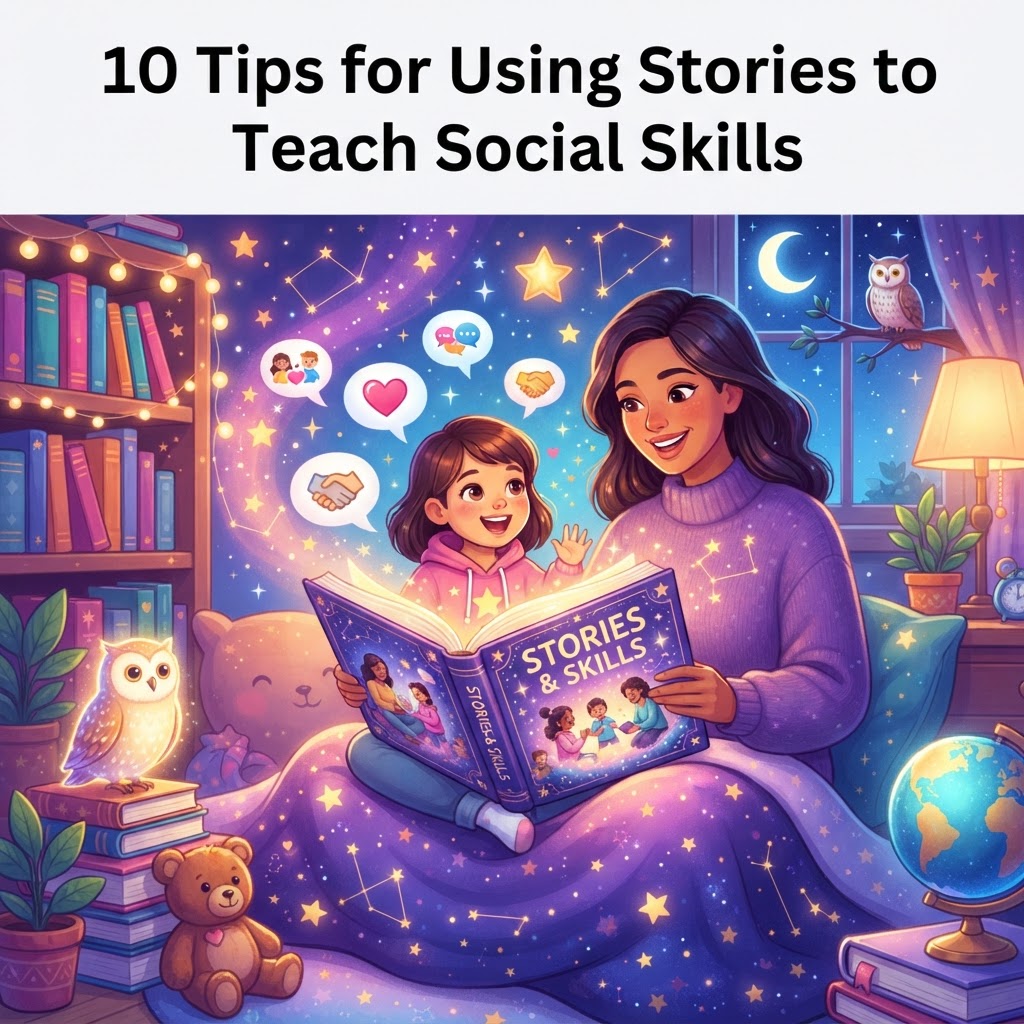
Stories give children a safe place to watch friendship problems, big feelings, and tricky choices play out before they face them in real life. That is why some of the best social skills stories tips are also the simplest: pick the right story, talk a little, practice a little, and revisit it often. Whether you read at bedtime, during school, or in a cozy reading space, teaching social skills through reading can help children build empathy, self-control, problem-solving, and confidence. It works even better when stories are part of a steady story time routine.
Why are stories such a powerful way to teach social skills?
Stories work because they let children explore social situations at a safe distance. A child can notice feelings, mistakes, and solutions in a character before applying them to their own life.
This matters for social-emotional learning. Organizations like CASEL describe core skills such as self-awareness, relationship skills, and responsible decision-making, and stories naturally support all three. Shared reading also creates the kind of warm back-and-forth interaction that Harvard’s Center on the Developing Child highlights as essential for healthy development.
For parents and teachers, that means stories are not “just entertainment.” They are a gentle, effective way to teach children how people think, feel, and respond.
How do you choose the right story for a child’s current challenge?
Choose a story that matches one real-life skill your child is working on right now. A focused story is more effective than a general lesson about “being good.”
Start by asking yourself what is hardest at the moment:
- Sharing toys
- Waiting for a turn
- Joining a group
- Handling losing
- Using kind words
- Noticing others’ feelings
Then pick a story with one clear social problem and one clear solution. Children learn best when they can follow the cause-and-effect: “The character grabbed the toy, the friend felt upset, then they fixed it by taking turns.”
If you cannot find the perfect book, you can create your own personalized bedtime story using your child’s name, favorite interests, and a situation they actually face. Personalized stories often feel more relevant, especially for children who resist direct advice.
What makes a social skills story easier for young children to understand?
The best social skills stories are simple, concrete, and emotionally clear. Young children learn more from short plots with obvious feelings than from long, complicated stories.
Look for stories with:
- Clear facial expressions or easy-to-imagine emotions
- Everyday situations children recognize
- Repetition in language or structure
- A small cast of characters
- A positive, realistic resolution
For toddlers and preschoolers, one social lesson per story is enough. For older children, you can add more nuance, such as mixed feelings, misunderstandings, or compromise. If you are using custom stories, keep the language short and the scene familiar.
How can you read in a way that highlights feelings and social cues?
The way you read matters almost as much as the story you choose. Pausing to point out feelings, body language, and tone helps children notice the social clues they may miss in real life.
As you read, slow down at key moments:
- “Look at his face. How do you think he feels?”
- “She crossed her arms. What might that mean?”
- “He wanted to play too, but didn’t know how to ask.”
This kind of emotion coaching builds the vocabulary children need to understand themselves and others. The CDC’s developmental guidance also reminds families that social and emotional skills grow over time, so naming emotions during reading is a simple way to support that growth. If your child needs more feeling words, stories can also build vocabulary through reading.
Which discussion questions actually help children reflect?
The most helpful questions are open, short, and curious. They invite thinking without making story time feel like a test.
Try using a few questions before, during, and after the story:
- “What do you think might happen next?”
- “Why do you think she did that?”
- “How did that choice affect the other character?”
- “What could he say instead?”
- “Have you ever felt like that?”
Keep your tone warm and nonjudgmental. If a child gives an unexpected answer, stay curious. The goal is not perfect wording; it is helping children practice perspective-taking and problem-solving.
How does role-playing make social skills easier to practice?
Role-playing turns a story lesson into a real skill. When children act out what to say or do, they are much more likely to remember it later.
After reading, pick one scene and practice it with:
- Stuffed animals
- Puppets
- Dolls
- A parent or teacher
- Siblings taking turns in each role
For example, if the story is about joining play, practice saying, “Can I play too?” or “What game are you playing?” If the story is about conflict, practice calm repair phrases like, “I’m sorry,” or “Can we try again?”
This is one of the most practical social stories tips because it moves children from understanding to action.
When should you connect the story to real life?
Make the real-world connection soon after reading and again during everyday moments. Children learn best when the story and the real situation are linked gently and specifically.
You might say:
- “That was like the story when you waited for your turn.”
- “Remember how the character took a deep breath before asking for help?”
- “Your friend looked disappointed, just like the girl in the book.”
Keep the link light. Avoid using the story as a scolding tool. Stories should feel supportive, not like a hidden lecture. This is also where social skills and values overlap, because many story lessons include kindness, honesty, patience, and respect.
Why does rereading the same story improve social learning?
Rereading helps children notice more each time. The first reading often follows the plot; later readings reveal feelings, motives, and better choices.
Repetition is especially helpful for:
- Children under six
- Kids who need extra processing time
- New or challenging social skills
- High-interest stories your child already loves
A familiar story also makes discussion easier because the child is not working so hard to track what happens next. Saving favorite stories in your story library can make it simple to revisit the same lesson across several days or weeks.
How can you use stories to teach social skills with siblings or mixed ages?
Use one story, but give each child a different job. Mixed-age reading works well when younger children focus on feelings and older children focus on motives, choices, and solutions.
For example:
- A younger child can point to who feels sad or happy.
- An older child can explain why the conflict happened.
- Both can suggest better ways to respond.
This approach keeps everyone involved without expecting the same level of insight from every child. If group reading is part of your routine, these strategies pair well with tips for reading to multiple kids at once.
What helps social skills lessons stick over time?
Consistency matters more than intensity. Small, repeated story moments are more effective than one long “teaching talk.”
To help the lesson last:
- Pick one social goal for one to two weeks
- Read related stories several times
- Practice the skill in play
- Praise effort when you see it in real life
- Revisit the story after a hard moment, not during it
Say exactly what your child did well: “You waited and looked at your friend’s face. That was kind.” Specific praise helps children connect behavior to outcome.
Over time, these habits make teaching social skills through reading feel natural. You are not just finishing a book. You are helping your child build empathy, flexibility, and better relationships one page at a time.
Frequently Asked Questions
What age can children start learning social skills through stories?
Children can start very young, even as toddlers. Simple stories about feelings, sharing, and routines help build early empathy and emotional awareness.
How long should a social skills story session be?
Short is usually best. For most children, 5 to 15 minutes of reading and a little follow-up talk is enough to keep the lesson meaningful without feeling heavy.
Are social stories only for autistic children?
No. While social stories are often used to support autistic children, all children can benefit from stories that explain emotions, friendship, routines, and problem-solving.
What if my child does not answer discussion questions?
That is okay. Keep reading, model your own thinking out loud, and ask only one or two simple questions. Listening is still learning.
Can personalized stories work better for social skills?
Yes, often they do. A story that includes your child’s name, interests, or real-life challenge can feel more relevant and easier to remember.
Explore More Stories
Ready for more? - free AI bedtime story generator
Get a new bedtime story every week
Free, personalized, and delivered to your inbox. No spam, ever.
Ready to Create a Personalized Bedtime Story?
Use our free AI bedtime story generator to create a personalized illustrated story for your child in 30 seconds — no credit card needed.
Popular story types:
Maya Rodriguez
Lead Content Editor & Early Literacy Specialist
Maya is a former early childhood educator and literacy specialist with over a decade of experience helping children develop a love of reading. She leads content at InstaTales, where she writes about the science of storytelling, child development, and how families can use personalized AI stories to build literacy and emotional resilience.
instatales.ai