Aztec Stories for Kids: Gentle Myths & Heroes
Exciting Aztec stories for kids — gods, heroes, monsters, and adventures from Aztec mythology, retold for young readers.
✦ Key Takeaways
- •Aztec stories for kids are child-friendly retellings of myths from the Aztec world, usually focused on adventure, nature, and big emotions rather than fear or violence.
- •The best Aztec mythology characters for children are the ones connected to nature, transformation, and guiding wisdom.
- •Aztec tales teach children about courage, balance, respect for nature, and the idea that the world is connected.
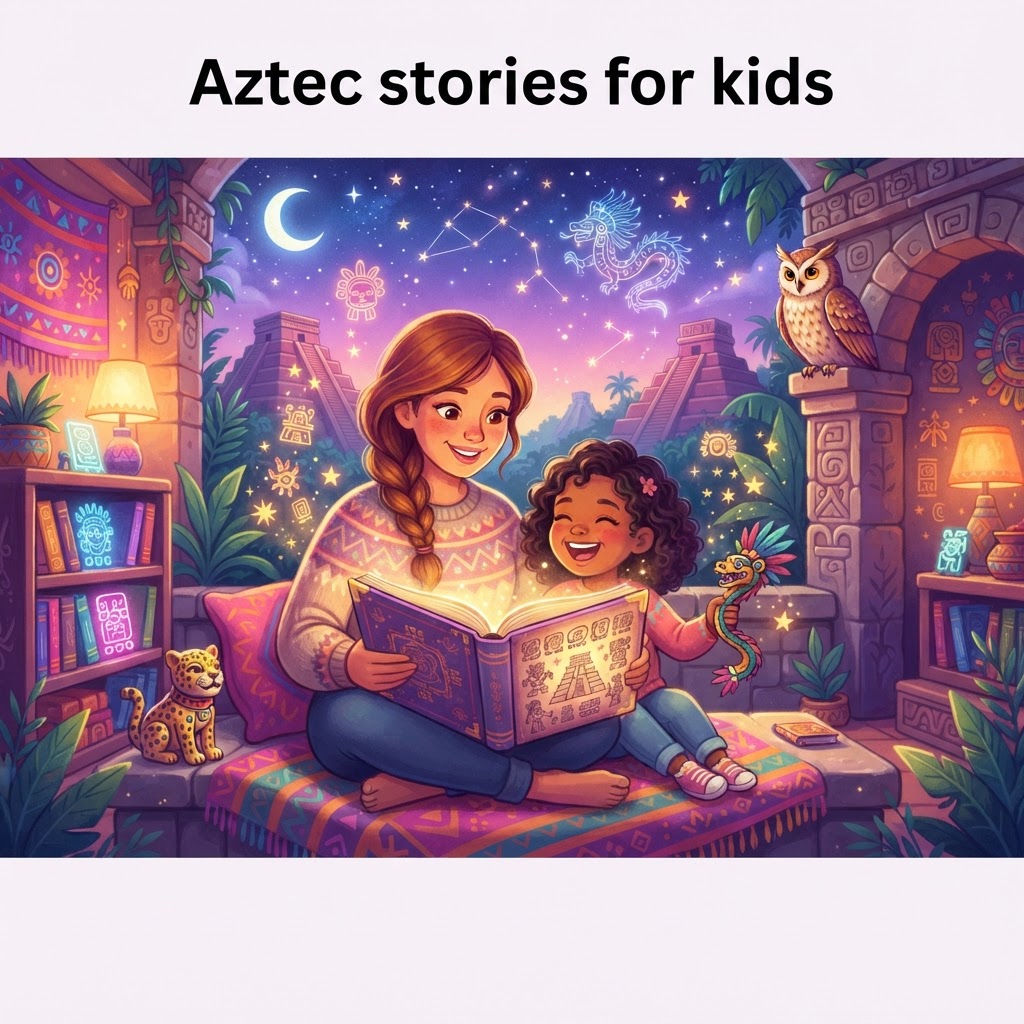
Aztec stories for kids can be exciting, imaginative, and surprisingly meaningful when they are retold with care. These traditional tales introduce children to feathered serpents, sun gods, animal guides, and brave young heroes—while also opening the door to conversations about nature, courage, and cultural respect.
If you are looking for Aztec stories for kids, the goal is not to copy every detail from ancient myths word for word. It is to share the wonder of Aztec tales in a way that feels safe, age-appropriate, and engaging for young readers. For families who enjoy world mythology, you might also like our guides to gentle Native American myths for children, Japanese stories with magic and kindness, and African myths retold for young readers.
What are Aztec stories for kids?
Aztec stories for kids are child-friendly retellings of myths from the Aztec world, usually focused on adventure, nature, and big emotions rather than fear or violence. They work best when adults keep the cultural heart of the story but simplify the hardest parts for young listeners.
The Aztecs were a civilization in central Mexico, and many of their stories explain the sun, rain, animals, stars, and the cycles of life. In books and bedtime retellings, these myths often become stories about helping the world, learning bravery, or solving a problem with kindness and clever thinking.
For parents who want a more source-based introduction to Aztec history and belief, Fordham University’s Internet History Sourcebooks: Aztecs is a useful starting point. Reading the background first can help you retell these stories with more accuracy and respect.
Which Aztec mythology characters are best for children?
The best Aztec mythology characters for children are the ones connected to nature, transformation, and guiding wisdom. Younger readers usually respond well to characters who feel magical rather than frightening.
Here are some of the most adaptable figures from Aztec mythology children can understand:
- Quetzalcoatl – the feathered serpent, often linked with wisdom, wind, learning, and creation. He is usually the easiest character to introduce in kids Aztec stories.
- Xolotl – a dog-like guide associated with journeys and protection. For children, he can become a loyal helper who leads lost travelers safely home.
- Tlaloc – a rain god connected to storms, crops, and water. In child-friendly retellings, he works well in stories about rain, gardens, and caring for the earth.
- Tonatiuh – the sun, often represented as powerful and bright. Children enjoy stories where the sun needs help rising or sharing its light.
- Animal messengers – rabbits, birds, and coyotes can play important roles in Aztec-inspired storytelling, especially for ages 5-8.
For bedtime, it helps to focus on each character’s symbolic role rather than their most intense mythological details. That keeps the story magical without making it overwhelming.
What themes do kids learn from Aztec tales?
Aztec tales teach children about courage, balance, respect for nature, and the idea that the world is connected. These are strong themes for early childhood because they support both imagination and emotional learning.
Many Aztec stories for kids naturally explore:
- The importance of the sun, rain, and seasons
- Respect for the natural world
- Bravery during a challenge
- Teamwork and problem-solving
- Transformation and growth
- Gratitude for food, water, and family
These themes matter because young children learn best when stories connect emotion with imagery. The American Academy of Pediatrics has emphasized that shared reading supports language growth, bonding, and early literacy development through warm back-and-forth interaction between adult and child (AAP reading guidance). Myth-based stories are especially effective because they repeat symbols and patterns children can remember.
This is one reason world myths remain so appealing. If your child enjoys patterned, symbolic storytelling, they may also love Chinese myths made gentle for kids or Celtic stories with magical adventures.
Which Aztec stories for kids work best at bedtime?
The best bedtime Aztec stories are gentle quests, creation tales, and nature adventures with a calm ending. For ages 5-8, short plots with clear emotions and reassuring resolution work better than battle-heavy retellings.
Here are 7 age-appropriate story ideas inspired by Aztec mythology:
-
The Feathered Serpent and the Lost Wind
Quetzalcoatl must help the wind find its way back to sleepy flowers and tired birds before morning. -
Xolotl’s Moonlight Walk
A nervous child follows Xolotl, the glowing dog guide, across a silver path to help a lost rabbit get home. -
The Little Rain Keeper
A young helper learns how to ask Tlaloc for gentle rain to save a thirsty garden. -
Why the Sun Needed a Song
The sun cannot rise until children, birds, and butterflies sing together at dawn. -
The Floating Garden Surprise
Inspired by chinampas, or floating gardens, this story follows a child growing the brightest flowers in the lake. -
The Rabbit in the Moon
A moon rabbit learns that even small acts of kindness can shine across the sky. -
The Brave Child and the Mountain Echo
A child climbs a mountain to return a sacred feather and discovers that courage can be quiet, not loud.
These ideas keep the beauty of Aztec tales while staying emotionally safe for young readers. They also work well as prompts if you want to create your own personalized bedtime story at home.
What should adults change when adapting Aztec mythology children can enjoy?
Adults should soften violence, remove ritual sacrifice, and simplify frightening imagery when adapting Aztec mythology for children. You do not need to erase the culture; you need to retell it in a developmentally thoughtful way.
A good rule is to preserve the meaning of the story while adjusting the intensity. For example:
- Change battles into challenges or contests
- Turn frightening gods into powerful but understandable forces of nature
- Replace sacrifice with offerings like songs, flowers, or acts of kindness
- Emphasize helpers, guides, and restoration
- End with safety, connection, or hope
This matters for child development. The Harvard Center on the Developing Child notes that young children learn best when experiences are engaging but not overwhelming. In practice, that means myths should feel exciting, not scary enough to disturb sleep.
It also helps to name the retelling honestly. You can say, “This is a kid-friendly version inspired by an Aztec myth.” That teaches respect and avoids pretending the bedtime version is the full original.
How can you create Aztec-inspired stories with InstaTales?
InstaTales makes it easy to turn Aztec-inspired ideas into personalized stories that match your child’s age, interests, and comfort level. This is especially helpful when you want mythology to feel magical without becoming too intense.
A simple method is to choose one mythic element, one child-friendly theme, and one gentle goal. For example:
- Mythic element: Quetzalcoatl, moon rabbit, rain temple, floating garden
- Theme: bravery, kindness, curiosity, teamwork
- Goal: help the sun rise, find a lost animal, save a garden, return a feather
Then add personal details your child will love:
- Their name
- Favorite animal
- Preferred setting
- Bedtime tone: calm, funny, adventurous, or dreamy
If you want a quick start, browse the story templates first. After you make a story, you can save it in your story library for easy re-reading, which is useful because repetition supports comprehension and confidence in early readers. Teachers can also explore InstaTales for teachers for mythology units, cultural storytelling prompts, and creative writing extensions.
A strong prompt might be:
“Write a gentle Aztec-inspired bedtime story for a 6-year-old. Include Quetzalcoatl, a floating garden, a lost rabbit, and a theme of kindness. Keep it calm, magical, and not scary.”
You can also visit the InstaTales blog for more culture-themed reading ideas and compare how different traditions adapt myths for children.
Frequently Asked Questions
Are Aztec stories appropriate for young children?
Yes, many are appropriate when carefully adapted. The best versions keep the wonder, symbolism, and nature themes while removing violent or frightening details.
Which Aztec god is best to introduce first?
Quetzalcoatl is usually the easiest starting point. He is strongly associated with wisdom, wind, and creation, which makes him feel magical rather than scary.
How do I explain Aztec mythology to children?
Start simple: explain that these are traditional stories people told to understand the sun, rain, animals, and life. Then connect each story to a familiar theme like bravery, kindness, or helping nature.
What age is best for Aztec stories for kids?
Ages 5-8 are often the sweet spot for short, gentle retellings. Older children can handle more history and symbolism, while younger children usually prefer animal helpers and calm adventures.
Can I use Aztec tales in the classroom?
Yes, especially in units on world cultures, storytelling, or mythology. Just use respectful, age-appropriate retellings and provide a little historical context alongside the story.
How can I make kids Aztec stories less scary at bedtime?
Keep the plot short, focus on nature and helpers, and end with safety or restoration. Avoid battles, sacrifice, and intense monster imagery, especially right before sleep.
Explore More Stories
Ready for more? - free AI bedtime story generator
Get a new bedtime story every week
Free, personalized, and delivered to your inbox. No spam, ever.
Ready to Create a Personalized Bedtime Story?
Use our free AI bedtime story generator to create a personalized illustrated story for your child in 30 seconds — no credit card needed.
Popular story types:
Maya Rodriguez
Lead Content Editor & Early Literacy Specialist
Maya is a former early childhood educator and literacy specialist with over a decade of experience helping children develop a love of reading. She leads content at InstaTales, where she writes about the science of storytelling, child development, and how families can use personalized AI stories to build literacy and emotional resilience.
instatales.ai