Japanese Stories for Kids: Gentle Myths & Magic
Exciting Japanese stories for kids — gods, heroes, monsters, and adventures from Japanese mythology, retold for young readers.
✦ Key Takeaways
- •Japanese stories for kids work well because they blend clear moral themes with vivid imagination.
- •The best starting point is a small group of memorable characters and a few big themes.
- •The best Japanese stories for ages 5 to 8 are high on wonder and low on fear.
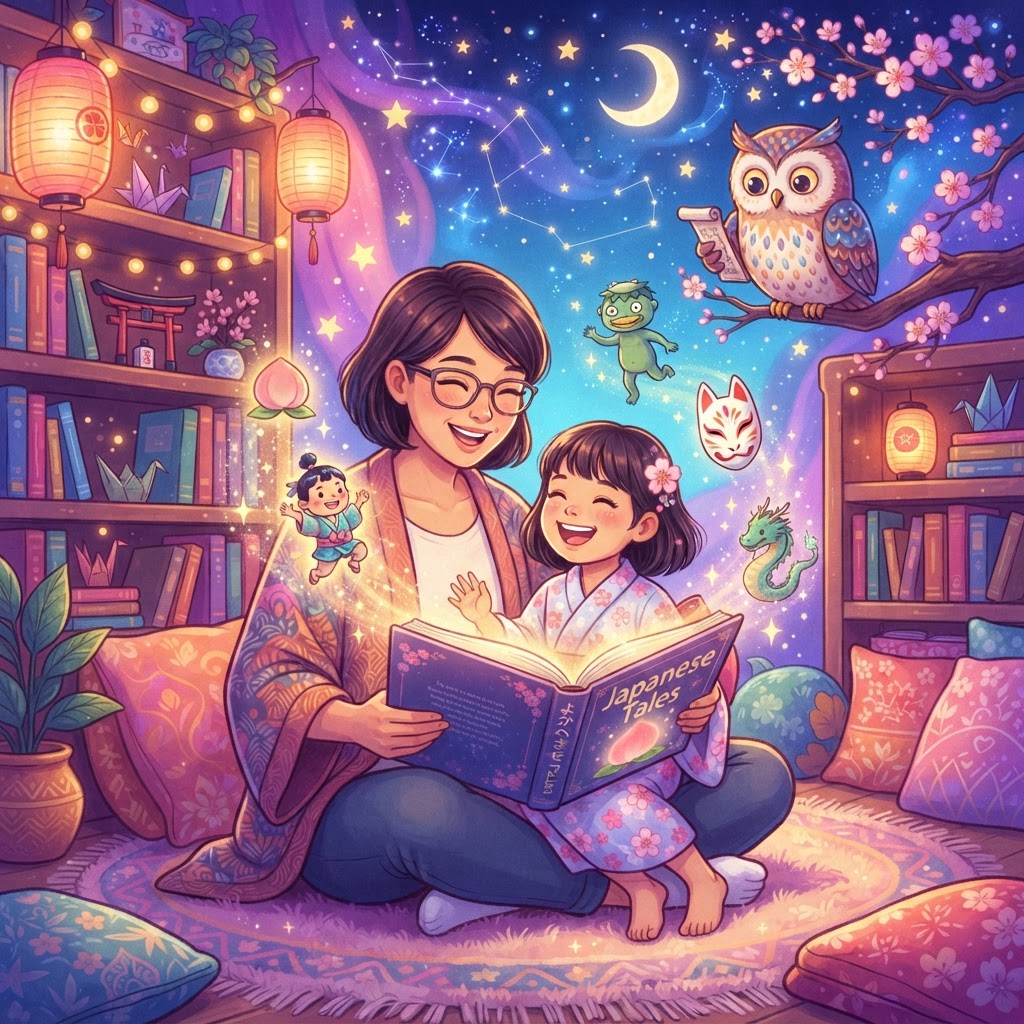
Japanese stories for kids can be magical, calming, and full of wonder when they are chosen and adapted with care. From shining sun goddesses and brave peach-born heroes to playful fox spirits and moon rabbits, Japanese tales offer rich themes that young children love: courage, kindness, nature, family, and curiosity.
For parents and teachers, the key is to introduce Japanese mythology children can enjoy without the darker details found in some original legends. This guide explains the main characters and ideas in Japanese mythology, shares age-appropriate story prompts for ages 5-8, and shows how to turn these themes into warm bedtime adventures with InstaTales.
What makes Japanese stories for kids such a good fit for young readers?
Japanese stories for kids work well because they blend clear moral themes with vivid imagination. Children are drawn to talking animals, magical objects, brave helpers, and adventures that connect people with nature.
Many kids Japanese stories also repeat patterns, images, and actions. That matters for early literacy. The American Academy of Pediatrics has long emphasized that shared reading supports language development, bonding, and later school success, especially when adults pause to talk about the story together (AAP reading guidance).
Japanese myths and folktales are especially strong for:
- Imagination: shape-shifting foxes, dragons, enchanted islands
- Emotional learning: bravery, jealousy, forgiveness, patience
- Nature connection: mountains, rivers, moonlight, seasons, animals
- Cultural learning: children hear stories from a different tradition in a respectful, child-friendly way
If your child enjoys world mythology, you might also like our guides to Norse myths for children, Egyptian myths made gentle, and Celtic bedtime tales.
Who are the main characters and themes in Japanese mythology children should know?
The best starting point is a small group of memorable characters and a few big themes. Young children do not need the full family tree of the gods. They only need simple, vivid ideas they can hold onto.
Here are some of the most useful figures from Japanese mythology children can meet in gentle retellings:
- Amaterasu: the sun goddess, often linked with light, warmth, and order
- Susanoo: a stormy, impulsive figure who can also become heroic
- Kami: spiritual beings connected to places, forces of nature, and sacred presence
- Yokai: magical creatures or monsters, which can be silly, tricky, mysterious, or spooky
- Fox spirits: clever shape-shifters in many Japanese tales
- Dragons and sea beings: guardians, rulers, or magical helpers in water stories
Common themes in Japanese tales include:
- Light returning after darkness
- Respect for nature
- Cleverness over size
- Kindness being rewarded
- The danger of greed or boasting
- Family, duty, and gratitude
For adult background, Columbia University’s Asia for Educators is a helpful academic source on Japanese history and belief traditions. For folktale context, the University of Pittsburgh’s Japanese folktales collection is also useful for grown-ups choosing source material.
Which Japanese tales work best for ages 5 to 8?
The best Japanese stories for ages 5 to 8 are high on wonder and low on fear. Choose stories with one main plot, a strong emotional hook, and a reassuring ending.
Here are 7 age-appropriate story ideas inspired by Japanese mythology and folklore:
1. Amaterasu and the return of the sun
Retell the story as a gentle tale about light hiding away after hurt feelings, then coming back through music, laughter, and friendship. This version helps children understand emotions without heavy conflict.
2. Momotaro, the Peach Boy
A child born from a peach goes on a brave journey with animal friends. Keep the focus on teamwork, generosity, and courage rather than fighting.
3. The moon rabbit
A rabbit on the moon is a soft, bedtime-ready story. It works well for themes of kindness, sharing, and quiet wonder.
4. Kintaro, the strong golden boy
Kintaro is a cheerful, super-strong child who befriends forest animals. This is excellent for energetic children who love adventure and nature.
5. Issun-boshi, the one-inch hero
A tiny hero uses cleverness instead of size to solve problems. This is a lovely pick for children who worry about being small or not keeping up.
6. Urashima Taro, adapted gently
The original story can feel sad, but a child-safe version can focus on rescuing a turtle and visiting an enchanted sea palace. For younger children, end before the more complex final twist.
7. A friendly fox spirit in the bamboo grove
This is a great modern retelling idea rather than a strict traditional tale. A fox spirit can guide a child through a moonlit forest, helping lost animals find home.
These are good entry points into Japanese stories for kids because they are easy to simplify while keeping the heart of the tradition.
What should adults adapt when retelling Japanese mythology for children?
Yes, many Japanese myths need adaptation before they are shared with young children. The goal is not to erase the culture, but to present it in a developmentally appropriate way.
According to the CDC’s developmental guidance, children in the 5-8 range are building emotional understanding, flexible thinking, and stronger language skills. They can handle suspense, but they still need safety, clarity, and resolution.
When adapting kids Japanese stories, it helps to:
- Soften violence: replace battles with contests, clever escapes, or teamwork
- Reduce frightening imagery: make monsters mysterious or silly instead of graphic
- Simplify relationships: too many gods and family links can confuse young listeners
- Clarify values: explain why a choice was kind, selfish, brave, or unfair
- Keep endings emotionally safe: bedtime stories should usually end with comfort and calm
Good phrases to use in child-friendly retellings include:
- “A tricky spirit”
- “A great storm”
- “A magical test”
- “A sad feeling that later changed”
- “A brave choice that helped everyone”
What to avoid for this age:
- Graphic punishments
- Heavy death scenes
- Themes of abandonment without repair
- Complex revenge plots
- Endings that feel hopeless
This is where educator judgment matters. Respectful adaptation means keeping the symbols, setting, and core lesson while shaping the tone for the child in front of you.
How can Japanese tales support literacy, empathy, and cultural learning?
Japanese tales help children grow as readers and listeners because they combine story structure with emotional meaning. They also open the door to cross-cultural understanding when adults give simple context.
Research and classroom practice both support this. NAEYC often highlights storytelling and pretend play as foundations for oral language, comprehension, and imagination. In practical terms, when children hear myths and folktales, they learn to follow sequence, predict outcomes, and talk about feelings and motives.
You can extend Japanese stories for kids with simple activities:
- Draw the sun goddess’s cave and the world outside
- Compare a fox spirit with animal tricksters from other cultures
- Ask, “What would you do if you found a magical peach?”
- Sort characters into helpers, tricksters, and problem-solvers
- Talk about how nature appears in the story
For classrooms, Japanese-inspired stories also work well in mythology units, art lessons, and geography tie-ins. Teachers looking to create leveled reading versions can use InstaTales for teachers to generate age-adjusted prompts and discussion-friendly stories.
How can you use InstaTales to create Japanese-inspired bedtime stories?
InstaTales makes it easy to turn Japanese myth themes into gentle, personalized stories for your child. The most successful prompts are specific, warm, and clear about age, tone, and content boundaries.
When you create your own personalized bedtime story, try including:
- Your child’s age
- A calm bedtime tone
- One myth-inspired figure, like a moon rabbit or fox spirit
- A clear setting, such as a bamboo forest, mountain shrine path, or seaside village
- A comfort-focused ending
A strong prompt might look like this:
Write a soothing bedtime story for a 6-year-old about a kind fox spirit who helps Maya find a missing lantern during a moon festival in Japan. Include gentle magic, friendship, and a happy ending. Avoid anything scary.
You can also ask for:
- Shorter stories for preschool siblings
- Repetition for early readers
- Cultural notes for parents at the end
- A moral about patience, honesty, or bravery
Once you have a story you love, save it in your story library so your child can revisit favorite characters night after night. Repeat reading builds confidence, comprehension, and comfort.
Frequently Asked Questions
Are Japanese myths too scary for young children?
Not always. Many Japanese stories for kids can be softened by removing graphic scenes and focusing on courage, friendship, and nature instead.
What is the difference between Japanese mythology and Japanese folktales?
Japanese mythology usually centers on gods, sacred origins, and spiritual beings such as kami. Folktales are broader folk stories, often featuring heroes, animals, clever children, or magical creatures.
Which Japanese tale is best for bedtime?
The moon rabbit and gentle versions of Amaterasu are excellent bedtime choices. They have calm imagery, emotional warmth, and endings that feel safe and peaceful.
How do I make kids Japanese stories age-appropriate?
Choose one main character, simplify the plot, and replace harsh punishments or violence with problem-solving. A happy or reassuring ending also helps younger children process the story well.
Can teachers use Japanese mythology children’s stories in class?
Yes. These stories work well for reading comprehension, art, drama, and cultural studies when they are introduced with simple context and respectful adaptation.
Ready to Create a Personalized Bedtime Story?
Use our free AI bedtime story generator to create a personalized illustrated story for your child in 30 seconds — no credit card needed.
Popular story types:
Maya Rodriguez
Lead Content Editor & Early Literacy Specialist
Maya is a former early childhood educator and literacy specialist with over a decade of experience helping children develop a love of reading. She leads content at InstaTales, where she writes about the science of storytelling, child development, and how families can use personalized AI stories to build literacy and emotional resilience.
instatales.ai