Best Lullaby Stories for Kids: Parent Guide
The best lullaby stories for kids — what makes them great, why kids love them, and how to find or create the perfect lullaby tale.
✦ Key Takeaways
- •A lullaby story is a bedtime story designed to soothe, not excite.
- •Children love lullaby stories because they feel safe, predictable, and emotionally warm.
- •The right lullaby story depends on a child’s stage, attention span, and sensitivity.
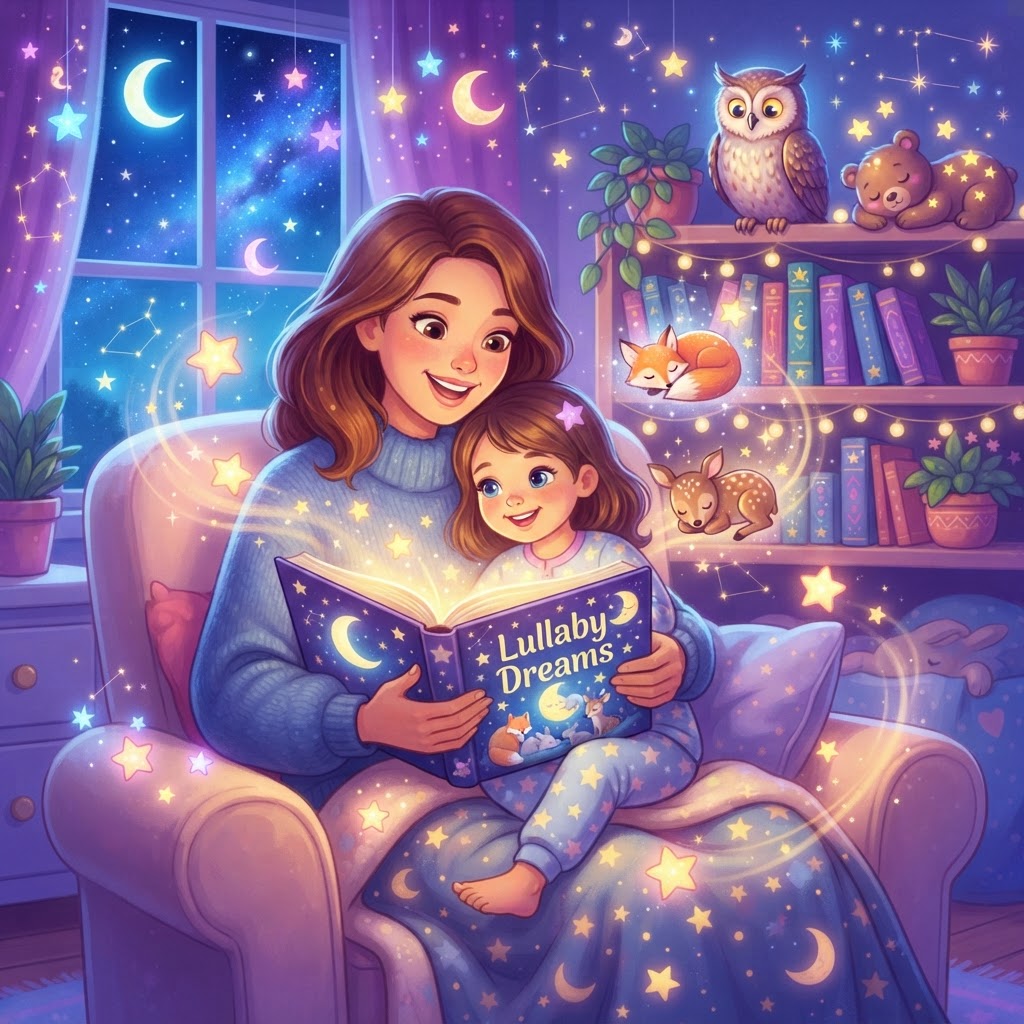
The best lullaby stories for kids do more than fill a few quiet minutes before sleep. They slow the body, soften big feelings, and give children a gentle bridge from daytime energy to nighttime rest. If you are looking for lullaby stories for kids that actually help children settle, this guide will show you what makes them work, which styles fit each age, and how to create personalized lullaby bedtime stories that children want to hear again and again.
If you want a wider mix of calming reads, our guide to gentle bedtime stories for kids is a helpful next step. But when the goal is pure calm, lullaby tales for children have a special role.
What makes a story a lullaby story?
A lullaby story is a bedtime story designed to soothe, not excite. The best ones use soft language, repetition, gentle imagery, and very low conflict so a child’s mind can drift instead of rev up.
In practice, lullaby bedtime stories often include familiar bedtime cues: moonlight, stars, cozy blankets, sleepy animals, and a safe journey toward sleep. The plot is simple. The ending feels certain. Nothing startling happens on the final pages.
The strongest lullaby stories usually share these features:
- Rhythm and repetition that sound calming when read aloud
- Predictable structure, so children know they are safe
- Gentle sensory details, like warm light, soft wind, or quiet footsteps
- Low-stakes problems, if any problem appears at all
- A peaceful ending that naturally leads into sleep
Not every bedtime story is a lullaby story. A funny or adventurous bedtime tale can still be wonderful, but the best lullaby stories are shaped specifically to lower stimulation.
Why do children love lullaby stories so much?
Children love lullaby stories because they feel safe, predictable, and emotionally warm. Those three qualities matter at bedtime, when many children are separating from parents, processing the day, or winding down from busy play.
Research and child development guidance both support the value of calming routines. The CDC’s sleep guidance emphasizes consistent sleep habits, and the American Academy of Pediatrics, through HealthyChildren.org, encourages predictable bedtime routines for better sleep and emotional security.
Lullaby stories help in several ways:
- Repetition lowers effort. Children do not need to work hard to follow the story.
- A soothing voice supports regulation. Slow, warm reading helps the nervous system settle.
- Familiar images build comfort. A sleepy rabbit or glowing moon becomes a bedtime signal.
- Shared reading builds connection. That closeness can reduce bedtime resistance.
Development experts at the Harvard Center on the Developing Child also highlight how warm, responsive interactions help children feel secure and ready to regulate emotions. A gentle story read with attention and closeness does exactly that.
Which lullaby stories for kids work best at each age?
The right lullaby story depends on a child’s stage, attention span, and sensitivity. In general, younger children need shorter and more repetitive stories, while older children can enjoy richer imagery and slightly longer plots.
Ages 1-3
For toddlers, the best lullaby stories for kids are very short and highly rhythmic. Think simple actions, repeated phrases, and clear bedtime cues like “the moon is up” or “the bunny closes her eyes.”
Look for:
- 2-5 minute stories
- Repeated lines
- Familiar animals or family routines
- Little to no conflict
Ages 4-6
Preschoolers and kindergartners can enjoy a bit more story, as long as it stays soft and reassuring. This is a great age for gentle magic, sleepy adventures, and cozy quests.
Look for:
- 5-8 minute stories
- One calm problem and one calm solution
- Reassuring characters
- Musical or poetic language
Ages 7-10
Older children often still love lullaby tales children can sink into, especially after a busy school day. The difference is that they may want more imagination, a stronger setting, or a slightly more meaningful emotional arc.
Look for:
- 8-12 minute stories
- Rich imagery
- Low-stakes fantasy or reflective themes
- A peaceful ending without suspense
If your child is anxious, highly sensitive, or overtired, choose the gentlest version for their age. A calm six-year-old may enjoy soft fantasy, while another six-year-old may sleep best with a simple moon-and-bunny pattern.
What are five lullaby story ideas children tend to love?
The best story ideas are simple, sensory, and easy to personalize. These five concepts work especially well because they mix comfort, repetition, and a clear path toward sleep.
1. The Moonboat on the Sleepy Lake
A child and a friendly animal float across a silver lake, saying goodnight to stars, reeds, frogs, and clouds. Each stop repeats a soothing phrase, which makes this one ideal for younger listeners.
Best for: ages 2-6
2. The Bunny Who Collected Goodnights
A small bunny hops through the house gathering goodnight wishes from slippers, pillows, books, and the window moon. This makes everyday bedtime objects feel magical and safe.
Best for: ages 1-5
3. The Little Star That Forgot to Twinkle
A shy star cannot fall asleep because it thinks it must stay awake and shining. Gentle friends teach the star that even bright things need rest.
Best for: ages 4-8
4. The Cloud Tailor’s Blanket
A kind cloud tailor sews dream blankets from mist, moonbeams, and quiet songs. Each blanket fits one child’s favorite comfort: dinosaurs, flowers, trains, kittens, or the sea.
Best for: ages 3-8
5. The Forest’s Last Whisper
As nighttime falls, every creature in the forest shares one soft secret before sleep. This works beautifully for older children who like imagery, reflection, and a more poetic tone.
Best for: ages 6-10
If your child also likes imaginative worlds, you can blend lullaby structure with soft fantasy stories. If they enjoy learning through stories, calm fact-based themes from educational story ideas can also work well at bedtime when kept gentle.
How can parents make lullaby bedtime stories even more soothing?
The way you read matters almost as much as the story itself. A calm delivery can turn an ordinary bedtime tale into one of the best lullaby stories your child hears all week.
Try these simple techniques:
- Slow your pace more than you think you need to
- Lower your voice slightly, but keep it warm
- Pause after repeated lines so your child can join in
- Dim lights before reading to cue the body for sleep
- End on the softest page, not the most exciting one
- Re-read favorites often instead of chasing novelty every night
It also helps to keep the story emotionally safe. Avoid surprise villains, loud jokes right at the end, or cliffhangers that make a child want “just one more chapter.”
How can you use InstaTales to create personalized lullaby stories children will ask for again?
Personalized lullaby stories work best when they keep the soothing structure of a classic lullaby but add details your child already loves. That might be their name, favorite animal, comfort object, or a place that feels safe and familiar.
With InstaTales, start by choosing to create your own personalized bedtime story and select the lullaby-style setting. Then build the story around a few calming details instead of a busy plot.
A simple formula works well:
- Child’s name or nickname
- One comforting setting, like a moon garden or cozy bedroom
- One gentle companion, like a bunny, bear, or star
- One repeated bedtime phrase
- A peaceful ending that returns the child to bed
If you want help getting started, browse the ready-made story templates and adapt one for bedtime. Once you find a story that works, save it in your story library so you can re-read it on nights when routine matters most.
For best results, keep the prompt clear and calm. For example: “Write a 5-minute lullaby story for Maya, age 4, about a sleepy fox, soft moonlight, repeated goodnight phrases, and no scary parts.”
Frequently Asked Questions
Are lullaby stories only for babies and toddlers?
No. Many older children still enjoy lullaby bedtime stories, especially when they include richer imagery or gentle fantasy. The key is matching the language and length to the child’s age.
How long should a lullaby story be?
For most children, 3-10 minutes is enough. Younger children usually settle best with very short, repetitive stories, while older children can enjoy a slightly longer, calmer tale.
Can lullaby stories help with bedtime resistance?
They often can, especially as part of a predictable routine. A familiar story gives children a clear signal that sleep is coming and can reduce anxiety around transitions.
What if my child wants exciting stories at night?
That is common. Try saving big adventures for earlier in the day and offering one or two cozy choices at bedtime instead, such as a calm animal story or a moonlit journey.
What should I avoid in lullaby tales for children?
Avoid cliffhangers, loud humor, fast pacing, and scary or confusing endings. The best lullaby tales children hear before sleep should feel safe, simple, and emotionally steady.
Can teachers use lullaby-style stories in the classroom?
Yes, especially for rest time, transition periods, or emotional regulation practice with younger children. A soft, rhythmic story can help children reset after busy learning blocks.
Ready to Create a Personalized Bedtime Story?
Use our free AI bedtime story generator to create a personalized illustrated story for your child in 30 seconds — no credit card needed.
Popular story types:
Maya Rodriguez
Lead Content Editor & Early Literacy Specialist
Maya is a former early childhood educator and literacy specialist with over a decade of experience helping children develop a love of reading. She leads content at InstaTales, where she writes about the science of storytelling, child development, and how families can use personalized AI stories to build literacy and emotional resilience.
instatales.ai