Best space bedtime stories for 1-year-olds
Discover the best space bedtime stories for 1-year-olds — themes, tips, and story ideas that will delight your child at bedtime.
✦ Key Takeaways
- •The best bedtime stories for 1 year olds are short, predictable, and emotionally safe.
- •The most important milestones at age 1 are short attention span, early language development, growing memory, and a strong need for familiar routines.
- •Space stories appeal to one-year-olds because they combine wonder with simplicity.
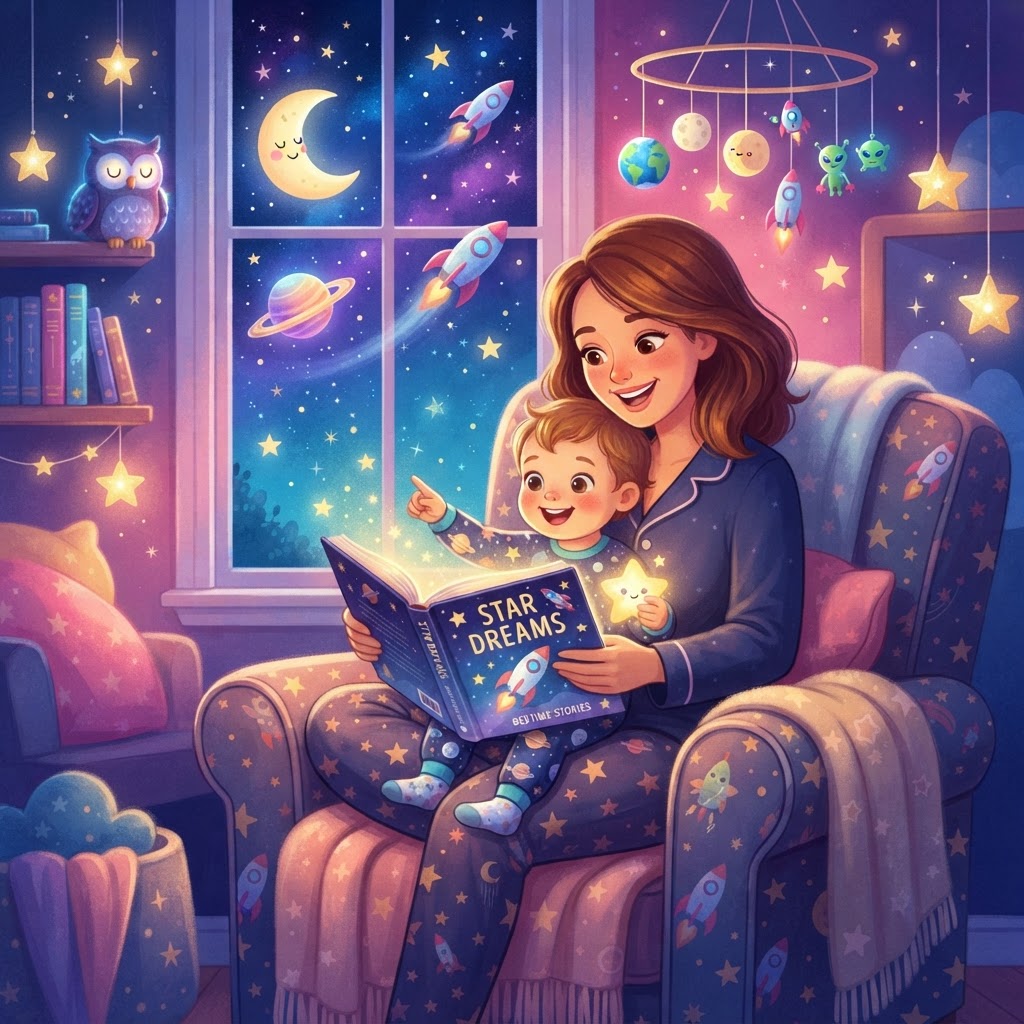
If you are looking for the best space bedtime stories for 1-year-olds, the sweet spot is simple, calm, and repetitive. At this age, babies do not need big plots or science facts. They need soothing sounds, familiar patterns, and cozy images they can hold onto as they settle for sleep. The good news is that space bedtime stories can do this beautifully. A gentle moon, twinkly stars, sleepy rockets, and friendly planets can turn bedtime into a peaceful little adventure. In this guide, you will find what makes space stories for 1 year olds work, what to avoid, and five easy story ideas you can use tonight.
What are the best space bedtime stories for 1-year-olds?
The best bedtime stories for 1 year olds are short, predictable, and emotionally safe. For a space theme, that means stories with a sleepy moon, friendly stars, and a soft journey toward rest rather than action or danger.
At age 1, children respond more to rhythm, repetition, and warmth than to a complicated storyline. A good space story might follow one simple idea: a tiny rocket says goodnight to the moon, or a baby bear counts stars before bed. These stories work because they match a one-year-old’s growing language skills and love of routine.
The most effective kids space stories for this age usually include:
- One main character
- A clear bedtime goal, like “find a cozy cloud” or “say goodnight to the stars”
- Repeated phrases
- Gentle sensory language such as “soft,” “glowy,” “quiet,” and “sleepy”
- A calm ending
What developmental milestones matter when choosing bedtime stories for 1-year-olds?
The most important milestones at age 1 are short attention span, early language development, growing memory, and a strong need for familiar routines. These milestones should guide the kind of space stories for 1 year olds you choose.
According to the CDC developmental milestones, many one-year-olds respond to simple words, copy sounds, use gestures, and notice familiar people and routines. The American Academy of Pediatrics also emphasizes the value of consistent, calming bedtime routines on HealthyChildren.org.
In practical terms, that means a story should support, not stretch, your child’s brain at bedtime. Look for stories that fit these age-related needs:
- Simple language: short sentences and everyday words
- Repetition: repeated names, sounds, or goodnight phrases
- Recognition: familiar objects like a blanket, teddy, or bedtime bottle
- Emotional safety: no scary surprises or loud conflict
- Routine cues: bedtime actions like yawning, snuggling, or dimming the stars
A one-year-old may not fully “follow” a plot, but they absolutely absorb tone, rhythm, and comfort.
Why do space stories appeal to 1-year-olds?
Space stories appeal to one-year-olds because they combine wonder with simplicity. The moon, stars, and glowing sky are visually gentle and naturally tied to nighttime, which makes them ideal for sleep.
Babies and toddlers are drawn to contrast, repetition, and familiar shapes. A round moon, bright stars, and a slow-moving rocket are easy to imagine and easy to repeat. That matters because young children learn through patterns. Research and practice shared by ZERO TO THREE also show that warm back-and-forth interactions, including reading and naming, help build language and connection.
Space also gives parents a calm story setting. Unlike some fantasy or action themes, you can keep the whole story soft:
- The moon can “watch over” the child
- Stars can “blink goodnight”
- Planets can “take turns sleeping”
- A rocket can “float home slowly”
If your child also enjoys other gentle themes, you may like these ideas for nature-themed bedtime stories for 1-year-olds or magic bedtime stories for 1-year-olds.
How long should space bedtime stories for 1-year-olds be?
For most one-year-olds, the ideal bedtime story length is about 2 to 5 minutes. In word count, that is often around 150 to 350 words, depending on your reading pace and how often you pause.
Shorter is usually better at this age. If a story runs too long, the soothing rhythm can turn into overstimulation. The goal is not to finish a “big” story. The goal is to help your child feel secure, drowsy, and ready to sleep.
A good rule is to watch your child, not just the page. Stop while they are still calm and engaged.
Helpful signs the story length is right:
- Your child is cuddling in and looking relaxed
- They enjoy hearing the same lines repeated
- They do not start squirming or fussing
- The ending flows naturally into sleep
If your child loves one scene, stay there. Repeating “goodnight, moon” five times is often more useful than adding new events.
Which space themes work best for one-year-olds?
The best space themes for one-year-olds are bedtime themes, not adventure themes. Choose sleepy, loving, low-stakes ideas that mirror real bedtime routines.
Here are the safest and most effective themes for space bedtime stories:
- Goodnight Moon and Stars: A baby says goodnight to each glowing part of the sky.
- Sleepy Rocket Ride: A tiny rocket floats slowly home to bed.
- Peekaboo Planets: Friendly planets appear one by one, then go to sleep.
- Star Counting: A child counts a few stars with a grown-up or cuddly toy.
- Moonlight Comfort: The moon helps a little animal or child feel calm and cozy.
These themes work because they are repetitive and easy to picture. They also let you use gentle sound patterns like “shh,” “glow,” “float,” and “twinkle.”
If your child loves social stories, you can also explore friendship bedtime stories for 1-year-olds, then blend that warmth into a space setting.
What should parents avoid in space bedtime stories for 1-year-olds?
Parents should avoid scary, noisy, or overly complex space stories for 1-year-olds. At bedtime, the story should calm the nervous system, not activate it.
That means avoiding:
- Space battles, chasing, or crashing
- Villains, monsters, or “lost in space” fear
- Too many characters
- Fast scene changes
- Bright screen-based storytelling right before sleep
- Heavy educational content that feels like a lesson
It is also wise to avoid language that could create bedtime worry, such as “dark and lonely” or “the rocket was all alone and scared.” Space can feel magical without feeling vast or unsettling.
Instead of dramatic suspense, use emotional security. Try phrases like:
- “Mama star stayed close”
- “The rocket floated gently home”
- “The moon watched all night”
- “Everyone in the sky was getting sleepy”
What are five easy space bedtime story ideas for 1-year-olds?
The easiest story ideas for one-year-olds are simple enough to tell from memory. Each of these story starters can become a short, soothing bedtime ritual.
1. The Little Rocket Says Goodnight
A tiny rocket flies slowly past the moon, one star, and one cloud. At each stop, it says, “Goodnight, star. Goodnight, moon. Goodnight, home.”
2. Baby Bear and the Sleepy Moon
A baby bear cannot settle until the moon shines softly on its blanket. The moon hums a quiet goodnight song, and Baby Bear closes its eyes.
3. Twinkle, Twinkle, One by One
A child and teddy count three sleepy stars. After each one, they snuggle deeper into bed until all the stars are tucked in too.
4. The Yawning Planets
Each planet takes a turn yawning. “Yawn, Mars. Yawn, Venus. Yawn, little Earth.” By the end, your child is usually yawning too.
5. The Moon Finds Bunny’s Blanket
A soft moonbeam helps a sleepy bunny find its blanket, pillow, and cozy bed. Once Bunny is tucked in, the moon smiles and dims the sky.
These ideas work well because they use repeated structure, one emotional goal, and a very gentle ending.
How can parents make space bedtime stories more soothing and interactive?
Parents can make bedtime stories more soothing by reading slowly, repeating key phrases, and inviting tiny moments of participation. At age 1, interaction should be simple and calming, not demanding.
Try these practical strategies:
- Use your child’s name once or twice
- Point to the moon, stars, or rocket in the pictures
- Pause for a soft sound like “shh” or “twinkle”
- Repeat one line on every page
- End with the same final words each night
For example, you might say, “Goodnight, little star. Goodnight, little moon. Goodnight, Ava too.” That repeated pattern helps babies predict what comes next, which often makes them feel safe.
If you want more variety without losing that bedtime rhythm, using story templates can make it easier to keep a familiar structure while changing the details.
How can InstaTales help you create personalized space stories for 1-year-olds?
InstaTales can help by turning a simple bedtime idea into a personalized, age-appropriate space story. Personalization often works especially well at age 1 because babies love hearing familiar names, objects, and routines.
With InstaTales, you can create your own personalized bedtime story using your child’s name, favorite toy, bedtime habits, or comfort object. That could mean a story about Maya and her sleepy blue rocket, or Leo and his teddy visiting the moon before bed.
Personalized stories are most useful when they stay simple. For one-year-olds, aim for:
- One main character
- A very short plot
- Familiar bedtime actions
- Soft, repetitive language
- A peaceful ending
Once you find a story your child loves, you can save it in your story library for easy re-reading. Repetition is not boring for babies. It is often exactly what helps the story become part of a calming bedtime routine.
Frequently Asked Questions
Are space stories good for 1-year-olds?
Yes, space stories can be excellent for one-year-olds when they are gentle and simple. The moon, stars, and quiet nighttime setting naturally fit a calming bedtime routine.
How many words should bedtime stories for 1 year olds have?
A good range is about 150 to 350 words. That usually takes 2 to 5 minutes to read aloud, which matches a one-year-old’s attention span well.
Can a 1-year-old understand a space story?
A one-year-old may not follow a full plot, but they understand tone, repetition, and familiar words. They enjoy hearing soothing language and recognizing patterns like “goodnight moon” or “twinkle star.”
What makes space bedtime stories calming?
Calming space bedtime stories use soft imagery, repeated phrases, slow pacing, and a safe ending. They avoid danger, noise, and too many new ideas right before sleep.
Can personalized AI stories be safe for toddlers?
Yes, if parents keep them short, simple, and age-appropriate. The best personalized AI stories for toddlers focus on comfort, routine, and familiar details rather than excitement or suspense.
Ready to Create a Personalized Bedtime Story?
Use our free AI bedtime story generator to create a personalized illustrated story for your child in 30 seconds — no credit card needed.
Popular story types:
Maya Rodriguez
Lead Content Editor & Early Literacy Specialist
Maya is a former early childhood educator and literacy specialist with over a decade of experience helping children develop a love of reading. She leads content at InstaTales, where she writes about the science of storytelling, child development, and how families can use personalized AI stories to build literacy and emotional resilience.
instatales.ai