Best space bedtime stories for 2-year-olds
Discover the best space bedtime stories for 2-year-olds — themes, tips, and story ideas that will delight your child at bedtime.
✦ Key Takeaways
- •Most 2-year-olds can follow very simple plots, enjoy repetition, and connect strongly with familiar words and routines.
- •Space bedtime stories appeal to 2-year-olds because space is visually simple, emotionally gentle, and naturally full of bedtime imagery.
- •The ideal story length for most 2-year-olds is about 3 to 7 minutes.
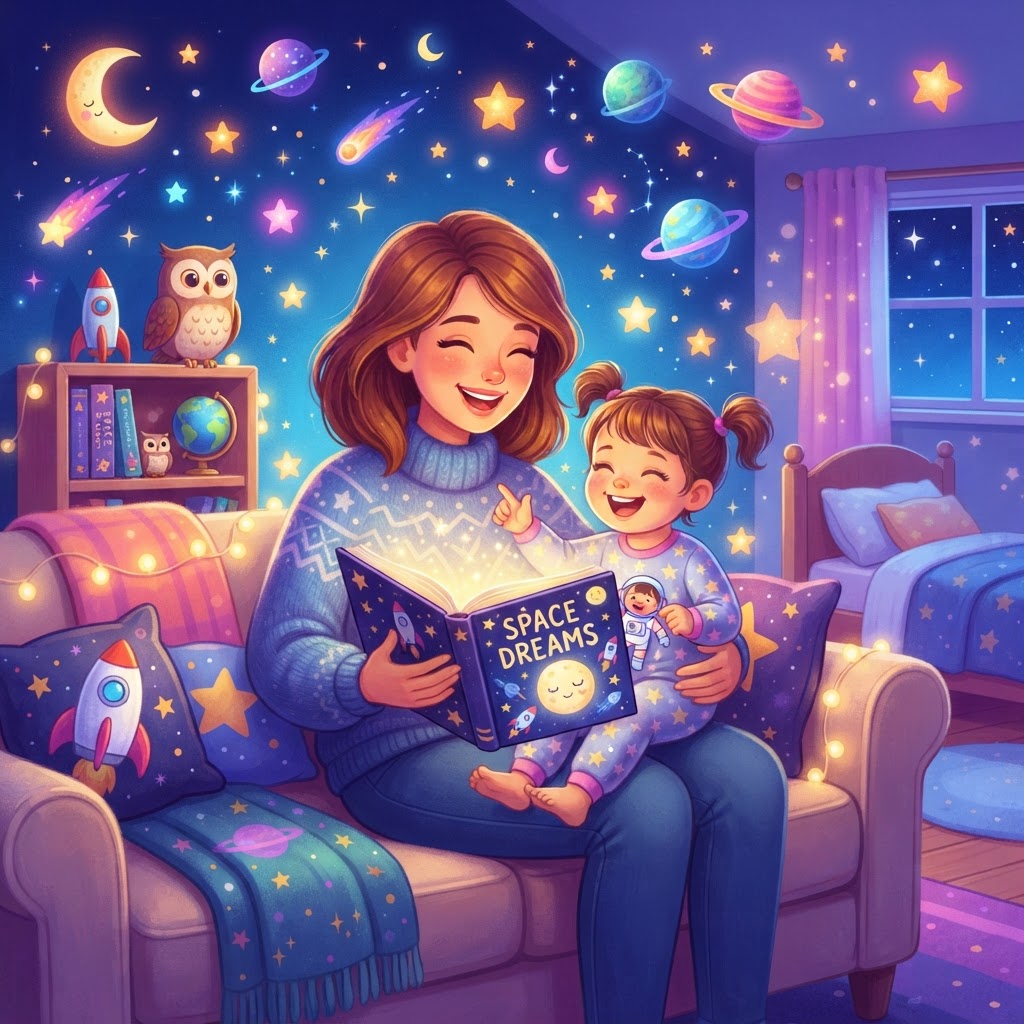
When parents look for space stories for 2 year olds, they usually want the same thing: a story that feels magical without becoming too exciting. The best space bedtime stories for toddlers turn big ideas like stars, moons, and rockets into small, gentle moments a 2-year-old can understand. At this age, bedtime stories work best when they are short, rhythmic, comforting, and full of simple wonder.
What can most 2-year-olds understand at bedtime?
Most 2-year-olds can follow very simple plots, enjoy repetition, and connect strongly with familiar words and routines. They do not need a complex storyline; they need a clear beginning, one small event, and a calm ending.
According to the CDC developmental milestones, many children around age 2 are using short phrases, following simple directions, and starting pretend play. That matters for story choice. A toddler can enjoy “Bunny flies to the moon” or “Star cannot find its blanket,” but may struggle with multiple characters, time jumps, or detailed science explanations.
At bedtime, toddlers also process the day’s emotions. Research and guidance from organizations like ZERO TO THREE emphasize that predictable routines help young children feel safe and regulated. That is why the best bedtime stories for 2 year olds often include:
- Repeated phrases
- Gentle emotional themes
- Familiar bedtime actions like yawning, cuddling, or saying goodnight
- A soothing resolution
For parents, the key is to match the story to your child’s developmental stage, not to the biggest or most imaginative idea you can find.
Why do space stories appeal to 2-year-olds?
Space bedtime stories appeal to 2-year-olds because space is visually simple, emotionally gentle, and naturally full of bedtime imagery. Moons, stars, night skies, and soft glowing lights fit beautifully into a calm nighttime routine.
Toddlers love strong contrasts: dark sky and bright moon, big rocket and tiny star, up and down, near and far. Space also supports early pretend play. A blanket can become a rocket. A night-light can become a star. A teddy bear can become a sleepy astronaut.
There is also a natural bridge between bedtime and outer space. The moon already belongs to your child’s evening world. Even very young children often recognize the moon before they understand what it is. Resources from NASA Space Place show how space topics can be introduced to young children through simple, playful language rather than technical facts.
That is why kids space stories work so well: they feel new and exciting, but they can still stay soft, slow, and cozy.
How long should space bedtime stories be for 2-year-olds?
The ideal story length for most 2-year-olds is about 3 to 7 minutes. In practice, that usually means roughly 150 to 400 words, one main idea, and very little conflict.
If a story is too long, bedtime can shift from soothing to overstimulating. Many parents notice that toddlers lose interest, ask for random detours, or become silly when a story goes on too long. Shorter stories are easier to follow and easier to repeat, which toddlers often love.
A strong bedtime structure looks like this:
- One main character
- One gentle goal, such as finding a star pillow
- One small problem
- One comforting solution
- A sleepy ending
This is especially helpful if you are building a consistent bedtime routine. If you want more age-specific ideas, our guide to soothing bedtime reads for age 2 can help you compare different styles of bedtime stories for 2 year olds.
Which themes work best in space bedtime stories for 2-year-olds?
The best themes for toddlers are simple, sensory, and emotionally safe. Good space stories for 2 year olds usually focus less on adventure and more on comfort, curiosity, and bedtime rituals.
Here are themes that work especially well:
-
Saying goodnight to the moon and stars
This supports routine and repetition. Children can predict what comes next, which helps them relax. -
A gentle rocket ride
A slow, floating journey feels exciting without feeling scary. Think drifting, not blasting. -
A sleepy alien making a friend
This adds novelty while keeping the emotional focus warm and familiar. -
A lost star finding its bed in the sky
Toddlers relate to simple “find and return” stories. -
A teddy bear astronaut getting ready for sleep
Familiar objects help children enter imaginative worlds more confidently.
If your child likes calming, real-world story settings too, you might also enjoy our nature-themed bedtime picks for toddlers or these animal bedtime favorites for 2-year-olds. The best themes often overlap: soft animals, nighttime skies, and gentle friendship all work beautifully together.
What should parents avoid in space stories for 2-year-olds?
Parents should avoid intense danger, scary darkness, fast pacing, and too much information. A toddler bedtime story should calm the nervous system, not wake it up.
That means skipping:
- Meteors crashing toward Earth
- Characters getting lost for a long time
- Loud countdowns and explosive launches
- Villains, monsters, or frightening aliens
- Dense science facts about planets, gravity, or black holes
Even if your child enjoys energetic books during the day, bedtime is different. The American Academy of Pediatrics often stresses the value of calm, predictable evening routines for sleep and regulation. For many toddlers, a “space story” should feel more like floating than zooming.
Also avoid abstract language that has no anchor in a 2-year-old’s daily life. “The lunar module entered orbit” means very little to a toddler. “The little rocket went up, up, up and then whispered goodnight to the moon” is much easier to picture.
What are five great space bedtime story ideas for 2-year-olds?
The best story ideas are simple enough to repeat and flexible enough to personalize. Here are five toddler-friendly space bedtime stories parents can use tonight.
1. The Moon Who Needed a Blanket
The moon feels chilly in the night sky, so a child helps tuck it in with a soft cloud blanket. The story ends with the moon glowing warmly and saying goodnight to everyone below.
2. The Sleepy Rocket Ride
A tiny rocket takes one slow trip around the stars before heading home for bed. Instead of speed and noise, the focus is on floating, yawning, and snuggling into a warm landing.
3. The Little Star Looking for Its Bed
A twinkly star cannot remember which cloud is its bedtime cloud. Friendly sky helpers point the way, and the star settles down just as the child listener settles down too.
4. The Alien Who Loved Lullabies
A gentle alien visits Earth and learns a bedtime song from a child, bear, or bunny. Friendship is the theme, and the alien leaves with a calm heart and sleepy eyes.
5. Teddy Bear Astronaut Says Goodnight
A stuffed teddy puts on a helmet, visits the moon, waves to the stars, and comes back just in time for cuddles. This works especially well for personalization because you can swap in your child’s favorite toy.
If you want these ideas made personal, InstaTales lets you create your own personalized bedtime story with your child’s name, favorite toy, and preferred bedtime tone. Parents who want a quick starting point can also browse ready-made story templates, then save favorite versions in your story library for easy rereading.
How can InstaTales help parents create better space bedtime stories?
InstaTales can help by turning a good bedtime idea into a story that matches your child’s age, interests, and attention span. For 2-year-olds, that personalization matters because small details often make the story feel safe and memorable.
For example, you can create a story where your toddler’s name appears, the rocket is their favorite color, and the ending includes their usual bedtime cue, such as a blanket, song, or teddy. That makes the story feel familiar, which is exactly what many toddlers need at night.
Personalized storytelling is not about making stories bigger. It is about making them simpler, warmer, and more connected to the child in front of you. Used thoughtfully, it can turn kids space stories into a predictable part of a healthy bedtime rhythm.
Frequently Asked Questions
Are space bedtime stories too exciting for 2-year-olds?
Not if they are written with a calm tone. The best space bedtime stories for toddlers focus on moons, stars, floating, and goodnight routines rather than danger or fast action.
What if my 2-year-old is afraid of the dark?
Choose stories that make nighttime feel friendly and gentle. Soft stars, a smiling moon, and familiar characters can help replace fear with comfort.
How often can I repeat the same bedtime story?
Very often. Repetition is helpful for 2-year-olds because it supports language learning, memory, and emotional security.
What words work best in space stories for 2 year olds?
Simple, concrete words work best. Think moon, star, up, soft, glow, sleepy, cuddle, and goodnight.
Can personalized stories help toddlers sleep better?
They can help when they are calm and predictable. Hearing their own name, favorite toy, or bedtime routine in a story often makes the experience feel safer and more soothing.
Should space stories teach science at this age?
Only in a very light way. At age 2, wonder matters more than facts, so it is better to build curiosity first and save detailed science learning for later.
Ready to Create a Personalized Bedtime Story?
Use our free AI bedtime story generator to create a personalized illustrated story for your child in 30 seconds — no credit card needed.
Popular story types:
Maya Rodriguez
Lead Content Editor & Early Literacy Specialist
Maya is a former early childhood educator and literacy specialist with over a decade of experience helping children develop a love of reading. She leads content at InstaTales, where she writes about the science of storytelling, child development, and how families can use personalized AI stories to build literacy and emotional resilience.
instatales.ai