Best space bedtime stories for 4-year-olds
Discover the best space bedtime stories for 4-year-olds — themes, tips, and story ideas that will delight your child at bedtime.
✦ Key Takeaways
- •Space bedtime stories work well because 4-year-olds love big ideas, simple patterns, and playful “what if” questions.
- •The most important milestones are language growth, pretend play, emotional sensitivity, and a growing ability to follow simple plots.
- •For most 4-year-olds, the ideal length is about 5 to 10 minutes, or roughly 500 to 900 words.
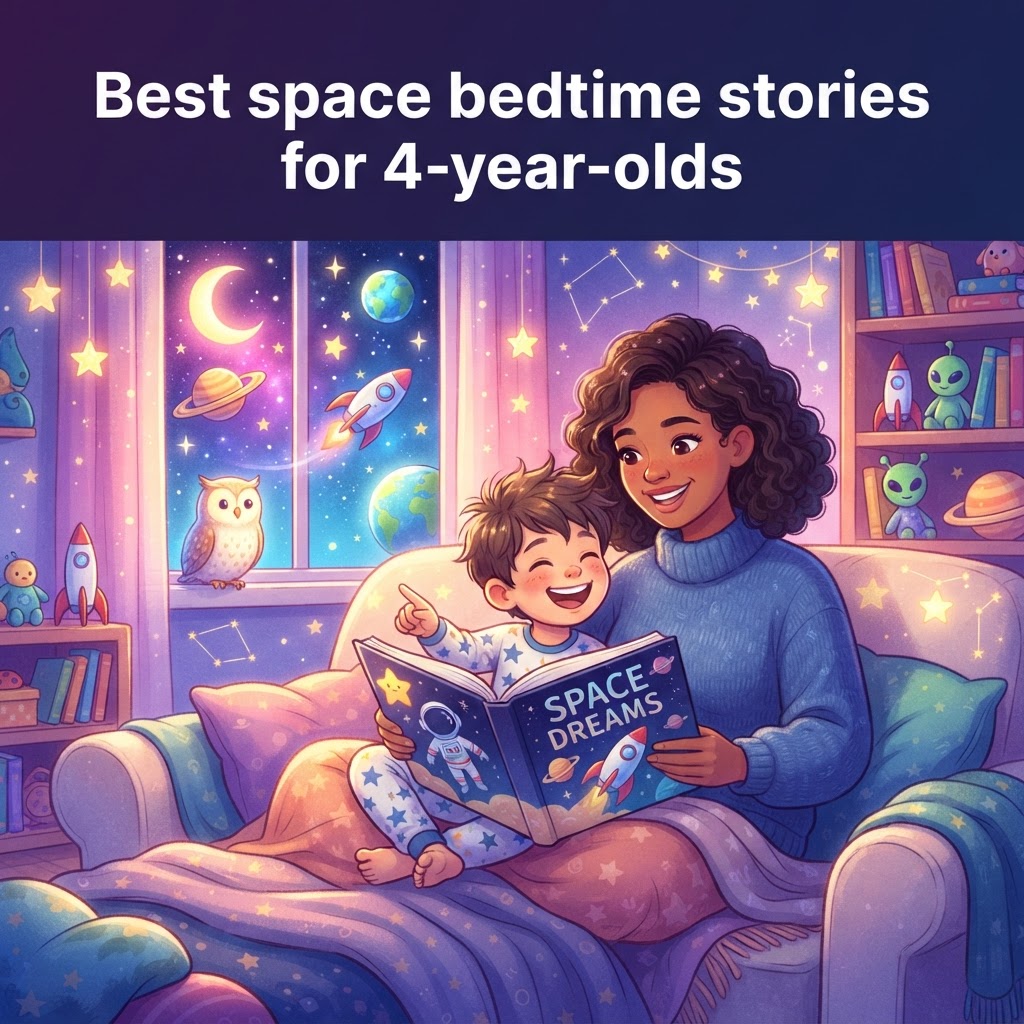
The best space bedtime stories for 4-year-olds do two things at once: they spark wonder and help little bodies settle down for sleep. If you are looking for space stories for 4 year olds that feel gentle, age-right, and fun, it helps to know what children this age can understand, what bedtime pacing works best, and which story themes feel exciting without becoming overstimulating.
Why do space bedtime stories work so well for 4-year-olds?
Space bedtime stories work well because 4-year-olds love big ideas, simple patterns, and playful “what if” questions. At this age, children are curious enough to imagine rockets and stars, but still young enough to enjoy soft repetition and cozy endings.
Many 4-year-olds are in a sweet spot for imaginative play. They can pretend a pillow is a moon rock, a blanket is a night sky, and a cardboard box is a spaceship. That makes kids space stories especially appealing. Space feels huge and magical, but it can still be made safe and familiar through a bedtime story.
There is also a natural bedtime link. Nighttime already brings out talk about the moon, stars, darkness, and dreams. A gentle story about floating past friendly planets often feels more soothing than a noisy action plot.
If your child also enjoys other imaginative themes, you might like these magic stories for imaginative evenings or these gentle bedtime picks for 4-year-olds.
What developmental milestones matter when choosing bedtime stories for 4-year-olds?
The most important milestones are language growth, pretend play, emotional sensitivity, and a growing ability to follow simple plots. A good story for this age should match those strengths without asking too much.
According to the CDC’s 4-year developmental milestones, many children at this age can tell parts of a story, use longer sentences, and enjoy imaginative roles. That means they can follow a clear beginning, middle, and end. They also love stories where a character has a small problem and a comforting solution.
At the same time, 4-year-olds still think very concretely. They may not understand complex science explanations, time jumps, or emotionally heavy themes. The best bedtime stories for 4 year olds keep the language simple and the emotional tone secure.
As an educator, I usually look for these signs of a strong bedtime story for this age:
- One main character, or two at most
- A clear goal, like finding a star or visiting the moon
- Repetition, such as “zoom, float, glow”
- Gentle problem-solving
- A calm ending that leads back to sleep
Research on shared reading, including work highlighted by the American Academy of Pediatrics, shows that reading aloud supports language, attention, and parent-child bonding. That is one reason a well-chosen bedtime story matters more than many parents realize.
How long should space stories for 4 year olds be at bedtime?
For most 4-year-olds, the ideal length is about 5 to 10 minutes, or roughly 500 to 900 words. That is usually long enough to feel satisfying, but short enough to avoid bedtime second wind.
Children this age can enjoy a richer story than toddlers, but they still tire quickly at the end of the day. If the story is too short, it may not help them settle. If it is too long, they may wiggle, ask many side questions, or become overstimulated.
A good rhythm for space bedtime stories often looks like this:
- 1 minute: introduce the child or main character
- 3 to 5 minutes: one small adventure in space
- 1 to 2 minutes: a slow, cozy return home
- Final lines: rest, cuddles, stars, sleep
If your child is extra tired, choose a shorter version. If they are very engaged, pause often and let them point, guess, or repeat key phrases. That kind of back-and-forth, sometimes called dialogic reading, helps build vocabulary and comprehension.
Which space themes are best for bedtime?
The best bedtime space themes are gentle, familiar, and full of wonder. Think moonbeams, glowing stars, sleepy planets, kind astronauts, and safe little journeys.
Not every space topic fits bedtime. Black holes, alien battles, and emergency landings may sound exciting, but they can easily tip a child from calm curiosity into anxiety. For sleep, soft wonder wins.
These themes tend to work especially well:
- Moon visits: quiet, silver, dreamy, and naturally linked to bedtime
- Star collecting: simple goals and pretty imagery
- Planet friendships: each planet can have a personality without becoming scary
- Rocket rides with a safe return: adventure with reassurance
- Space animals or cuddly aliens: novelty without fear
You can also blend interests. If your child loves teamwork, try friendship-focused bedtime stories. If they want a bit more motion, adventure bedtime ideas can still be calming when the stakes stay low.
For real-world inspiration, parents sometimes enjoy browsing child-friendly resources like NASA Space Place, then turning one simple fact into a story. A child does not need scientific detail at bedtime. They just need one spark of wonder.
What should parents avoid in kids space stories for this age?
Avoid anything too intense, too confusing, or too fast-paced right before sleep. The goal is comfort, not cliffhangers.
Here are the biggest pitfalls to skip in kids space stories for 4-year-olds:
- Scary darkness: outer space can be vast, so describe it as peaceful, sparkling, and safe
- Loud conflict: space battles, chases, and villains often raise arousal levels
- Too much science detail: facts are great, but bedtime is not the time for a lecture on gravity
- Unresolved endings: always bring the character home, to bed, or to a cozy resting place
- Sensory overload: too many characters, planets, or twists can make it hard to follow
Also watch your own child’s cues. Some children love suspense; others carry story images into sleep. If your child asks to stop, clings more than usual, or has trouble settling after certain stories, that is useful information. The best space stories for 4 year olds are the ones that fit your specific child.
What are five great space bedtime story ideas for 4-year-olds?
The best story ideas are simple, visual, and easy to personalize. Each one below gives your child a clear adventure and a peaceful ending.
1. The Little Rocket Who Forgot to Yawn
A tiny rocket is too excited to sleep, so the moon teaches it how to slow down. At each star, the rocket takes a deep breath, stretches, and finally gives one big yawn before landing on a fluffy cloud.
2. The Star That Needed a Goodnight Song
A shy star cannot glow until someone sings to it. Your child-character floats through the sky, singing soft songs until the star shines warmly and lights the way home.
3. The Friendly Planet Parade
Each planet says hello in a different gentle way. One twirls, one hums, one glows blue, and one blows sleepy sparkles, before everyone waves goodnight and the spaceship returns to Earth.
4. Teddy Bear on the Moon
A favorite stuffed animal accidentally bounces to the moon in a dream. Your child goes on a calm rescue mission, finds Teddy beside a moonflower, and tucks them safely back into bed.
5. The Sleepy Astronaut’s Night Garden
An astronaut discovers a quiet garden growing among the stars. The flowers close their petals one by one, showing the child how every creature in the universe rests at night.
These kinds of plots are easy to adapt around your child’s favorite toy, name, bedtime routine, or comfort phrase.
How can parents use personalized stories to make bedtime easier?
Personalized stories often help because children listen longer when they hear their own name, interests, and routines in the story. Personalization can make bedtime feel more familiar, predictable, and emotionally safe.
With InstaTales, parents can create your own personalized bedtime story using a child’s name, age, favorite things, and preferred tone. For a 4-year-old who loves rockets but gets nervous about darkness, you can generate a story with glowing stars, a brave bunny astronaut, and a very calm ending.
This can be especially useful when you want to keep a consistent routine. You might save favorite stories in your story library so your child can revisit the same comforting characters again and again. Repetition supports early learning and emotional security.
If you want a quicker starting point, you can also browse story templates or explore more reading ideas on the InstaTales blog. Personalized storytelling works best when parents still guide the tone, length, and emotional feel.
How can parents turn a space story into a calming bedtime routine?
A space story works best when it is part of a predictable, low-stimulation routine. The story should come after active play is over, not during a rushed or noisy moment.
A simple routine might be:
- Bath or wash-up
- Pajamas
- One short cuddle and chat
- One space bedtime story
- Lights low, same goodnight phrase each night
Keep your voice slow and warm. Pause before the final page. Let the ending mirror what you want your child’s body to do next: snuggle, close eyes, breathe slowly, and rest.
If your child rotates interests, it can help to keep a few calming themes ready. Some families alternate space nights with animal bedtime stories or friendship stories to keep the routine fresh without making it unpredictable.
Frequently Asked Questions
Are space bedtime stories too exciting for 4-year-olds?
Not usually, as long as the story is gentle. Choose soft adventures, kind characters, and calm endings instead of danger or fast action.
What makes a good bedtime story for 4 year olds?
A good story for this age is short, clear, and emotionally safe. It should have simple language, mild suspense, repetition, and a comforting ending.
How often should I read the same story at bedtime?
Repeating a favorite story is helpful for many 4-year-olds. Familiar stories build language, confidence, and a sense of bedtime security.
Can personalized AI stories be appropriate for young children?
Yes, if a parent guides the prompt and checks the tone, length, and themes. The best results come when adults keep stories simple, warm, and age-appropriate.
What if my child starts asking lots of science questions at bedtime?
That is a great sign of curiosity. Give a short answer in the moment, then save the longer explanation for daytime so bedtime can stay calm.
Should space stories include real facts?
A few simple facts can add wonder, but they are not required. For bedtime, emotional comfort matters more than scientific detail.
Ready to Create a Personalized Bedtime Story?
Use our free AI bedtime story generator to create a personalized illustrated story for your child in 30 seconds — no credit card needed.
Popular story types:
Maya Rodriguez
Lead Content Editor & Early Literacy Specialist
Maya is a former early childhood educator and literacy specialist with over a decade of experience helping children develop a love of reading. She leads content at InstaTales, where she writes about the science of storytelling, child development, and how families can use personalized AI stories to build literacy and emotional resilience.
instatales.ai