Easter Stories for Kids: Magical Holiday Ideas
Celebrate Easter with these magical stories for kids — festive, fun, and perfect for the season.
✦ Key Takeaways
- •Easter stories for kids are special because they combine celebration, comfort, and curiosity in a way young children naturally understand.
- •The simplest child-friendly way to explain Easter is to say that it is a holiday about hope, love, and new life.
- •The best Easter stories children enjoy at bedtime are gentle, imaginative, and easy to follow.
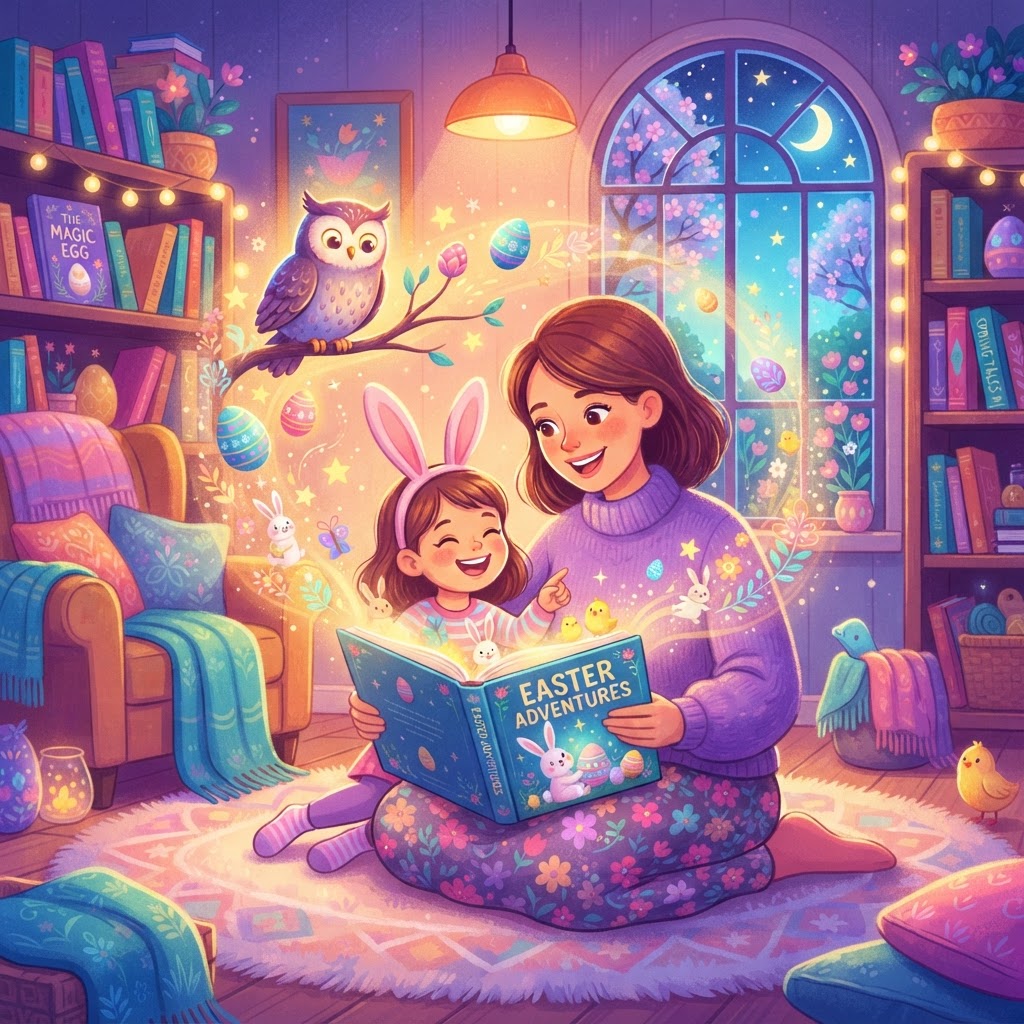
Easter is a wonderful time for gentle, hopeful storytelling, and the best Easter stories for kids blend springtime wonder with comfort, kindness, and imagination. Whether your family celebrates Easter as a religious holiday, a seasonal tradition, or simply a joyful spring festival, stories can help children make sense of the symbols around them—eggs, bunnies, blossoms, surprises, and new beginnings.
For young children especially, seasonal stories do more than entertain. Read-aloud routines build language, emotional connection, and early literacy skills. The American Academy of Pediatrics recommends reading together from infancy because it supports both brain development and parent-child bonding. That makes Easter bedtime stories a simple but meaningful way to celebrate the season.
Why are Easter stories for kids such a special tradition?
Easter stories for kids are special because they combine celebration, comfort, and curiosity in a way young children naturally understand. They offer familiar symbols, cozy repetition, and a hopeful theme of renewal that works beautifully at bedtime or during family gatherings.
Children learn through patterns and sensory details. Easter stories often include bright eggs, fluffy chicks, flower gardens, and little acts of kindness—all images that are easy for children aged 1-10 to picture and remember.
Seasonal stories also help children connect events in their world to emotions and routines. A child who hears a story about sharing eggs, helping a friend, or welcoming spring is not just listening for fun. They are practicing empathy, sequencing, prediction, and vocabulary.
That is one reason educators and literacy specialists often encourage themed storytelling throughout the year. If your child already loves festive read-alouds, you might also enjoy other holiday ideas on the InstaTales blog or seasonal favorites like Christmas story ideas.
How can you explain the meaning of Easter to children?
The simplest child-friendly way to explain Easter is to say that it is a holiday about hope, love, and new life. For Christian families, Easter celebrates the resurrection of Jesus. For many other families, it is also a springtime tradition that focuses on renewal, joy, and togetherness.
For younger children, keep the explanation short and reassuring:
- Easter is a time when many people celebrate hope and new beginnings.
- Spring reminds us that the world wakes up again with flowers, sunshine, and baby animals.
- Families may celebrate with church, meals, egg hunts, songs, stories, or acts of kindness.
If children ask about Easter eggs and the Easter Bunny, you can explain that many traditions grew over time as symbols of spring and new life. The Library of Congress offers a helpful overview of where some of those customs came from.
A good rule is to match your explanation to your child’s age. Toddlers need simple ideas and warm images. Older children may enjoy learning that holidays can have both religious meaning and cultural traditions.
Which Easter story ideas make the best bedtime reads?
The best Easter stories children enjoy at bedtime are gentle, imaginative, and easy to follow. A strong Easter story usually includes one clear problem, a kindhearted character, and a calm, hopeful ending.
Here are seven story ideas that work especially well as kids Easter tales:
-
The Bunny Who Forgot the Basket
A young bunny is excited for Easter morning but realizes the basket is missing. Along the way, woodland friends help solve the problem, teaching teamwork and gratitude. -
The Golden Egg in the Garden
A child finds a glowing egg hidden among tulips. Inside is not candy but a tiny note asking them to do one kind thing before sunset. -
Lila and the Sleepy Chicks
On Easter Eve, the chicks are too sleepy to join the parade. Lila creates a soft song and a moonlit path to help them feel brave. -
The Rainy Day Egg Hunt
When rain ruins the family’s outdoor plans, siblings create an indoor Easter hunt for a younger cousin. This makes a lovely story about flexibility and joy. -
The Little Lamb’s First Spring
A timid lamb explores the farm for the first time, discovering daffodils, puddles, and friendship. This is ideal for toddlers and preschoolers. -
The Easter Basket Delivery Team
A rabbit, a robin, and a turtle must deliver baskets across a windy meadow. Each friend contributes a different strength, making the story perfect for ages 4-8. -
Maya’s Wish Egg
Maya paints one egg for each person she loves. When one cracks, she learns that love is not ruined by mistakes—it often grows stronger through them.
These ideas work because they are emotionally safe, visually rich, and easy to personalize. You can change the main character, add your child’s favorite animal, or set the story in your own backyard to make it more memorable.
What does a gentle Easter bedtime story sound like?
A good Easter bedtime story sounds calm, magical, and reassuring. It should use soft sensory details, a simple rhythm, and an ending that leaves children feeling safe.
Here is a short sample excerpt:
On the night before Easter, Millie Bunny tiptoed through the silver grass with a tiny lantern swinging from her paw. The moon was round and quiet, and every flower in Clover Meadow seemed to be holding a secret.
Near the old apple tree, Millie found one last egg to deliver. It was pale blue, warm to the touch, and painted with a little golden sun.
“Who is this one for?” she whispered.
A robin fluttered down beside her. “For the child who helped without being asked,” he chirped.
Millie smiled. She thought of Leo, who had shared his crayons, picked up fallen tulips, and carried carrots to his grandmother’s door.
So she placed the egg gently in Leo’s basket and tucked a note beside it: Kindness grows like spring—quietly, brightly, everywhere.
When Leo woke the next morning, he did not notice the chocolate first. He noticed the note. And before breakfast, before games, before the egg hunt began, he ran outside and hugged the first person he saw.
This kind of excerpt works well because it keeps the stakes low while still feeling meaningful. It also gives parents a natural opening to talk about kindness, gratitude, or family traditions.
How can you create personalized Easter stories with InstaTales?
You can create personalized Easter stories quickly by choosing a theme, adding your child’s details, and shaping the tone for their age. Personalized stories are powerful because children engage more deeply when they hear their own name, interests, and feelings reflected in a story.
Here is a simple way to do it with InstaTales:
- Start with a seasonal prompt such as “an Easter egg hunt in a moonlit garden” or “a shy bunny learning to share.”
- Add your child’s name, age, favorite animal, and favorite colors.
- Choose the mood: cozy, funny, magical, or faith-inspired.
- Include a gentle lesson like patience, kindness, bravery, or gratitude.
- Ask for a bedtime-friendly ending with calm language.
You can create your own personalized bedtime story in just a few steps, and if you want a quicker starting point, the Easter-themed story templates can help spark ideas. Once you have a few favorites, save them in your story library so children can revisit the same stories all season long.
A good prompt might look like this:
- “Write an Easter bedtime story for a 5-year-old named Ava who loves ducks, yellow flowers, and treasure hunts. Make it gentle, magical, and about helping others.”
That small amount of detail can turn a generic story into one your child truly remembers.
How can Easter stories support learning at home or in the classroom?
Easter stories can support language, emotional growth, and creative thinking when adults use them interactively. A simple story becomes much more powerful when you pause to ask questions, predict what happens next, or invite children to retell the plot.
Research on interactive read-alouds shows that children learn more when reading is conversational rather than passive. Reading Rockets highlights how dialogic reading builds vocabulary and comprehension, while NAEYC emphasizes playful, responsive literacy experiences in early childhood.
Try these simple extensions after reading Easter stories for kids:
- Ask, “What was the kindest choice in the story?”
- Invite children to draw the egg, bunny, or garden they imagined.
- Retell the story in three steps: beginning, middle, end.
- Create your own family ending or classroom sequel.
For educators, seasonal storytelling can fit literacy centers, spring writing prompts, and social-emotional learning. If you want ideas for group use, InstaTales for teachers can support classroom storytelling, shared writing, and differentiated reading activities. And if your family enjoys storytelling across the year, cozy reads like not-too-scary Halloween stories can help keep the habit going long after Easter.
Frequently Asked Questions
What age are Easter stories best for?
Easter stories can work well for children ages 1-10 when the language and length match the child’s stage. Toddlers do best with short, repetitive stories, while older children can enjoy more detailed plots and character growth.
What should be included in Easter bedtime stories?
The best Easter bedtime stories include calm pacing, warm imagery, and a reassuring ending. Themes like kindness, springtime discovery, family traditions, and gentle adventure are especially bedtime-friendly.
Can Easter stories be meaningful without being strongly religious?
Yes. Many families enjoy Easter stories centered on spring, hope, gratitude, and new beginnings. Others prefer stories that include the Christian meaning of Easter in an age-appropriate way.
How do personalized Easter stories help children?
Personalized stories often hold a child’s attention longer because they feel seen in the story. Hearing their own name, interests, or worries reflected in a tale can support emotional connection and motivation to read.
How can teachers use Easter stories in the classroom?
Teachers can use Easter stories for read-alouds, sequencing activities, vocabulary work, and creative writing. They also work well for social-emotional discussions about helping, sharing, and celebrating traditions respectfully.
Where can I make custom Easter stories for my child?
You can use InstaTales to create Easter stories tailored to your child’s age, interests, and bedtime needs. Personalized prompts make it easy to turn simple Easter themes into memorable family stories.
Ready to Create a Personalized Bedtime Story?
Use our free AI bedtime story generator to create a personalized illustrated story for your child in 30 seconds — no credit card needed.
Popular story types:
Maya Rodriguez
Lead Content Editor & Early Literacy Specialist
Maya is a former early childhood educator and literacy specialist with over a decade of experience helping children develop a love of reading. She leads content at InstaTales, where she writes about the science of storytelling, child development, and how families can use personalized AI stories to build literacy and emotional resilience.
instatales.ai