Hindu Stories for Kids: Myths Made Gentle
Exciting Hindu stories for kids — gods, heroes, monsters, and adventures from Hindu mythology, retold for young readers.
✦ Key Takeaways
- •The best Hindu stories for kids are gentle retellings of well-known tales from Hindu tradition.
- •Young children do best when they meet a few memorable characters first.
- •The most child-friendly Hindu tales are the ones built around feelings and choices that children already understand.
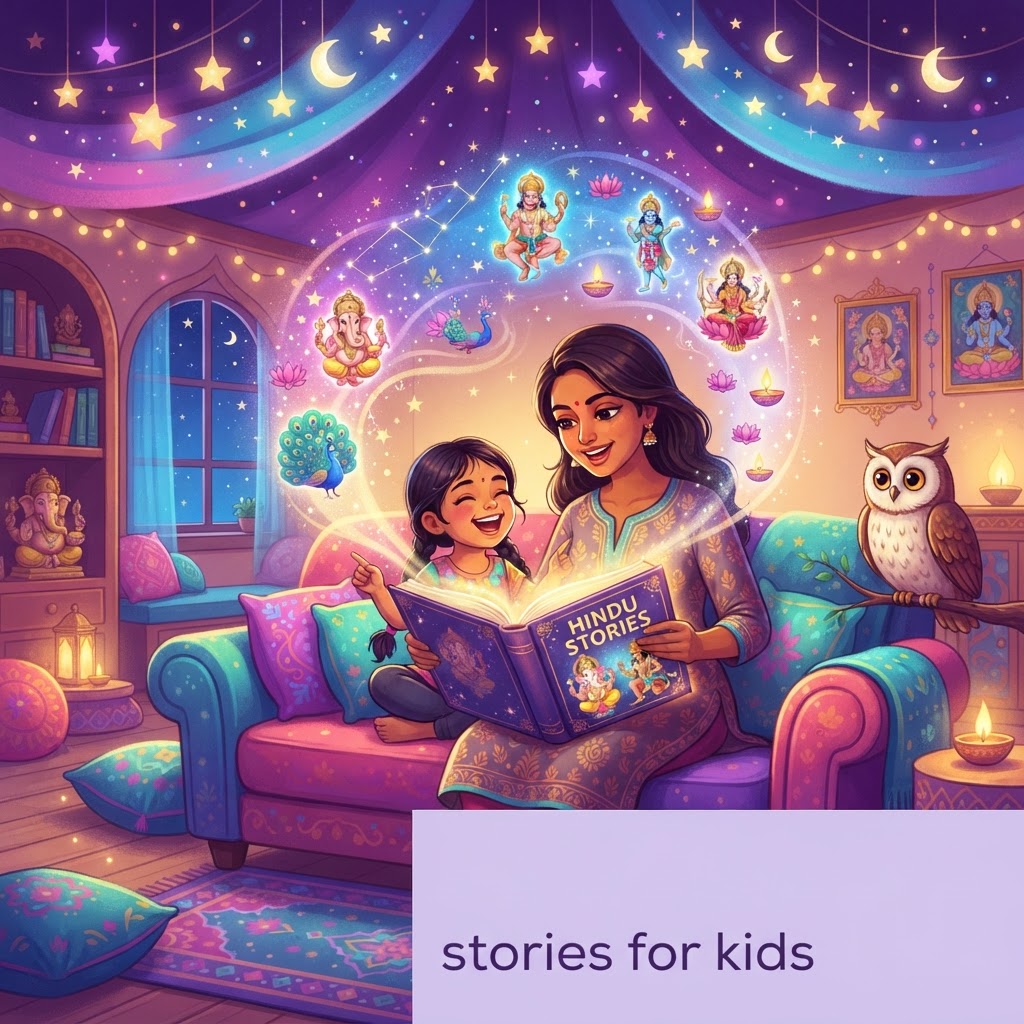
Hindu stories for kids are full of color, feeling, and adventure. They introduce children to brave heroes, playful gods, wise animals, and big ideas like kindness, courage, focus, and family love. When these stories are retold with care, Hindu mythology for children can feel exciting without becoming overwhelming.
The key is to choose simple, age-friendly versions. Many classic Hindu tales come from sacred texts and long oral traditions, so parents and teachers do not need to tell every dramatic detail. Instead, they can share the heart of the story in a way that feels respectful, clear, and comforting for young listeners.
What are Hindu stories for kids?
The best Hindu stories for kids are gentle retellings of well-known tales from Hindu tradition. They keep the meaning, values, and wonder of the originals while simplifying names, plot lines, and intense scenes for young readers.
Many kids Hindu stories come from the Ramayana, the Mahabharata, and stories about deities such as Ganesha, Krishna, Hanuman, Durga, and Saraswati. These stories are not just fantasy adventures. For many families, they are part of a living faith and cultural heritage, which is why respectful retelling matters.
If you want reliable background on South Asian religion and epic traditions, Columbia University’s Asia for Educators is a strong starting point.
Which characters from Hindu mythology should children meet first?
Young children do best when they meet a few memorable characters first. Start with warm, easy-to-follow figures whose stories have clear emotions and simple lessons.
Good first characters include:
- Ganesha: Often loved by children because he is gentle, clever, and easy to recognize.
- Krishna: Mischievous, musical, and full of joy in many child-friendly tales.
- Hanuman: Brave, loyal, energetic, and perfect for action-filled stories.
- Rama and Sita: Helpful for stories about promises, loyalty, and doing the right thing.
- Durga: Strong and protective, especially in versions that focus on courage rather than battle.
- Saraswati: A lovely choice for stories about learning, music, and creativity.
For ages 1-5, pick one main character per story. For ages 6-10, children can usually handle a larger cast and a little more background.
What themes in Hindu tales connect best with young readers?
The most child-friendly Hindu tales are the ones built around feelings and choices that children already understand. Themes like helping others, staying brave, telling the truth, and using your mind well are easy for children to connect with.
These themes tend to work especially well:
- Courage: Trying something hard even when you feel small
- Devotion and love: Caring deeply for family, friends, or a higher purpose
- Clever thinking: Solving problems with wisdom, not force
- Duty and responsibility: Keeping promises and doing what is right
- Kindness: Helping others, including animals and strangers
- Self-control: Learning to pause, focus, and choose wisely
That is one reason Hindu mythology children often remember becomes the story set they hear again and again. The lessons are strong, but they are carried by vivid characters and magical scenes.
Which Hindu stories work best for ages 1-10?
The best Hindu stories for kids are short, visual, and centered on one clear event. Here are seven age-appropriate ideas that work well at bedtime, in classrooms, or during family reading time.
-
Ganesha and the race around the world
Best for ages 3-8. Ganesha wins a race by circling his parents, showing that love and wisdom matter more than speed. -
Krishna and the butter pot
Best for ages 2-7. This playful tale focuses on curiosity, mischief, and affection rather than punishment. -
Hanuman reaches for the sun
Best for ages 3-8. Young Hanuman mistakes the sun for a fruit, creating a funny and energetic adventure. -
The little squirrel helps build the bridge
Best for ages 4-9. A tiny squirrel helps Rama’s team, teaching children that even small helpers matter. -
Krishna lifts Govardhan Hill
Best for ages 5-9. This story works well as a protective adventure about community and care. -
Durga protects the world
Best for ages 6-10. Keep the focus on bravery, protection, and light overcoming fear, not on violent detail. -
Arjuna learns to focus
Best for ages 6-10. A simple retelling of his concentration lesson can become a powerful story about attention and practice.
If your child enjoys world mythology in general, they may also like Chinese myths for young readers and Japanese myths for children.
What should adults adapt when retelling Hindu mythology for children?
Adults should adapt intensity, not meaning. The goal is to keep the heart of the story while making it emotionally safe and developmentally appropriate.
A few smart ways to adapt:
- Soften violent scenes by saying a hero “protected others” or “defeated the danger”
- Shorten long epics into one simple episode
- Reduce complex family trees and extra side plots
- Explain unusual words like dharma in plain language, such as “doing what is right”
- Acknowledge different versions by saying, “Some families tell this story this way”
- Avoid turning sacred figures into jokes if the humor feels disrespectful
This approach matches what many child development experts recommend: young children learn best when stories are emotionally manageable and repeated in clear, simple language. It also honors the fact that Hinduism is a living tradition, not just a shelf of old myths.
How can Hindu stories support learning, empathy, and bedtime routines?
Hindu stories can support language growth, emotional learning, and cultural understanding. Shared reading helps children build vocabulary, memory, and listening skills, especially when adults pause to talk about feelings and choices.
The American Academy of Pediatrics encourages reading aloud from early childhood, and Harvard’s Center on the Developing Child highlights the value of warm back-and-forth conversation. A simple question like “Why do you think Hanuman wanted to help?” turns a story into a rich learning moment.
At home, try:
- asking one prediction question
- naming one feeling in the story
- ending with one calm takeaway, such as “Even small helpers matter”
In the classroom, these stories also work well beside other global traditions. Teachers can compare themes across cultures and invite children to notice how many stories celebrate bravery, kindness, and cleverness.
How can you create Hindu-inspired stories with InstaTales?
You can use InstaTales to create gentle, personalized Hindu-inspired bedtime stories by starting with one character, one value, and one simple adventure. This keeps the story calm, age-appropriate, and easy for children to follow.
A good process looks like this:
- Choose a character, such as Ganesha, Hanuman, or Krishna
- Pick a theme, such as courage, sharing, or focus
- Add your child’s favorite elements, like animals, stars, music, or a forest path
- Keep the prompt respectful and inspired by tradition rather than copying sacred text word for word
You can create your own personalized bedtime story with prompts like:
- “Write a gentle bedtime story inspired by Ganesha about solving a problem with wisdom.”
- “Tell a calm Hanuman adventure for a 5-year-old about helping a friend.”
- “Create a Krishna story with music, rain, and kindness for bedtime.”
If you want a quick start, browse the story templates. When you find favorites, save them in your story library so children can revisit beloved stories again and again.
Frequently Asked Questions
Are Hindu stories good for bedtime?
Yes, many Hindu stories work beautifully at bedtime when you choose calm, short episodes. Look for stories centered on love, wisdom, or gentle adventure rather than conflict.
Which Hindu character is best for young children?
Ganesha is often the easiest starting point. His stories are warm, memorable, and usually simple enough for preschool and early elementary ages.
How do I make Hindu mythology less scary for kids?
Focus on the emotional lesson instead of the dramatic action. You can say a character “protected others” or “solved the problem” without describing every frightening detail.
Are Hindu stories only for Hindu families?
No, many families enjoy these stories for their cultural richness and universal themes. The important part is to present them respectfully and remember that they come from a living religious tradition.
Can teachers use Hindu tales in class?
Yes, when they are taught with context and respect. Short, age-appropriate retellings can support literacy, world cultures, and discussion about values like courage, focus, and kindness.
Ready to Create a Personalized Bedtime Story?
Use our free AI bedtime story generator to create a personalized illustrated story for your child in 30 seconds — no credit card needed.
Popular story types:
Maya Rodriguez
Lead Content Editor & Early Literacy Specialist
Maya is a former early childhood educator and literacy specialist with over a decade of experience helping children develop a love of reading. She leads content at InstaTales, where she writes about the science of storytelling, child development, and how families can use personalized AI stories to build literacy and emotional resilience.
instatales.ai