Transitioning From Picture Books to Story Books
Is your child ready for longer story books? Here's how to make the transition from picture books to story books smoothly.
✦ Key Takeaways
- •Transitioning from picture books feels big because children are being asked to hold more of the story in their minds.
- •A child is often ready for story books when they can stay engaged with a longer narrative and talk about what happened.
- •The best first story books for kids are short, engaging, and easy to follow.
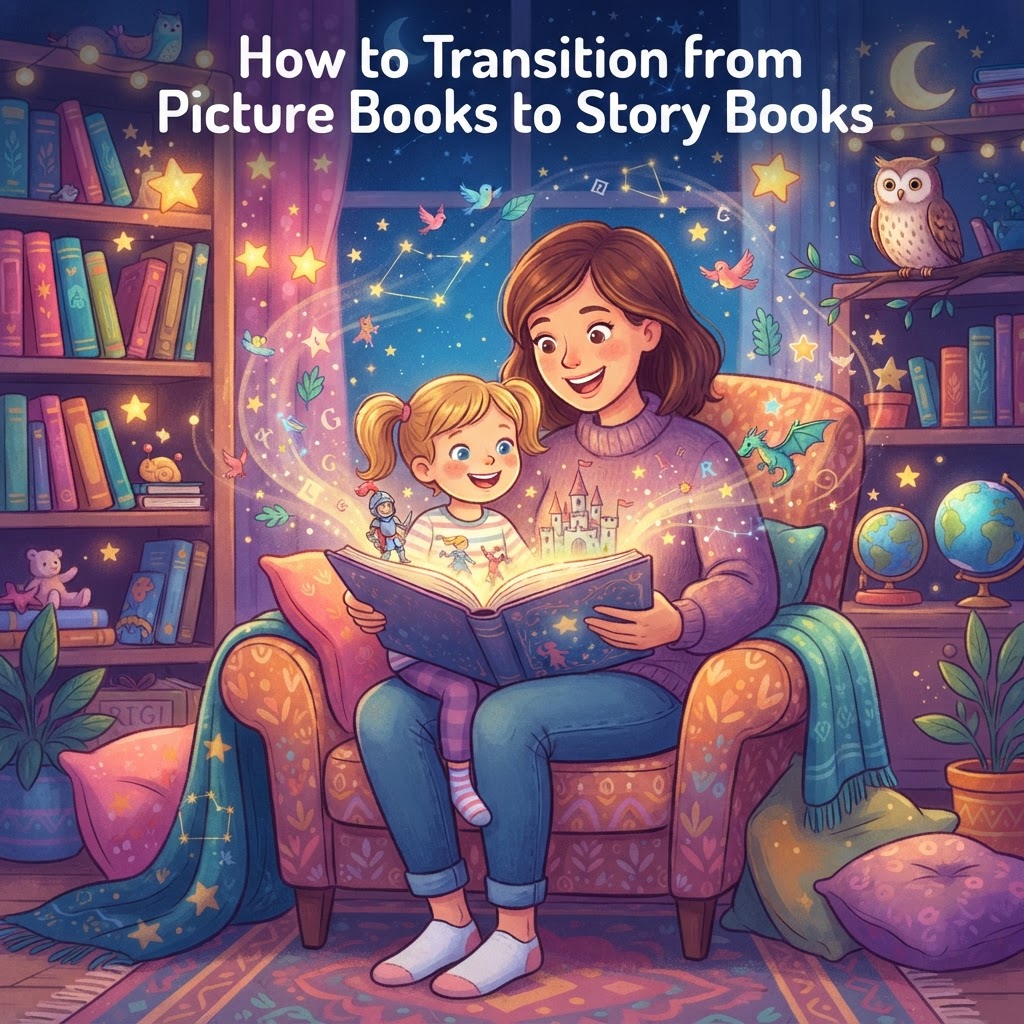
If your child has happily spent months—or years—inside colorful picture books, moving to longer stories can feel exciting and a little uncertain. The good news is that transitioning from picture books is usually not a sudden leap. It is a gradual shift in attention, language, memory, and confidence.
Many children are ready for story books for kids before parents expect, while others need more time and support. The key is not to rush the format. It is to build the skills that help children enjoy longer plots, fewer illustrations, and richer language—while keeping reading warm, interactive, and fun.
Why can transitioning from picture books feel like a big step?
Transitioning from picture books feels big because children are being asked to hold more of the story in their minds. In picture books, illustrations do a lot of the work. In story books, children rely more on listening, memory, and imagination.
That does not mean story books are “better.” It simply means they ask for different skills. Children need to follow a plot across more pages, remember characters, and understand meaning with fewer visual clues.
Research consistently shows that shared reading supports language and comprehension growth. The National Institute of Child Health and Human Development notes that reading together builds vocabulary, listening skills, and background knowledge—all essential for longer books.
So if the transition feels slower than expected, that is normal. It is a developmental shift, not a reading test.
How do you know your child is ready for story books?
A child is often ready for story books when they can stay engaged with a longer narrative and talk about what happened. Readiness is less about age and more about attention, curiosity, and comprehension.
Common signs of readiness include:
- They can listen through a picture book with fewer interruptions
- They ask what happens next
- They remember characters from previous nights
- They enjoy books with slightly longer text on each page
- They can retell simple events in order
- They tolerate pages with fewer or smaller pictures
You may also notice your child “acting out” stories during play. That is a strong sign they are building narrative understanding.
The American Academy of Pediatrics has long emphasized the value of reading aloud and conversation around books because back-and-forth talk helps children make meaning from stories. Dialogic reading research, including work by Grover Whitehurst and colleagues, also shows that children benefit when adults ask questions, pause, and expand on answers instead of simply reading straight through.
If your child still prefers highly visual books, that is fine too. You may just need an in-between step, much like moving up from board books to picture books.
How should you choose the first story books for kids?
The best first story books for kids are short, engaging, and easy to follow. When choosing early story books, look for strong plots, familiar themes, and enough visual support to prevent frustration.
Good transition books often have:
- Short chapters or natural stopping points
- Illustrations every few pages
- Repetition in language or structure
- One main character or a small cast
- Clear cause-and-effect events
- Everyday themes like friendship, school, bedtime, or animals
You do not need to jump straight from a 32-page picture book to a dense chapter book. Early readers, illustrated story collections, and short chapter books can all work beautifully.
Here are a few helpful book transition tips when choosing:
- Pick topics your child already loves
- Start with humor or adventure rather than “worthy” books
- Preview the first few pages for sentence length
- Choose books you can finish in 1-3 sittings at first
- Let your child abandon a book that clearly is not working
Children stay engaged longer when they feel successful. A “just-right” story book should stretch attention without draining it.
How should you read story books differently from picture books?
Story books usually need a slower, more supportive read-aloud style than picture books. You are not just reading more words. You are helping your child track the story across time.
A few simple changes make a big difference:
- Read in chunks. Stop at natural breaks instead of pushing to finish.
- Recap briefly. Start with “Last night, the bear lost his map. Tonight, let’s see what happens next.”
- Name feelings and motives. “Why do you think she hid the letter?”
- Invite predictions. “What do you think he will do now?”
- Keep voices expressive. Longer books still need energy.
- Stop while interest is still high. Leaving them wanting more is powerful.
This kind of interactive reading matters. Reading Rockets explains dialogic reading as an evidence-based way to build comprehension and language through conversation, not just performance.
It also helps to accept that not every page needs to be read word-for-word at first. Summarizing, paraphrasing, and discussing are part of skilled shared reading.
If bedtime has started to feel tense, it can help to pair the transition with a calmer rhythm, like a bedtime story routine for preschoolers or a school-age reading routine.
What if your child misses the pictures or loses interest?
If your child misses the pictures, do not force the jump. Blend formats instead. Many children need a bridge stage where they still get visual support while practicing longer listening.
Try these strategies:
- Alternate picture books and story books across the week
- Choose heavily illustrated early chapter books
- Let your child hold a related toy while listening
- Draw a favorite scene after reading
- Act out a chapter the next day
- Re-read the same story book several times
Re-reading is not a step backward. It strengthens comprehension, vocabulary, and confidence.
Children also benefit from responsive adult interaction during reading. The Harvard Center on the Developing Child describes how “serve and return” exchanges build learning through responsive back-and-forth communication. In reading terms, that means your child’s comments, questions, and wiggles are part of the process.
If resistance is becoming a pattern, these ideas on what helps with bedtime story resistance can make reading feel easier again.
How can AI stories help bridge picture books and story books?
AI stories can be a practical bridge because you can match the story length, theme, and language level to your child’s readiness. Instead of jumping into a fixed book that may be too long or too advanced, you can gradually increase complexity in small, manageable steps.
That matters for children who want:
- Familiar characters
- Shorter chapters
- Repeated phrases
- Stories about their own interests
- More control over what happens next
For example, you might create your own personalized bedtime story starring your child and keep it to a 3-minute read. After a week, you can try a slightly longer version with a stronger plot and fewer repetitive cues. That makes story stamina feel achievable.
AI stories also support repetition well. When children want “the same one again,” it helps to save favorites in your story library so you can revisit them, compare versions, or build a simple series.
To use AI well, keep a few guardrails in mind:
- Read together rather than replacing shared reading
- Check the tone, vocabulary, and themes first
- Choose age-appropriate length
- Use AI as a bridge, not the only reading experience
- Balance digital story generation with print books and library visits
If you want quick starting points, curated story templates can make it easier to match stories to your child’s age and interests without overwhelming choice.
What does a gentle transition plan look like over a few weeks?
A gentle transition plan works best when you increase difficulty slowly and keep success high. Most children do better with a gradual mix of familiar and new formats than with a sudden switch.
Here is a simple four-week approach:
Week 1: Pair one picture book with one short story
Read the picture book first, then a very short story book section. Keep the second part brief and upbeat.
Week 2: Build recall
Before reading, ask your child what happened last time. A one-sentence recap is enough.
Week 3: Stretch the story slightly
Choose a story with fewer illustrations or one extra chapter. Stop before your child is tired.
Week 4: Create a routine
Set predictable reading nights and re-read favorites. Consistency helps attention grow.
You can also add gentle motivation through simple goals or weekly reading challenges if your child enjoys charts, themes, or mini achievements.
The biggest takeaway? Story readiness grows through practice, not pressure. When children feel secure, interested, and involved, the move from picture books to story books becomes a natural next step.
Frequently Asked Questions
What age do children usually move from picture books to story books?
There is no single age because readiness depends on attention, language, and interest. Many children start enjoying simple story books between ages 4 and 7, but some are ready earlier and others later.
Are picture books still important after a child starts story books?
Yes. Picture books still build vocabulary, comprehension, and emotional understanding. Many older children benefit from reading both formats side by side.
How long should early story book read-alouds be?
Start short. For many children, 5-10 minutes or one short chapter is enough at first, especially when transitioning from picture books.
What if my child only wants the same story again and again?
That is normal and often helpful. Repetition strengthens understanding and confidence, which can make longer books feel safer and more enjoyable.
Can AI stories replace regular books during this transition?
AI stories work best as a bridge, not a replacement. Shared reading with print books, library books, and personalized stories gives children the broadest reading experience.
Should I stop if my child seems restless during story books?
Usually, yes—pause before reading becomes a struggle. A short, positive experience is more effective than pushing through and creating resistance.
Ready to Create a Personalized Bedtime Story?
Use our free AI bedtime story generator to create a personalized illustrated story for your child in 30 seconds — no credit card needed.
Popular story types:
Maya Rodriguez
Lead Content Editor & Early Literacy Specialist
Maya is a former early childhood educator and literacy specialist with over a decade of experience helping children develop a love of reading. She leads content at InstaTales, where she writes about the science of storytelling, child development, and how families can use personalized AI stories to build literacy and emotional resilience.
instatales.ai