Transitioning from Board Books to Picture Books
Is your child ready to move from board books to picture books? Here's how to make the transition smoothly and keep them engaged.
✦ Key Takeaways
- •Children are often ready for picture books when they can engage with a story for longer and treat books with a bit more care.
- •The shift can feel hard because picture books ask for more attention, more language processing, and gentler motor control.
- •The best first picture books are short, visual, and emotionally clear.
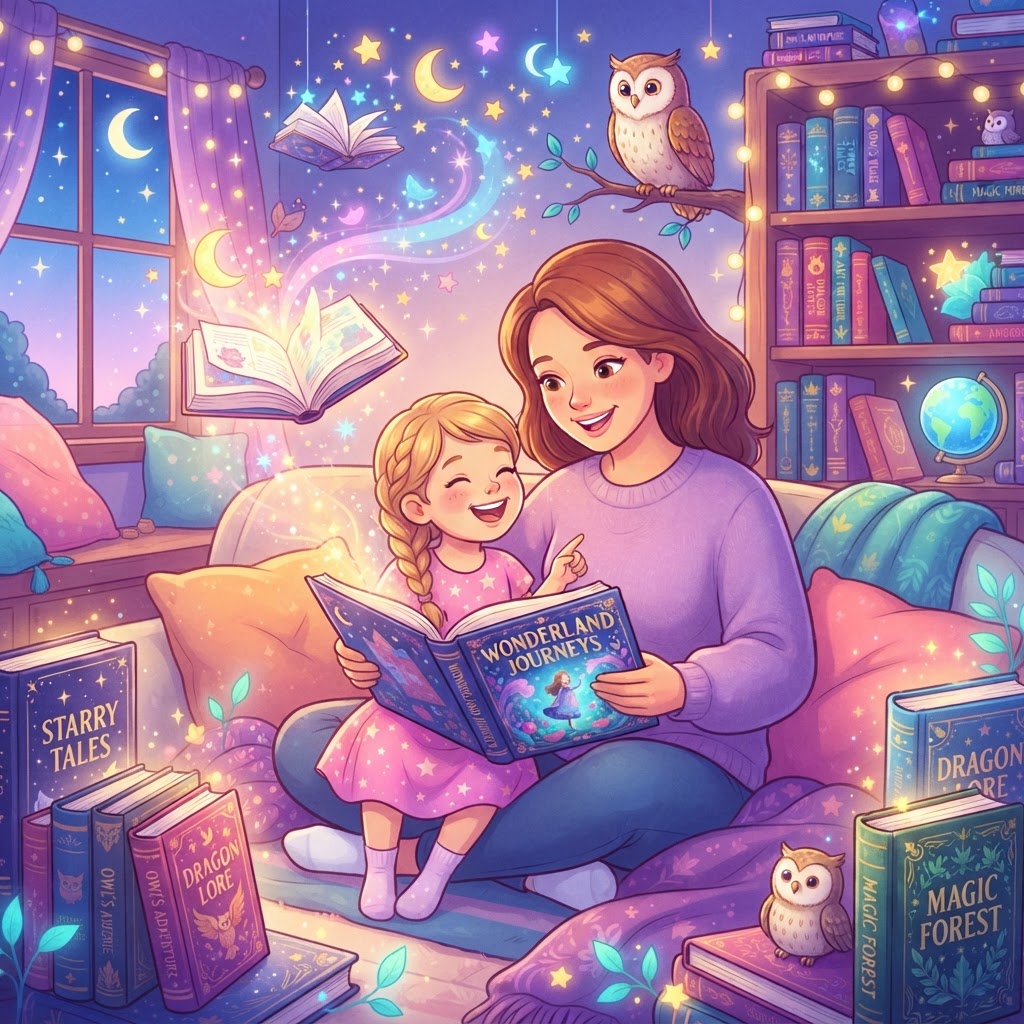
Moving from sturdy board books to longer picture books is a normal reading milestone, not a race. Most children are ready when they can stay with a story a little longer, handle pages more gently, and show curiosity about pictures, characters, and what happens next.
If you are transitioning from board books with a toddler or preschooler, the goal is not to “level up” quickly. It is to keep reading enjoyable while slowly building attention, language, and story understanding. With the right picture books for toddlers, a few simple book transition tips, and even personalized AI stories used thoughtfully, this shift can feel exciting instead of frustrating.
When are children ready to move from board books to picture books?
Children are often ready for picture books when they can engage with a story for longer and treat books with a bit more care. Readiness usually appears gradually, not all at once.
Many toddlers begin showing interest in picture books somewhere between ages 18 months and 3 years, but age alone is not the best guide. Child development research consistently shows that shared reading quality matters more than rigid timelines. The American Academy of Pediatrics encourages reading from infancy because responsive, back-and-forth reading supports language and relationships.
Look for signs like these:
- Your child listens through several pages instead of flipping quickly
- They point to details in illustrations and ask “What’s that?”
- They can turn thinner pages with some help
- They enjoy simple plots, not just labeling objects
- They remember favorite characters or repeated lines
- They can sit for 5-10 minutes for a story, even if not every night
A child does not need to give up board books completely. Many children benefit from a mixed diet of both formats for months or even years.
Why can the transition feel tricky for toddlers and preschoolers?
The shift can feel hard because picture books ask for more attention, more language processing, and gentler motor control. That is a lot to learn at once for a young child.
Board books are built for short bursts of attention and hands-on exploration. Picture books often have thinner pages, more complex illustrations, longer sentences, and a fuller story arc. For some children, that means the experience feels less predictable at first.
You may notice:
- More page flipping before the text is finished
- Less patience for stories with too many words
- Frustration with delicate pages
- Interest in the pictures, but not the full plot yet
This is normal. In fact, research on early literacy and dialogic reading—a shared reading approach studied by Grover Whitehurst and colleagues—shows that children learn best when adults actively involve them with questions, comments, and prompts rather than simply reading every word straight through. That means the “transition” is not only about the book format. It is also about how you read it.
If reading has recently become a struggle, these ideas can pair well with help for bedtime story resistance.
How can you tell whether a picture book is a good first choice?
The best first picture books are short, visual, and emotionally clear. Choose books that make it easy for your child to follow what is happening without needing long explanations.
When choosing picture books for toddlers, look for features that support early comprehension:
- Large, clear illustrations with a strong focus
- Short text on each page
- Repetition or predictable phrases
- Everyday topics like bedtime, animals, feelings, family, or play
- Simple story structure with a clear beginning, middle, and end
- Humor or surprise to hold attention
Books with too many words, crowded images, or abstract plots can make the transition harder. A good first picture book feels only slightly more demanding than a favorite board book.
It also helps to follow your child’s interests. If they love trucks, puppies, or helpers, start there. Motivation matters. Organizations like Reading Rockets note that children engage more deeply with books when adults connect reading to a child’s interests and experiences.
How should you read picture books differently from board books?
You do not need to read every word exactly as printed. During the transition, reading picture books more interactively often works better than performing them start to finish.
With board books, parents often label and point: “Ball. Dog. Baby.” With picture books, you can still do that, but you can also begin supporting story thinking. That means helping your child notice feelings, actions, and simple cause-and-effect.
Try these book transition tips:
- Preview the pictures first. Flip through and talk about what you see before reading all the text.
- Shorten the text if needed. Paraphrase longer pages.
- Pause often. Ask simple questions like “What is the bear doing?” or “What do you think comes next?”
- Use repetition. Repeat key lines and encourage your child to join in.
- Follow their attention. If they want to discuss one picture for a minute, that still counts as reading.
- Re-read favorites. Repetition builds language, memory, and confidence.
This style is supported by early literacy research. ZERO TO THREE emphasizes that young children learn through warm, responsive interactions around books, not through finishing the text perfectly.
What if your child still loves board books?
That is completely fine. Loving board books does not mean your child is behind.
Many children keep returning to board books because they offer comfort, familiarity, and independence. Re-reading easy books supports confidence and language growth. Think of board books as a stable home base while picture books are introduced in small, inviting steps.
A balanced approach works well:
- Keep favorite board books in the regular rotation
- Add one new picture book at a time
- Read picture books when your child is most rested
- Let your child choose between two options
- Revisit the same picture book across several days
If bedtime already feels busy, a predictable routine helps. You may find it useful to pair new books with a simple bedtime story routine for toddlers or a calm preschool reading routine.
How can AI stories help bridge board books and picture books?
AI stories can be a helpful bridge because they let you control the length, themes, and complexity. When used thoughtfully, they can make picture-book-style storytelling feel more personal and manageable.
A personalized story can meet your child exactly where they are. If longer traditional picture books feel overwhelming, you can create your own personalized bedtime story with a short plot, familiar routines, and a favorite character or interest. That gives your child story practice without the jump feeling too big.
AI stories work especially well when you:
- Keep stories short at first
- Use familiar topics like bedtime, pets, or visiting grandparents
- Include your child’s name for emotional connection
- Repeat phrases or patterns across stories
- Add simple story arcs: problem, feeling, solution, bedtime calm
This can support comprehension because children understand new story structures more easily when the content feels familiar. You can also save favorite bridge stories in your story library so your child can revisit them, just as they would with a beloved physical book.
The key is balance. AI stories should support shared reading, not replace it. Read them together, talk about the images or scenes, and connect them to print books when possible.
How can you build picture-book stamina without turning reading into a battle?
The best way to build stamina is through short, positive, repeatable reading moments. Children usually grow into longer books when they feel successful, not pressured.
Here are practical ways to help:
Start with “one picture book plus one favorite”
Begin with a familiar board book, then add one short picture book. This lowers resistance because your child knows something comfortable is coming too.
Read at the right time
Try new books when your child is calm, not overtired. Bedtime works for many families, but some children do better earlier in the day.
Break longer books into parts
You do not have to finish in one sitting. Read half tonight and half tomorrow.
Keep it interactive
Point, wonder, laugh, and invite your child in. Engagement builds endurance.
Use routines and rituals
Children handle change better when the reading routine stays steady. For older kids, a school-age bedtime reading routine can help preserve reading habits as books get longer.
If you want to make reading feel playful, try simple themes or prompts from weekly reading challenges.
What reading-development research supports this transition?
Research shows that early shared reading supports language, attention, narrative understanding, and later literacy. The transition from board books to picture books matters because it expands what children can understand and talk about.
Three evidence-based ideas are especially relevant:
- Responsive shared reading matters most. The adult-child interaction is the engine of learning.
- Repetition is beneficial. Hearing favorite stories again helps children learn vocabulary and narrative patterns.
- Story comprehension grows before independent reading. Children can understand much more through listening and conversation than they can read alone.
The National Association for the Education of Young Children and the American Academy of Pediatrics both emphasize rich language interactions, warm relationships, and frequent reading as foundations for literacy. Picture books offer more chances to discuss emotions, sequence, motivation, and problem-solving than many board books do, which is one reason the transition is so valuable.
For families and educators, this means the goal is not just exposing children to harder books. It is helping them become active meaning-makers during story time.
What is the simplest way to make the transition feel smooth and enjoyable?
Keep board books, add short picture books, and read them interactively. A gentle overlap is almost always more successful than a sudden switch.
If you remember only a few things, make them these:
- Follow your child’s readiness, not a strict age rule
- Choose short, visually clear picture books for toddlers
- Talk about the story instead of focusing on reading every word
- Re-read favorites often
- Use personalized AI stories as a bridge when helpful
- Protect the joy of reading above all
When children feel safe, interested, and included, transitioning from board books becomes less about the format and more about growing into a new kind of story experience. That is the real milestone.
Frequently Asked Questions
What age do children usually move from board books to picture books?
Many children begin showing interest between 18 months and 3 years, but there is a wide normal range. Readiness depends more on attention, curiosity, and page-handling skills than on age alone.
Can toddlers use both board books and picture books at the same time?
Yes, and that is often the best approach. Keeping both formats in rotation gives children comfort from familiar books while they build new story skills.
What if my child rips picture-book pages?
That is common during the transition. Offer sturdy books, model gentle page turning, and stay nearby to help until fine motor control improves.
Should I read every word in a picture book?
Not always. For young children, it is fine to shorten, paraphrase, or focus mostly on the pictures if that keeps them engaged and talking.
Are AI bedtime stories good for early literacy?
They can be, especially when an adult reads with the child and keeps the story age-appropriate. Personalized stories work best as a shared reading tool, not a replacement for real interaction.
How do I know if a picture book is too advanced?
If your child consistently loses interest, gets frustrated, or cannot follow even with support, the book may be too long or complex right now. Try shorter texts, simpler plots, or more familiar topics first.
Ready to Create a Personalized Bedtime Story?
Use our free AI bedtime story generator to create a personalized illustrated story for your child in 30 seconds — no credit card needed.
Popular story types:
Maya Rodriguez
Lead Content Editor & Early Literacy Specialist
Maya is a former early childhood educator and literacy specialist with over a decade of experience helping children develop a love of reading. She leads content at InstaTales, where she writes about the science of storytelling, child development, and how families can use personalized AI stories to build literacy and emotional resilience.
instatales.ai