Difficult Topics Stories for Kids: A Gentle Guide
Stories are a safe bridge to difficult conversations. Here's how to use them to discuss tough topics with your child.
✦ Key Takeaways
- •Stories help because they make difficult ideas feel safer and more understandable.
- •Stories create emotional distance, which means a child can think about a hard topic without feeling fully exposed.
- •The best story is honest, simple, and close enough to feel relevant without being overwhelming.
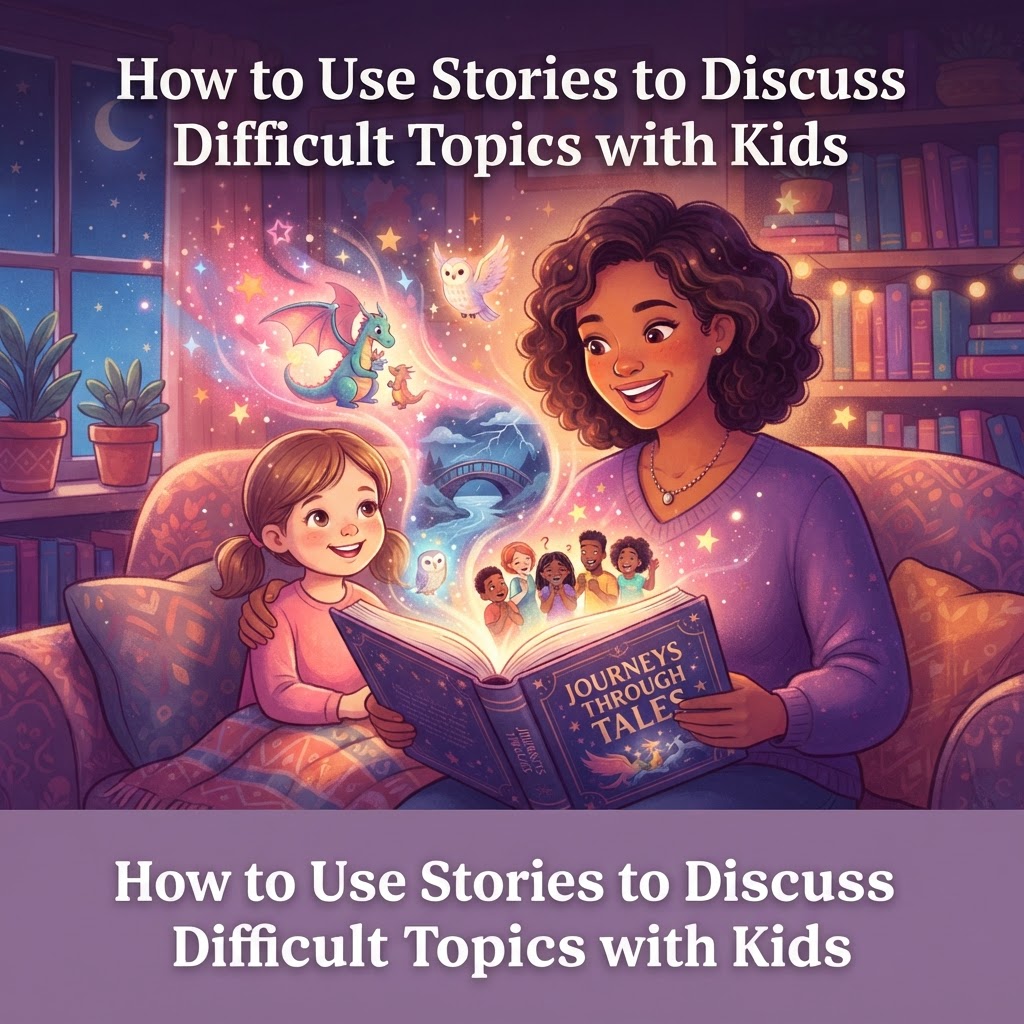
Stories can be a safe bridge when real life feels too big to name directly. If you are talking to kids about hard things like death, divorce, illness, or conflict, the right story can lower fear, open honest conversation, and help a child feel less alone.
That is why many parents, teachers, and child therapists use difficult topics stories and other stories for tough conversations. A child can look at a character’s problem first, then slowly connect it to their own feelings. With warmth, simple language, and time to revisit the story, you can turn bedtime or reading time into a gentle place for healing.
Why are stories so helpful for talking to kids about hard things?
Stories help because they make difficult ideas feel safer and more understandable. Instead of asking a child to explain their own feelings right away, a story lets them watch someone else go through something similar first.
Child development experts have long noted that children process emotions through play, repetition, and narrative. Guidance from the American Academy of Pediatrics and the National Child Traumatic Stress Network also emphasizes calm, honest, age-appropriate conversations when children are facing stress or change.
Stories support that process by helping children:
- hear hard truths in simple language
- see feelings named clearly
- notice that problems can be faced step by step
- ask questions without feeling put on the spot
- return to the same topic more than once
For many families, stories are not a “one talk” solution. They are a gentle way to start many small talks over time.
How do stories give children emotional distance?
Stories create emotional distance, which means a child can think about a hard topic without feeling fully exposed. That distance often makes it easier for children to listen, wonder, and speak.
For example, a child may not say, “I’m scared because Grandma is sick.” But they may say, “Why is the bunny worried about her grandma?” That small shift matters. The character carries some of the emotional weight, so the child can explore the feeling more safely.
This is one reason stories for tough conversations work so well. Children often reveal what they think through comments about the character:
- “He looks mad.”
- “She didn’t want both houses.”
- “That part is sad.”
- “I think he thought it was his fault.”
These comments give you a window into your child’s inner world. The goal is not to push for a big disclosure. The goal is to stay curious, calm, and available.
How can you choose the right story for your child’s age and situation?
The best story is honest, simple, and close enough to feel relevant without being overwhelming. When choosing a book or deciding to create your own personalized bedtime story, aim for clarity over drama.
A good story for a hard topic usually has:
- one clear problem
- age-appropriate language
- emotional truth without too much detail
- a caring adult, helper, or safe routine
- a hopeful ending that feels realistic, not magical
It also helps to match the story to your child’s developmental stage. Younger children need short, concrete explanations. Older children can handle more nuance and mixed feelings. The Center on the Developing Child at Harvard University explains that children build understanding through repeated, responsive interactions, so re-reading is often more helpful than one perfect conversation.
A few practical tips:
- Ages 1-3: Keep stories very short. Focus on feelings, routines, and safety.
- Ages 4-6: Use simple cause and effect. Expect repeated questions.
- Ages 7-10: Include more context, perspective-taking, and reassurance.
If you want a quick starting point, pre-made story templates can help you shape the right tone. And if a story works well, save it in your story library so your child can return to it when they need to.
How should you guide the conversation before, during, and after the story?
The best discussions are gentle, not intense. Read the story first, pause when your child shows interest, and let the conversation unfold in small pieces.
Before reading, give a simple frame: “This story is about a child whose family is going through a big change.” During the story, ask low-pressure questions. Afterward, focus on connection rather than lessons.
Try this simple rhythm:
- Before: “This story talks about something hard. We can stop anytime.”
- During: “How do you think the character feels?”
- Pause: Notice body language. Some children need silence to think.
- After: “Did any part remind you of something real?”
- Reassure: “You can always ask me more later.”
Keep your questions open and calm. If you want more ways to keep reading relaxed and engaging, these interactive story time ideas can help.
One more important point: if your child asks a direct question, answer honestly in simple language. Avoid long explanations. Children usually need small truthful answers repeated over time, not one big speech.
What are 5 gentle story prompts for difficult-topic stories?
These prompts work well because they keep the topic close enough to matter, but not so close that it feels overwhelming. You can use them as written, adapt them, or help your child write their own stories if they want more control.
-
Death:
“A young fox notices that Grandpa Fox is no longer coming to the garden. With help from a caring parent, the fox learns what it means when someone dies, remembers favorite moments, and finds a small way to keep loving Grandpa every day.” -
Divorce or separation:
“A little bear starts sleeping in two different homes. At first, two beds and two routines feel confusing, but the bear learns that love can stay steady even when family life changes.” -
Illness:
“A child’s favorite grown-up is tired and has many doctor visits. The child wonders if they caused it, asks brave questions, and learns what helpers, medicine, and rest can do.” -
Conflict and fighting:
“Two siblings in a bird family hear adults arguing and worry something bad will happen. A trusted adult helps them understand that grown-up conflict is not their job to fix and teaches safe ways to express big feelings.” -
Differences and belonging:
“A new child joins the forest school and looks, speaks, or moves differently from the others. Through play and kindness, the class learns that differences are not problems to solve but part of what makes a community strong.”
When you use difficult topics stories, remember that the story does not need to solve everything. It only needs to open the door. If your child is anxious at bedtime, these calming bedtime story techniques can make the experience feel even safer.
When should a story lead to extra support?
Stories are helpful, but they are not a substitute for professional care when a child is overwhelmed. If a topic brings up strong distress that does not ease, it is time to get more support.
Watch for signs like:
- ongoing sleep problems or nightmares
- sudden aggression or withdrawal
- repeated fears that interfere with daily life
- intense guilt, blame, or hopelessness
- loss of skills, such as toileting or separation tolerance
If you notice these patterns, speak with your pediatrician, school counselor, or a child therapist. Stories can still be part of the support plan, but they work best alongside responsive adult help.
Frequently Asked Questions
What age should I start using stories to talk about hard topics?
You can start very early, even with toddlers, as long as the language is simple and concrete. Young children do not need every detail, but they do benefit from honest words, emotional naming, and reassurance.
Should I use a story before or after a difficult event happens?
Both can help. A story can prepare a child for change, or it can help them process something that has already happened. The key is to keep the story calm, truthful, and appropriate for your child’s age.
What if my child does not want to talk after the story?
That is okay. Many children listen first and talk later, often during play, bedtime, or another story. Keep the door open by saying, “We can talk about this anytime.”
Can personalized AI stories help with sensitive topics?
Yes, if they are used thoughtfully. Personalized stories can match a child’s age, worries, and comfort level, especially when you keep the tone gentle and avoid too much detail.
How often should we re-read a difficult-topic story?
Re-reading is often very helpful. Children build understanding through repetition, and hearing the same story again can make hard ideas feel more predictable and less scary.
What if the story seems to upset my child?
Pause and stay present. A little emotion is not always a bad sign, but if your child becomes highly distressed, simplify the topic, offer comfort, and return to it later in a gentler way.
Ready to Create a Personalized Bedtime Story?
Use our free AI bedtime story generator to create a personalized illustrated story for your child in 30 seconds — no credit card needed.
Popular story types:
Maya Rodriguez
Lead Content Editor & Early Literacy Specialist
Maya is a former early childhood educator and literacy specialist with over a decade of experience helping children develop a love of reading. She leads content at InstaTales, where she writes about the science of storytelling, child development, and how families can use personalized AI stories to build literacy and emotional resilience.
instatales.ai