Meal Time Stories: Short Dinner Tales for Kids
Make meal time more fun with stories! These short stories are perfect for the dinner table.
✦ Key Takeaways
- •Meal time stories work because they combine attention, language, and connection in one everyday routine.
- •The best way to use stories at meal time is to keep them brief, interactive, and flexible.
- •The best meal time stories are simple, sensory, and connected to what children already know.
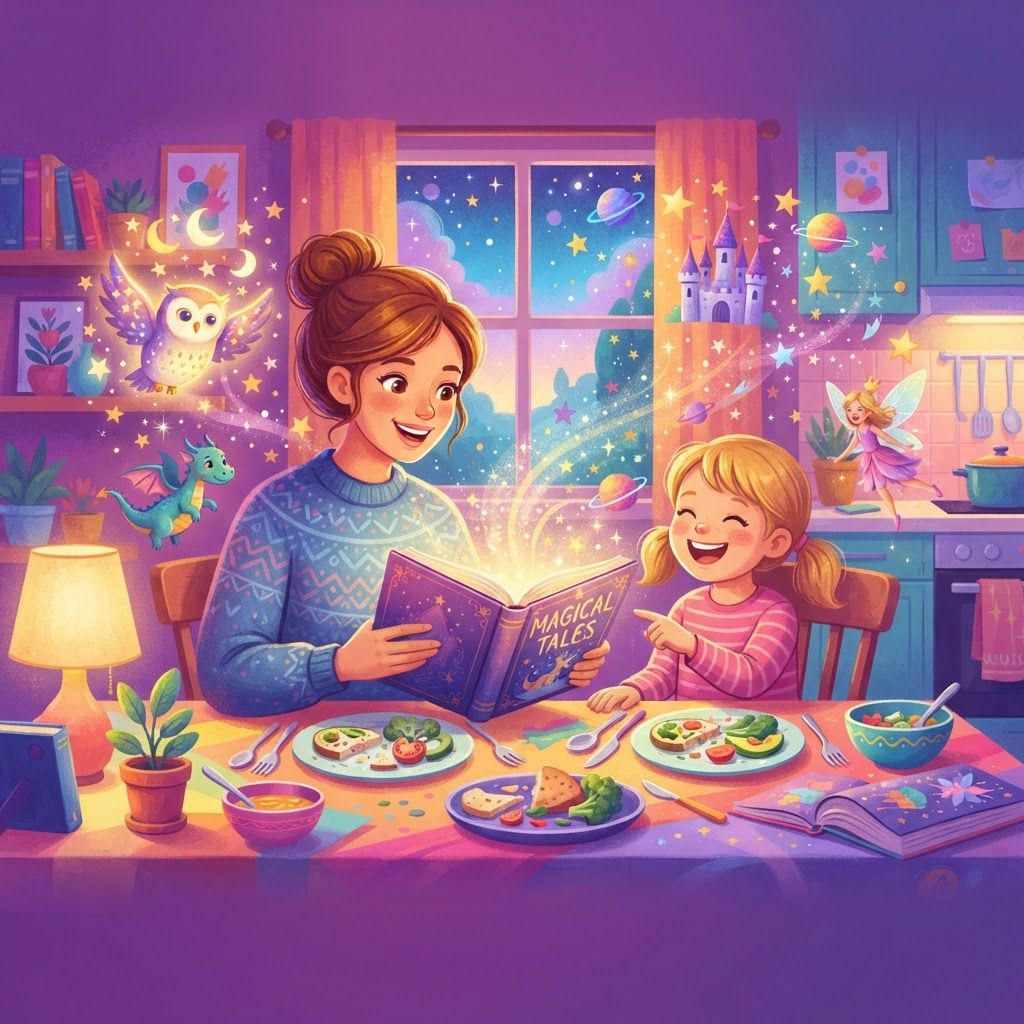
Meal times can do more than fill hungry tummies. They can build language, connection, and calm routines too. Meal time stories are a simple way to turn a rushed dinner into a shared family moment, especially for toddlers and young children who learn best through repetition, play, and conversation.
If you are looking for short stories for dinner or playful eating stories for kids, this guide will help. Below, you will find practical ways to use stories at the table, five easy meal-themed story ideas, and smart ways to use InstaTales when you want fresh dinner table entertainment without extra prep.
Why are meal time stories so effective for young children?
Meal time stories work because they combine attention, language, and connection in one everyday routine. Children are more likely to engage when learning feels playful, and a short story can lower stress around sitting, waiting, or trying new foods.
Research supports this kind of shared interaction. The American Academy of Pediatrics has long emphasized that shared reading builds early language and parent-child bonding. The CDC also highlights responsive talking and back-and-forth interaction as important for development.
At the dinner table, stories can help children:
- stay seated a little longer
- practice listening and turn-taking
- hear new vocabulary in context
- connect positive feelings with family meals
- feel less pressure if they are cautious eaters
The key is keeping the story light and short. For most children ages 1-10, one to five minutes is enough to spark interest without taking over the meal.
How can parents use stories at meal time without making dinner chaotic?
The best way to use stories at meal time is to keep them brief, interactive, and flexible. A story should support the meal, not compete with it. Think of it as a conversation starter, not a performance.
Here are a few practical guidelines I recommend as an educator:
- Start once food is served. Children settle more easily when plates are already on the table.
- Keep stories short. Aim for 1-3 minutes for toddlers and 3-5 minutes for older children.
- Invite participation. Ask, “What do you think happened next?” or “Which vegetable was the hero?”
- Use the food in front of you. A carrot, spoon, or bowl can become part of the story.
- Avoid pressure. Stories should not be used to force bites or bargain over food.
A good rule of thumb is this: use stories to create curiosity, not control. That approach fits what child development experts at ZERO TO THREE often recommend about responsive, relationship-based routines.
If your family already enjoys quick reading moments at other times of day, you might also like these 5-minute morning stories or these quick car ride stories. The same “short and cheerful” approach works well at dinner too.
What kinds of meal time stories keep children engaged?
The best meal time stories are simple, sensory, and connected to what children already know. Food, family routines, funny mix-ups, and tiny adventures are especially effective because they feel familiar and safe.
At the table, children usually respond well to stories with:
- a clear beginning, middle, and ending
- one small problem to solve
- repeated phrases
- silly details
- a comforting or happy resolution
For younger children, repetition matters. For older children, adding a choice or twist keeps the story fresh. If you need more ideas for short, situational storytelling, these waiting room story ideas show how a fast story can work almost anywhere.
What are five easy meal-themed story ideas to try tonight?
You do not need to be a professional storyteller to create fun dinner tales. Start with one simple idea and build from the food, people, and objects already at the table.
1. The Brave Broccoli Tree
A tiny broccoli floret wants to join the “Big Forest Feast” but worries it looks too small. Along the way, it learns that being small can still be strong, crunchy, and important.
This kind of story works well for toddlers because it gives a vegetable a gentle personality. You can repeat lines like, “Brave and green, brave and green,” to invite participation.
2. The Spoon Who Couldn’t Sit Still
A silver spoon keeps sliding, spinning, and clinking because it is so excited for dinner. The spoon learns that good helpers slow down, scoop carefully, and make room for everyone at the table.
This is one of the easiest short stories for dinner because it turns table manners into humor instead of correction. Children often love helping decide what the spoon says next.
3. The Missing Pea Mystery
One pea rolls off the plate and disappears. A child detective, a fork, and a napkin search under cups, beside chairs, and behind the bread basket before finding the runaway pea hiding near the salt shaker.
This idea is great for preschool and early elementary ages. It adds suspense without being scary, and it naturally encourages noticing objects and directions.
4. The Rainbow Soup Parade
Each ingredient in a soup pot wants to prove it is the most important. The red tomato, orange carrot, green pea, and yellow corn finally learn that dinner tastes best when everyone brings something special.
This story is ideal when you want to talk positively about variety and color. It also connects nicely to nutrition lessons many children hear in school and from resources like MyPlate.gov.
5. The Pancake Moon at Dinner
A round pancake appears by mistake at dinner instead of breakfast and feels very confused. The family reassures the pancake that sometimes the best meals break the rules in fun and loving ways.
Children who resist routine changes often enjoy stories like this. It gently models flexibility and reminds them that family rituals can still feel safe when they are a little different.
How can you make eating stories for kids interactive instead of passive?
Interactive stories are more effective than passive ones because children learn through participation. Even one question, sound effect, or choice can make a story feel like a shared experience instead of background noise.
Try these easy methods:
- ask children to name the main character
- let them choose the problem: “Was the carrot lost or sleepy?”
- add sound effects like “slurp,” “crunch,” or “tap-tap”
- use prediction questions: “What should the pea do now?”
- invite a sibling to tell the ending
This kind of storytelling builds oral language and sequencing skills. It also supports the “serve and return” style of interaction described by the Center on the Developing Child at Harvard University, where back-and-forth exchanges help children learn.
If your child prefers longer stories outside of meal time, you can save the bigger adventures for epic family reading sessions or 15-minute stories for older kids.
How can InstaTales help with dinner table entertainment?
InstaTales can make dinner storytelling easier by helping you create personalized, age-appropriate stories in seconds. That is especially useful on busy evenings when you want connection but do not have the energy to invent a fresh story from scratch.
Here are practical ways to use it at meal time:
- Create a custom story around tonight’s meal. You can create your own personalized bedtime story using your child’s name, favorite foods, or a silly dinner challenge.
- Use quick-start formats. If you want a faster prompt, browse story templates for ideas you can adapt to “The sleepy spaghetti” or “The adventurous apple slice.”
- Save family favorites. If one dinner story becomes a hit, keep it in your story library for easy re-reading.
- Share and borrow ideas. The community story gallery can spark new meal-themed plots from other families.
- Extend learning beyond home. For classroom snack time, food units, or literacy corners, InstaTales for teachers offers another way to connect stories with daily routines.
The goal is not to add more screen time at the table. Instead, use the tool before the meal or briefly between courses, then tell the story aloud together. That keeps the focus on family conversation.
For more practical reading ideas by setting, you can always explore the InstaTales blog for routines that fit mornings, travel, quiet waiting, and family reading time.
What should parents avoid when using stories during meals?
Parents should avoid turning stories into pressure, bribery, or distraction from hunger cues. Stories are most helpful when they create warmth and curiosity, not when they are used to push children to eat “just one more bite.”
Try not to:
- tell a story only in exchange for eating
- shame a child through the plot
- use stories to ignore signs of fullness
- make the story too long or overstimulating
- rely on devices instead of conversation
A calm, low-pressure approach matters. Children eat best when they feel safe, respected, and included. In practice, that means a short story can support the meal, but the real goal is connection.
Frequently Asked Questions
What age are meal time stories best for?
Meal time stories can work well for ages 1-10 when matched to attention span. Toddlers usually enjoy repeated phrases and object characters, while older children like funny twists and problem-solving.
How long should a dinner story be?
Most dinner stories should be between one and five minutes. Shorter stories keep children engaged and leave room for conversation, eating, and family interaction.
Can stories help picky eaters?
Stories can help reduce tension, but they should not be used to pressure children into eating. A playful story about food can build familiarity and comfort, which may support willingness over time.
Should I read from a book or make up the story?
Either option can work well. A made-up story feels personal and flexible, while a short read-aloud can be helpful when you want structure and less mental effort.
Can InstaTales be used for more than bedtime?
Yes, it can support many daily routines, including meals, travel, waiting times, and classroom use. Personalized stories are especially useful when children need a quick, engaging activity tied to real life.
What if my child gets too excited to eat?
If the story becomes too stimulating, simplify it or save storytelling for the start or end of the meal. A slower voice, fewer sound effects, and a shorter plot usually help children refocus.
Ready to Create a Personalized Bedtime Story?
Use our free AI bedtime story generator to create a personalized illustrated story for your child in 30 seconds — no credit card needed.
Popular story types:
Maya Rodriguez
Lead Content Editor & Early Literacy Specialist
Maya is a former early childhood educator and literacy specialist with over a decade of experience helping children develop a love of reading. She leads content at InstaTales, where she writes about the science of storytelling, child development, and how families can use personalized AI stories to build literacy and emotional resilience.
instatales.ai