Superheroes Stories for Kids: Bedtime Adventures
Exciting superheroes stories for kids — adventures, lessons, and imagination with your child's favorite characters.
✦ Key Takeaways
- •Children love superhero stories because they turn big feelings into simple, hopeful adventures.
- •The best superheroes bedtime stories are exciting without being overwhelming.
- •The best starter stories are simple, character-led, and easy for children to picture.
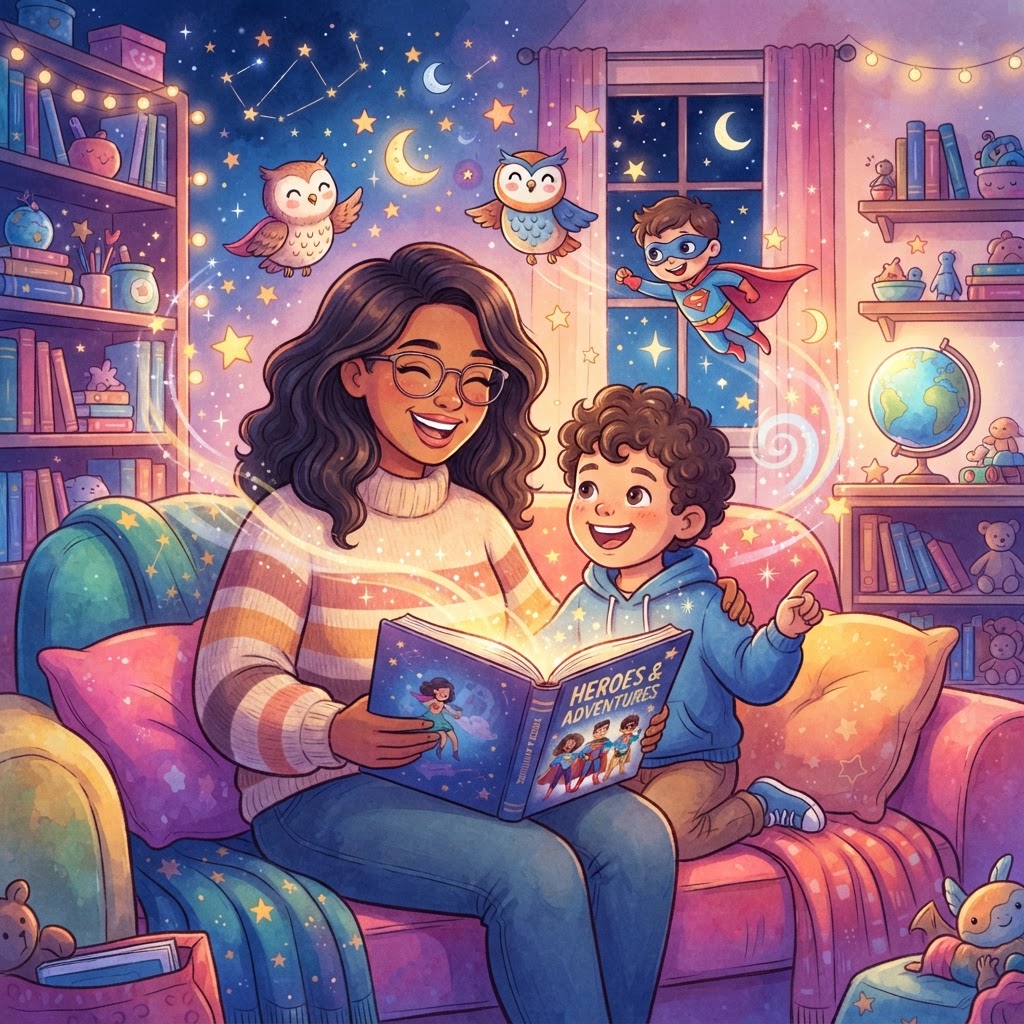
Superheroes stories for kids are more than exciting capes, secret powers, and daring rescues. They give children a safe way to explore bravery, kindness, teamwork, and self-control—while making bedtime feel magical. Whether your child loves classic comic-book energy or gentler superheroes bedtime stories, this guide will help you choose better themes, spark imagination, and create personalized adventures that truly fit your child.
Why do children love superheroes stories so much?
Children love superhero stories because they turn big feelings into simple, hopeful adventures. A superhero can face fear, solve problems, and help others, which makes children feel stronger too.
From a child development point of view, this makes sense. Children often use pretend play to process emotions and practice roles. Research from the American Academy of Pediatrics shows that shared reading supports language, connection, and emotional development. Superhero stories add an extra layer: they let children imagine, “What would I do if I were brave?”
Kids are also drawn to the clear structure in stories about superheroes:
- A problem appears
- The hero feels unsure
- The hero makes a good choice
- The day is saved through courage, kindness, or teamwork
That pattern is reassuring. It helps children understand that problems can have solutions, and that being a hero is often about character—not just power.
What makes superheroes bedtime stories work well before sleep?
The best superheroes bedtime stories are exciting without being overwhelming. A good bedtime superhero tale ends with safety, calm, and emotional closure.
Many children enjoy adventure at night, but they do not always sleep well after fast-paced conflict. For bedtime, choose stories with:
- Gentle stakes rather than scary danger
- A clear problem and a peaceful ending
- Helpers, friends, or family support
- Powers linked to positive values, like listening or kindness
- Soothing final scenes, such as homecoming, cuddles, or stars overhead
This matters because young children are still building emotional regulation skills. The Harvard Center on the Developing Child explains that self-control and flexible thinking grow over time. Calm, predictable superhero tales can support that growth by showing children how to pause, think, and act well.
A bedtime hero does not need to fight villains. Sometimes the strongest hero helps a lost puppy, comforts a worried friend, or uses super-breathing to stay calm.
Which superheroes stories for kids are best to try first?
The best starter stories are simple, character-led, and easy for children to picture. These superheroes tales children enjoy most often center on everyday bravery mixed with a touch of magic.
The Super Sleeper Who Saved the Night
A child hero notices that everyone in Dream Town is too restless to sleep. Using a glowing blanket and a calm voice, they help each friend settle down.
This is perfect for bedtime because the “mission” is sleep itself. It also normalizes wind-down routines.
The Listening Hero
This hero’s special power is super hearing—but not for danger. They hear when someone feels left out, sad, or worried, and they know exactly when to help.
This story teaches empathy and shows that quiet skills can be heroic.
The Cape Made of Kindness
A child receives a cape that only works when they do something kind. Each good deed makes the cape brighter and stronger.
This is one of the easiest stories about superheroes to adapt for ages 3-8 because the moral is concrete and easy to repeat.
The Tiny Team of Backyard Heroes
A group of children discovers that their toy bugs, garden friends, or neighborhood pets all have mini powers. Together they solve a small problem, like bringing water to thirsty flowers.
This works well for siblings or classroom groups. If your child also loves imaginative creature stories, they may enjoy magical themes like fairy adventures too.
The Recycled Rocket Rescuer
A young inventor builds superhero tools from cardboard, boxes, and recycled treasures. Their mission is to clean the park and help the community.
This idea blends superhero fun with creativity and responsibility. Children who love future-themed adventures may also enjoy robot story ideas.
The Star Shield Hero
A child protects sleepy animals on a moonlit journey using a shield made of stardust. Instead of battles, the hero solves problems with light, warmth, and gentle guidance.
This is ideal for children who like cosmic wonder. It pairs nicely with space-themed bedtime adventures.
The Courage Practice Club
A superhero-in-training learns that bravery is not being fearless—it is trying anyway. Their first missions are everyday challenges like saying hello, trying new food, or sleeping in their own bed.
This story is especially helpful for children working through anxiety or transitions.
How can superhero stories help build character and emotional skills?
Superhero stories can build character when the hero’s choices matter more than the hero’s powers. Children learn best when a story shows values in action.
This connects with classic child development research, including Albert Bandura’s social learning theory: children learn by observing models. In practice, that means a superhero who apologizes, shares, or asks for help may teach more than a hero who simply wins.
When choosing or creating superheroes stories for kids, focus on these character traits:
- Courage: trying something hard
- Kindness: helping without reward
- Honesty: telling the truth even when it is tough
- Perseverance: trying again after mistakes
- Self-control: calming down before acting
- Teamwork: solving problems together
Character development tips for parents and educators
- Give the hero one clear strength and one relatable struggle.
- Let the hero make a small mistake and repair it.
- Use emotional language: “worried,” “proud,” “frustrated,” “relieved.”
- Make the solution value-based, not violence-based.
- End with reflection: “What kind of hero do you want to be tomorrow?”
For younger children, repeat the hero’s core value several times. For older children, add a choice or dilemma so they can think deeper about what being “good” really means.
The CDC’s child development resources are also helpful for matching story themes to a child’s age and emotional stage.
How can you create personalized superheroes adventures with InstaTales?
Personalized superhero stories work beautifully because they place your child at the center of the lesson and the adventure. When children hear their own name, favorite color, or real-life worry in a story, they usually listen more closely and remember more.
With InstaTales, you can create your own personalized bedtime story in minutes. That makes it easy to turn your child into a hero who learns bravery, kindness, patience, or teamwork in a way that feels fun rather than preachy.
Here are simple ways to make a stronger personalized superhero story:
- Use your child’s name and age
- Include a favorite object, animal, or place
- Pick one emotional theme, such as first-day nerves or sibling conflict
- Choose powers that match the lesson, like super listening or patience rays
- Keep the ending warm, calm, and reassuring
If you want a quick starting point, browse story templates for ready-made structures you can adapt. Afterward, save your favorites in your story library so children can revisit the same hero again and again—a great way to build familiarity, confidence, and reading interest.
For parents, this means less scrambling for fresh bedtime ideas. For educators, it can support writing prompts, SEL lessons, or class read-alouds through InstaTales for teachers.
How can parents keep superheroes stories positive and age-appropriate?
Parents can keep superhero stories age-appropriate by softening conflict, focusing on values, and matching the plot to the child’s stage. The goal is wonder, not overload.
A few practical rules help:
- For ages 1-3, keep stories short, repetitive, and very gentle.
- For ages 4-6, use simple missions and clear feelings.
- For ages 7-10, add bigger choices, teamwork, and problem-solving.
- Replace “defeating villains” with helping, protecting, fixing, or learning.
- Avoid graphic danger, revenge plots, and chaotic endings.
A useful test is this: after the story, does your child feel calm, capable, and connected? If yes, the tone is probably right.
If your child loves themed reading, rotating hero stories with other imaginative genres can keep bedtime fresh. You can find more inspiration in the InstaTales blog, where different story themes help children explore new worlds while keeping familiar reading routines.
Frequently Asked Questions
Are superheroes stories good for bedtime?
Yes, they can be excellent for bedtime when the tone is gentle and the ending feels safe. Choose stories with calm problem-solving, kindness, and a soothing close instead of intense conflict.
What age are superheroes stories best for?
Superhero stories can work from toddlerhood through age 10, with the plot adjusted for development. Younger children do best with simple, repetitive hero tales, while older children enjoy deeper choices and longer adventures.
How do I make stories about superheroes less scary?
Focus on everyday problems, friendly helpers, and peaceful resolutions. You can also swap villains for mix-ups, worries, storms, or challenges that the hero solves with care.
Can personalized superhero stories help reluctant readers?
Yes, personalized stories often increase attention because children feel seen in the story. When the hero shares their name, interests, or worries, the reading experience becomes more meaningful and motivating.
What values work best in superheroes tales children remember?
Kindness, courage, honesty, teamwork, and perseverance are especially memorable. Children tend to remember stories where the hero’s good choice changes the outcome.
How long should a superhero bedtime story be?
For toddlers, 3-5 minutes is often enough. For older children, 5-10 minutes usually works well, especially if the story has a calm pace and a comforting ending.
Get a new bedtime story every week
Free, personalized, and delivered to your inbox. No spam, ever.
Ready to Create a Personalized Bedtime Story?
Use our free AI bedtime story generator to create a personalized illustrated story for your child in 30 seconds — no credit card needed.
Popular story types:
Maya Rodriguez
Lead Content Editor & Early Literacy Specialist
Maya is a former early childhood educator and literacy specialist with over a decade of experience helping children develop a love of reading. She leads content at InstaTales, where she writes about the science of storytelling, child development, and how families can use personalized AI stories to build literacy and emotional resilience.
instatales.ai