Benefits of Bilingual Stories for Kids
Bilingual stories support language development, cognitive flexibility, and cultural identity. Here's what the research says.
✦ Key Takeaways
- •Yes—bilingual stories support language acquisition by giving children repeated, meaningful exposure to vocabulary, grammar, and sentence patterns in two languages.
- •Bilingual stories can support cognitive flexibility, or the ability to shift attention, hold multiple ideas in mind, and adapt to different rules or perspectives.
- •Bilingual stories help children feel seen.
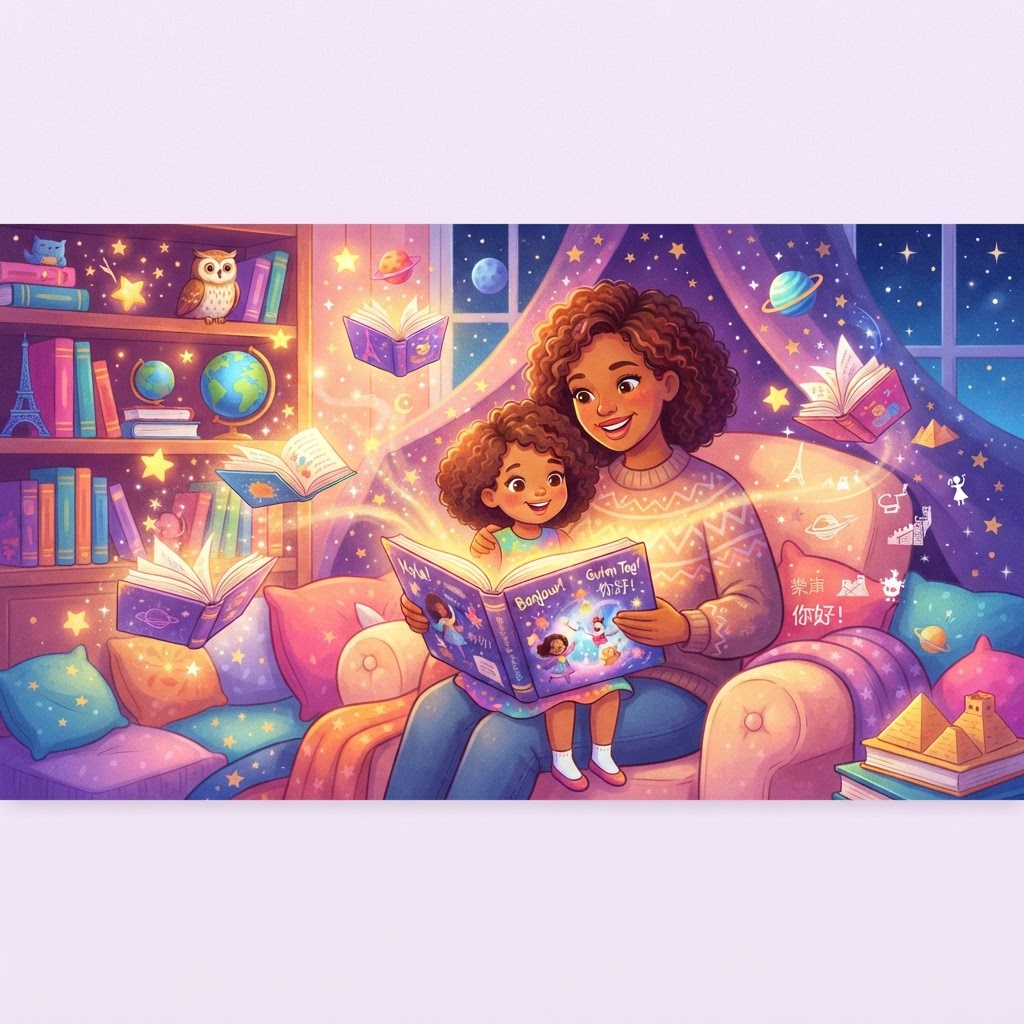
Bilingual stories do more than introduce children to new words. They help kids build language skills, strengthen flexible thinking, and feel proud of who they are and where they come from. For families raising bilingual children—or simply hoping to expose kids to more than one language—research suggests that bilingual children's books and read-alouds can be a meaningful, practical tool.
When children hear stories in two languages, they are not “getting confused.” In most cases, they are learning to connect sounds, meanings, emotions, and cultural cues across languages. That matters at home, in school, and in a child’s long-term relationship with reading. Below, we’ll look at the benefits of bilingual stories, what dual language stories research says, and how parents and teachers can use them well.
Why do bilingual stories help children learn language?
Yes—bilingual stories support language acquisition by giving children repeated, meaningful exposure to vocabulary, grammar, and sentence patterns in two languages. Stories are especially effective because language is easier to learn when it is attached to characters, emotions, and predictable events.
Young children learn best through repetition and context. In a bilingual story, a child might hear “moon” and “luna” while seeing the same picture or following the same bedtime scene. That helps them map meaning across languages without needing a formal lesson.
Research in early childhood and language development has long shown that rich verbal interaction supports vocabulary growth. Organizations like the American Speech-Language-Hearing Association note that learning two languages does not cause language delays in typically developing children. What matters most is the quality and consistency of language exposure.
Bilingual books can support this process by helping children:
- hear high-frequency words in both languages
- notice patterns in sounds and sentence structure
- build comprehension through familiar plots
- connect spoken and written language
- retain heritage-language vocabulary through repeated reading
For toddlers and preschoolers, even simple dual-language picture books can make a difference. For older children, bilingual chapter books or personalized stories can deepen understanding and keep reading engaging.
How do bilingual stories support cognitive flexibility?
Bilingual stories can support cognitive flexibility, or the ability to shift attention, hold multiple ideas in mind, and adapt to different rules or perspectives. Children who regularly engage with two languages often get practice switching between systems, and that mental practice may strengthen executive function over time.
This does not mean every bilingual child will show the same advantage in every setting. But dual language stories research often connects bilingual experience with skills like attention control, perspective-taking, and mental flexibility. Researchers continue to debate the size and consistency of these effects, yet many studies suggest there can be meaningful benefits, especially when children use both languages regularly in real life.
Stories are a gentle way to build those habits. A child listening to a dual-language story may:
- recognize that one idea can be expressed in two ways
- switch between labels for the same object or action
- follow meaning even when the wording changes
- compare how different languages sound and work
That kind of thinking is valuable far beyond language learning. It supports problem-solving, flexible communication, and readiness for diverse classroom environments. Harvard’s Center on the Developing Child emphasizes that early experiences shape brain architecture, and rich language experiences are part of that foundation.
Why are bilingual stories important for cultural identity?
Bilingual stories help children feel seen. They support cultural identity by telling children that their home language, family traditions, and lived experiences belong in books.
For many children, language is tied to grandparents, food, celebrations, lullabies, and everyday routines. When kids hear stories in the language spoken at home, they often feel a stronger sense of belonging. That emotional connection can motivate reading and protect the home language from fading as children grow.
This is especially important for heritage-language families. If a child mostly hears the community language at school, media, and activities, bilingual stories can help rebalance that exposure at home. They also give children language for family relationships that may not come up in standard classroom materials.
The National Association for the Education of Young Children has highlighted the importance of supporting dual language learners in ways that honor both development and identity. In practice, that means treating bilingualism as an asset—not a problem to fix.
Bilingual stories can also open conversations about difference and inclusion. If you’re interested in building that broader perspective, stories that reflect many backgrounds can work beautifully alongside books that celebrate diverse experiences.
What does research say about bilingual children’s books and reading outcomes?
Research suggests that bilingual children's books can support vocabulary, comprehension, family engagement, and positive attitudes toward reading. They are not a magic shortcut, but they are a strong tool when paired with regular read-aloud time and responsive conversation.
One reason bilingual books work well is that they invite interaction. Adults pause, explain, compare words, and connect the story to real life. That kind of back-and-forth talk is one of the strongest predictors of language growth in early childhood.
Studies on bilingual education and dual language learners often point to a few clear themes:
- children benefit when both languages are valued
- stronger home-language support can help overall language development
- family involvement improves reading outcomes
- meaningful, repeated exposure matters more than perfection
In other words, you do not need to be a trained teacher to use bilingual stories well. A warm, consistent reading routine counts. Asking questions, naming pictures, and re-reading favorite pages all help children process language.
For educators, bilingual stories can also support participation and comprehension in mixed-language classrooms. Teachers looking for literacy-rich activities can combine storytelling with drawing, retelling, and home-school reading practice through InstaTales for teachers.
How can parents use bilingual stories at home?
Parents can use bilingual stories effectively by keeping reading simple, consistent, and interactive. You do not need to translate every line or teach formal grammar; your main job is to make both languages feel natural, meaningful, and enjoyable.
A few practical strategies work especially well:
- read in the language you speak most comfortably
- pause to point, label, and ask simple questions
- repeat favorite stories often
- connect story words to daily life
- let children answer in either language
- revisit the same book on different days
For example, if a story uses both English and Spanish, you might read one page, point to an illustration, and say, “Yes, the dog is sleeping—el perro está durmiendo.” That small bridge helps children connect meaning without pressure.
Personalized stories can be especially engaging because children are more likely to attend when they hear their own name, favorite places, or family details. Families who want to create your own personalized bedtime story can use familiar routines and vocabulary from both languages to make reading feel even more relevant. Saving favorites in your story library also makes re-reading easier, which is important because repetition supports language learning.
What should families look for in a good bilingual story?
A good bilingual story is clear, natural, and enjoyable to read aloud. The best ones use age-appropriate language, strong storytelling, and respectful cultural representation rather than treating the second language like a gimmick.
When choosing bilingual books or stories, look for:
- accurate, natural translation
- simple, rhythmic language for younger children
- clear page design that is not visually overwhelming
- authentic cultural details
- engaging plots, not just vocabulary lists
- room for conversation and re-reading
It also helps to match the story to the child’s stage. Babies and toddlers often do best with short, repetitive books. Preschool and early elementary children may enjoy stories with humor, adventure, or fantasy. If your child loves imaginative play, pairing bilingual reading with fantasy stories that support development or adventure stories for kids can keep motivation high.
Can bilingual stories be useful in classrooms too?
Absolutely—bilingual stories can support inclusion, comprehension, and family-school partnerships in classrooms. They help dual language learners access the curriculum while also showing all children that multilingualism is normal and valuable.
In a classroom setting, teachers can use bilingual stories to:
- preview new vocabulary
- support oral language practice
- encourage peer discussion
- connect home languages to school learning
- invite family participation in reading routines
Even brief activities can help. A teacher might read a bilingual story, ask children to retell the main events, and send a related version home for family reading. This creates continuity between school and home, which is especially helpful for early learners.
Bilingual stories can also work well during calming routines, transitions, or bedtime-themed units. For children who need emotional reassurance, language familiarity can make stories feel especially safe—similar to the way calming stories can support anxious kids.
Frequently Asked Questions
At what age should children start hearing bilingual stories?
Children can start hearing bilingual stories from infancy. Even babies benefit from hearing the sounds, rhythm, and emotional tone of both languages during warm, responsive reading time.
Do bilingual stories confuse young children?
No, bilingual stories do not typically confuse children. Young learners are capable of separating and learning two languages, especially when exposure is consistent and connected to real-life meaning.
Are bilingual children’s books helpful if only one parent speaks the second language?
Yes, they can still be helpful. One fluent speaker, audio support, or simple repeated phrases can give children meaningful exposure without requiring both parents to speak the language.
What is the difference between bilingual books and dual language stories?
The terms are often used similarly, but dual language stories usually present the same content in two languages side by side. Bilingual books may do that too, or they may weave both languages more naturally into the story.
How often should families read bilingual stories?
A few times a week is a strong start, and daily reading is even better. Short, repeated sessions usually work better than occasional long ones because children learn through steady exposure.
Can personalized bilingual stories help reluctant readers?
Yes, personalized stories can increase engagement because children are more invested when the story reflects their name, interests, or family life. That extra motivation can make it easier to build a regular reading habit.
Ready to Create a Personalized Bedtime Story?
Use our free AI bedtime story generator to create a personalized illustrated story for your child in 30 seconds — no credit card needed.
Popular story types:
Maya Rodriguez
Lead Content Editor & Early Literacy Specialist
Maya is a former early childhood educator and literacy specialist with over a decade of experience helping children develop a love of reading. She leads content at InstaTales, where she writes about the science of storytelling, child development, and how families can use personalized AI stories to build literacy and emotional resilience.
instatales.ai