Kindergarten Music Stories That Make Learning Sing
Make music engaging for kindergarten students with stories. Practical strategies, story ideas, and classroom activities for teachers.
✦ Key Takeaways
- •Stories help children learn music because they give abstract concepts a concrete meaning.
- •The best kindergarten music activities are simple, repetitive, and easy to act out.
- •Differentiation works best when you adjust the response, not the joy of the activity.
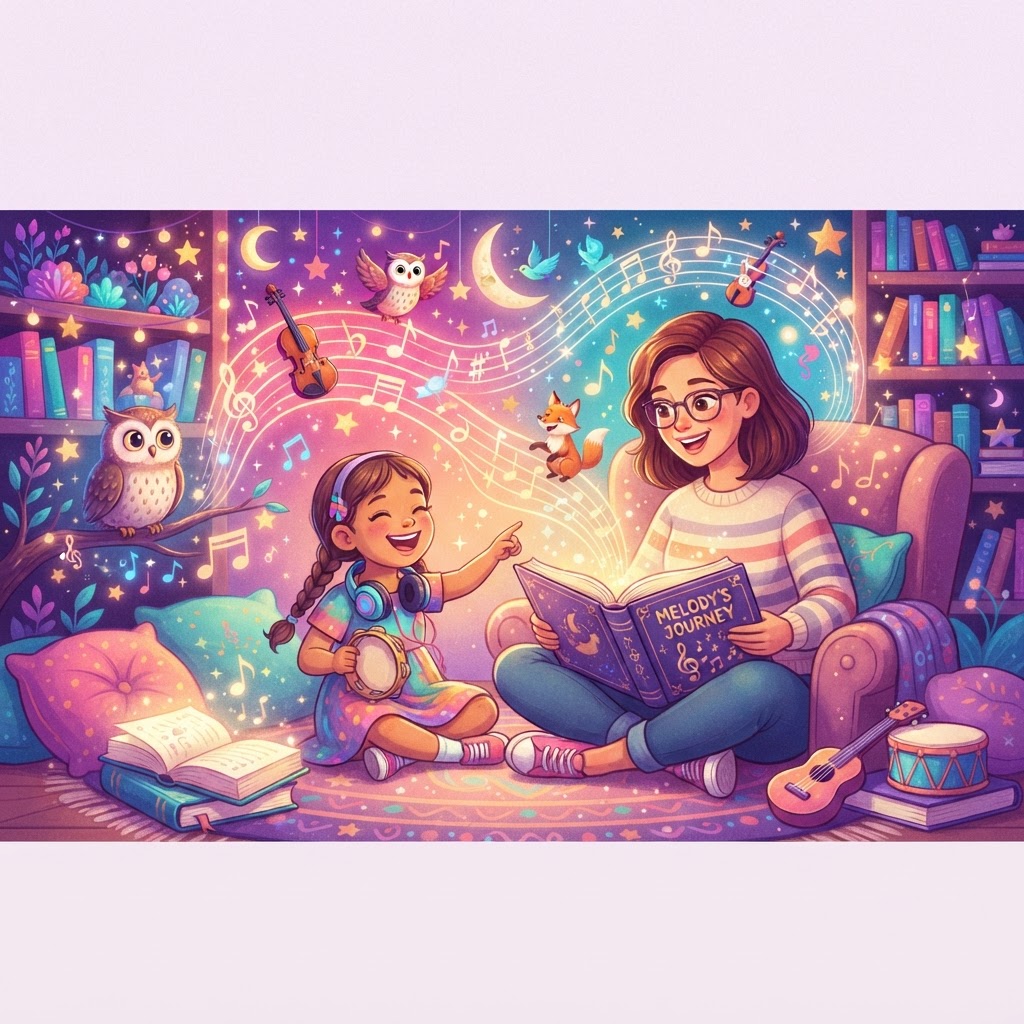
If you want young children to remember rhythm, dynamics, and steady beat, stories are one of the simplest tools you can use. For kindergarteners, music makes more sense when it lives inside a story with characters, movement, repetition, and emotion.
That is why kindergarten music stories work so well in the classroom. A fox tiptoeing through the forest teaches soft sounds. A giant crossing a bridge teaches loud sounds. A train chugging up a hill teaches tempo and beat. If you already use narrative in kindergarten math lessons or science read-alouds, the same approach can make music more active, memorable, and joyful.
Why do kindergarten music stories work so well?
Stories help children learn music because they give abstract concepts a concrete meaning. Instead of hearing “play softly” as an isolated direction, children understand soft sounds through a mouse sneaking past a sleeping cat.
In kindergarten, children learn best through play, movement, and relationships. Storytelling naturally supports all three. A narrative provides a sequence to follow, a reason to listen, and repeated language that helps children predict what comes next. That predictability is especially useful when you are teaching musical opposites like fast/slow, loud/soft, or high/low.
Research supports this approach. The Harvard Center on the Developing Child explains that meaningful, engaging experiences build attention, working memory, and self-regulation. Music stories for kindergarten do exactly that: children listen closely, wait for cues, and respond with their bodies and voices. The National Association for the Education of Young Children also highlights how music and movement support language, social development, and self-expression in early childhood.
There is also a cognitive reason stories stick. Dual coding theory, developed by Allan Paivio, suggests that children remember information better when it is linked through words, images, and actions. In practice, that means a story about raindrops tapping, thunder booming, and wind whooshing gives children multiple ways to remember rhythm and dynamics.
For teachers, the benefit is practical too. Teaching music with stories reduces off-task behavior because children have a purpose for every sound they make. They are not just clapping patterns; they are helping the hero cross the river.
Which story-based kindergarten music activities can teachers use right away?
The best kindergarten music activities are simple, repetitive, and easy to act out. Start with one music goal and one short story idea, then let children respond through voice, movement, instruments, or body percussion.
Sound detective stories
Tell a short mystery story and assign a sound to each clue. For example, a tiny bell means “fairy,” a drum means “giant,” and shakers mean “rain.”
- Read the story slowly.
- Pause for children to play the matching sound.
- Repeat the story and let students lead the sounds the second time.
This activity strengthens listening discrimination and sound-symbol matching.
Steady beat walking tales
Use a journey story where the class must keep moving to help a character reach a destination. A bear walking to the cave, astronauts marching to the rocket, or ducks waddling to the pond all work well.
- Pat or tap a steady beat first.
- Have children walk, march, or sway to the beat.
- Change the setting, but keep the beat steady.
This is one of the most effective kindergarten music activities for teaching pulse because the story keeps the beat purposeful.
Dynamics through character voices
Choose characters with clearly different voices and energies. A sleepy kitten can be soft, a cheerful dog can be medium, and a roaring lion can be loud.
- Say a repeated phrase for each character.
- Invite children to echo it at the right volume.
- Add instruments later for a second layer of practice.
The narrative makes dynamic contrast memorable without lengthy explanation.
Tempo change adventure stories
Create a story where the pace naturally changes. Children might creep through a cave, run from the rain, and then rest under a tree.
- Use one chant or repeated rhythm pattern.
- Perform it slowly, quickly, and at a medium tempo as the story changes.
- Ask students why the music changed in each part of the story.
This helps children feel tempo as part of meaning, not just as a speed rule.
Call-and-response song stories
Build a class story around a repeated musical line. For example: “Where is the lost bird?” and the class sings back, “High in the sky!”
- Teacher sings the narrator line.
- Children respond with the repeated phrase.
- Add movement, scarves, or puppets to deepen engagement.
This is a strong option for music stories for kindergarten because repetition builds confidence, especially for hesitant singers.
A helpful rule: keep the story short enough to retell in under five minutes. Young children benefit more from repeating a simple musical story several times than from hearing one long, complicated narrative once.
How can teachers differentiate music stories for kindergarten learners?
Differentiation works best when you adjust the response, not the joy of the activity. All children can join a music story, but they may show understanding in different ways.
Here are practical ways to adapt:
- For emerging language learners: use picture cards, gestures, and repeated phrases.
- For children with sensory sensitivities: offer quieter instruments, headphones, or movement-only roles.
- For children with strong musical skills: let them lead sound cues, improvise endings, or create new verses.
- For children who need motor support: use seated tapping, finger motions, or lap drums instead of full-body movement.
- For mixed-age or mixed-readiness groups: keep one shared story, but offer different response levels, such as tapping beat, choosing dynamics, or inventing rhythms.
The National Association for Music Education emphasizes active, developmentally appropriate music-making in the early years. In practice, that means keeping expectations playful and flexible. The goal is not perfect performance. The goal is that children connect sound, feeling, and meaning.
It also helps to repeat the same story over several days. Repetition lowers cognitive load, which gives children more room to succeed musically.
How can InstaTales support kindergarten music lessons?
InstaTales can help teachers create custom stories that match specific music goals, themes, or student interests. That makes it easier to plan teaching music with stories without writing every narrative from scratch.
With InstaTales for teachers, you can build a story around the exact concept you are teaching, such as steady beat, instrument families, or loud and soft sounds. You can also tailor the topic to what your class already loves, like dinosaurs, ocean animals, construction trucks, or fairy gardens. That instant relevance matters in kindergarten.
A few practical ways to use it:
- Generate a short story for a movement warm-up.
- Create a repeated chant line for call-and-response singing.
- Make parallel versions of the same story for different readiness levels.
- Use seasonal or thematic prompts to match classroom units.
- Save successful stories in your story library for reuse next year.
If you want a faster starting point, story templates can help you structure a story around a musical concept. For example, you might start with a “journey” template for tempo changes or a “mystery” template for instrument listening.
The real value is efficiency. Instead of spending planning time inventing a brand-new scenario, you can focus on the musical objective and how children will respond.
What does a simple story-based music lesson look like?
A strong story-based music lesson can fit into 15–20 minutes and still cover clear music objectives. You do not need a full performance or elaborate props to make it work.
Here is a simple lesson flow for kindergarten music stories:
- Objective: Students will identify and perform loud and soft sounds.
- Hook: Introduce two characters, such as a whispering mouse and a stomping bear.
- Story read-aloud: Tell a 3–4 minute story with repeated opportunities to use soft and loud sounds.
- Active response: Children use voices, body percussion, or instruments for each character.
- Quick reflection: Ask, “Which character was loud? Which was soft? How did you know?”
- Extension: Let students help invent a new character and choose its sound.
This lesson structure also works across the curriculum. If you enjoy integrated teaching, you might pair music with visual storytelling ideas from story-led art lessons or follow up with simple reflection pages inspired by kindergarten writing activities with stories.
Frequently Asked Questions
What musical concepts can stories teach in kindergarten?
Stories can teach steady beat, rhythm, dynamics, tempo, pitch, and listening skills. They work especially well for concepts children can act out, hear clearly, and connect to character actions.
How long should a music story be for kindergarten?
Most music stories for kindergarten work best at 3 to 5 minutes. Shorter stories leave more time for repeating, moving, singing, and discussing the music concept.
Do teachers need instruments to use kindergarten music stories?
No. You can teach excellent story-based music lessons with voice, clapping, tapping, marching, and movement alone. Instruments are helpful, but they are not required.
How often should teachers use stories in music lessons?
Stories can be used once a week or in short daily routines. Repeating a familiar story across several lessons often leads to better musical understanding than using a new story every time.
Can AI-generated stories be appropriate for classroom music?
Yes, as long as teachers review and adapt them for age level, lesson goals, and classroom needs. The best results come when teachers keep the story short, clear, and tied to one specific music objective.
Ready to Create a Personalized Bedtime Story?
Use our free AI bedtime story generator to create a personalized illustrated story for your child in 30 seconds — no credit card needed.
Popular story types:
Maya Rodriguez
Lead Content Editor & Early Literacy Specialist
Maya is a former early childhood educator and literacy specialist with over a decade of experience helping children develop a love of reading. She leads content at InstaTales, where she writes about the science of storytelling, child development, and how families can use personalized AI stories to build literacy and emotional resilience.
instatales.ai