When Kids Outgrow Favorite Stories: Next Steps
What to do when your child outgrows their favorite stories — developmental reading stages and how to level up stories as kids grow with free AI story generation.
✦ Key Takeaways
- •When kids outgrow stories, it usually means their language, attention span, and imagination are expanding, not that reading time is losing its value. A new story fit can re-engage them quickly.
- •Signs a child is ready for more complex narratives include asking deeper questions, predicting plot turns, wanting fewer repeats, and staying engaged for longer read-alouds.
- •The best next stories for growing kids add just one or two new challenges at a time, such as a longer plot, richer vocabulary, or more layered characters.
- •Personalized storytelling can ease a reading level transition because familiar characters, interests, and themes help children handle new complexity with confidence.
- •Parents do not need to rush independent reading levels; listening comprehension often develops before decoding skills, so read-alouds can stay advanced and enjoyable.
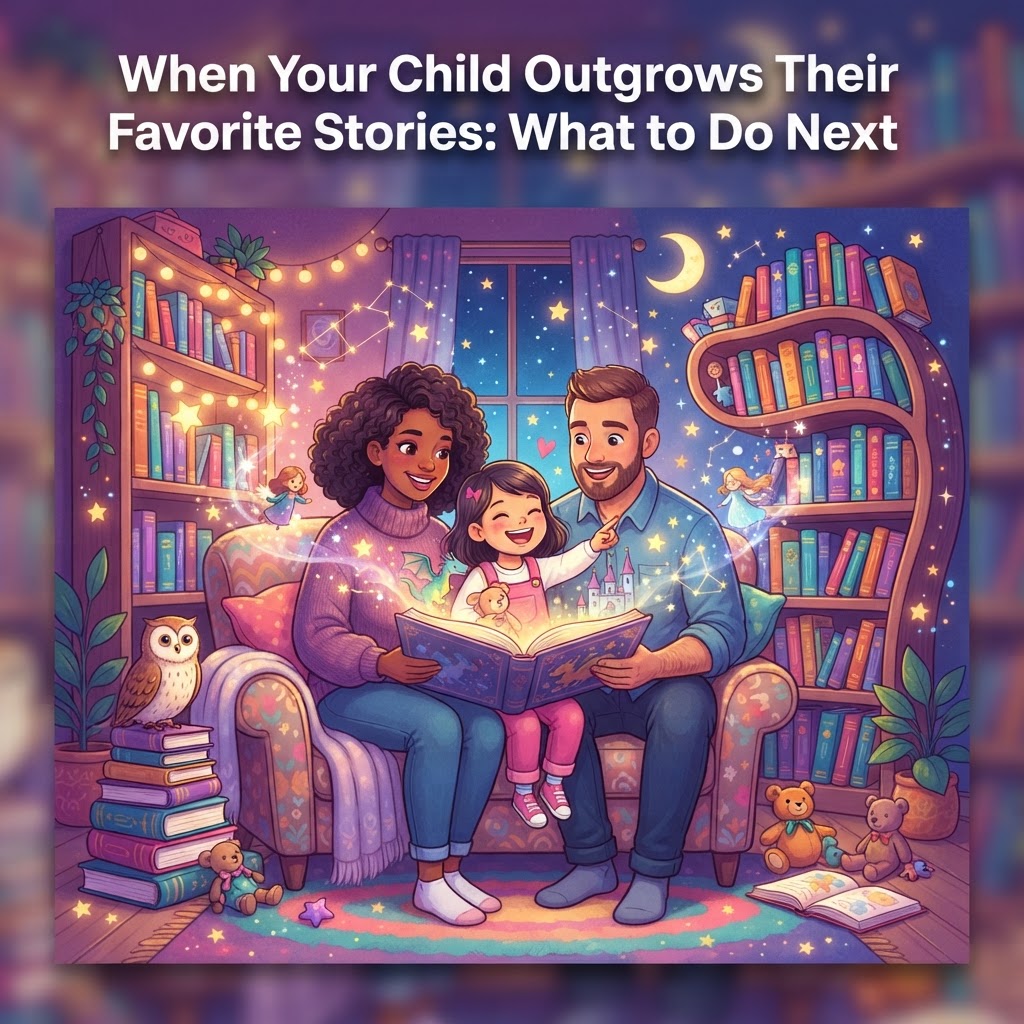
It can feel surprisingly emotional when a child outgrows favorite stories. One day they want the same gentle book for the hundredth time, and the next they seem restless, distracted, or ready for something bigger. The good news is that this shift is usually a healthy sign of growth: as children develop language, memory, empathy, and attention, they naturally move into a new reading level transition and start needing different kinds of stories.
People Also Ask
What does it mean when kids outgrow stories?
It usually means your child’s brain is ready for more challenge. They may now want a stronger plot, new themes, or characters with bigger problems to solve.
How do I know my child is ready for harder bedtime stories?
Look for signs such as longer attention span, more detailed questions, and less interest in very simple repetition. If they can follow a longer story across several pages or nights, they are likely ready.
Should I stop reading old favorites when my child outgrows them?
No. Many children still enjoy familiar comfort stories even while moving on to more advanced ones. Keep a mix of old favorites and new choices.
What are the best next stories for growing kids?
The best next stories match your child’s interests while gently increasing complexity. For one child that may mean longer animal adventures, while for another it may mean mysteries, friendships, or fantasy quests.
Why do children outgrow their favorite stories?
Children outgrow stories because development changes what feels satisfying, understandable, and exciting. As vocabulary, working memory, and social understanding expand, simple books may no longer offer enough novelty or challenge.
This is well supported by child development research. Early language growth is tied to repeated exposure, conversation, and story structure, while older children begin to enjoy causality, character motivation, and suspense. Organizations like the American Academy of Pediatrics and Zero to Three consistently emphasize that reading needs change as children grow, even though the value of shared reading stays constant.
Outgrowing a beloved story does not mean the story was “too babyish” or that you somehow missed the right timing. It means your child got what they needed from it. Repetition built comfort, language patterns, and confidence; now they are ready for the next layer.
What signs show a child is ready for more complex stories?
A child is often ready for more complex stories when they stay engaged longer, ask richer questions, and seem less satisfied by very simple plots. In other words, when kids outgrow stories, their behavior during reading often tells you before they can explain it.
Look for signs like these:
- They ask “why” questions about motives or feelings
- They predict what might happen next
- They enjoy stories that continue over several chapters or nights
- They want “bigger kid” themes like teamwork, bravery, school, or adventure
- They tolerate fewer pictures and more spoken detail
- They ask for different endings or new twists on familiar tales
It also helps to remember the difference between listening level and independent reading level. According to literacy guidance from groups such as the International Literacy Association, many children can understand more advanced stories when listening than they can read on their own. That means read-aloud time can level up before your child is reading those books independently.
How can parents handle a reading level transition without stress?
The best way to manage a reading level transition is to make it gradual. Most children do better when stories become slightly more complex over time, rather than changing overnight from simple board books to long chapter books.
Try a “bridge” approach:
- Keep one or two familiar favorites in the routine
- Add one new story element at a time
- Choose topics your child already loves
- Alternate short, easy books with one longer read-aloud
- Pause often to talk, predict, and explain new words
This matters because story difficulty is not only about word count. It also includes sentence length, emotional themes, number of characters, and whether the child must remember earlier events. A child who still loves repetition may still be ready for richer plots if the topic feels safe and familiar.
For many families, personalized stories can help during this in-between phase. An AI bedtime story generator lets you keep a favorite character type or bedtime tone while gradually adding longer plots, new settings, and more advanced language.
What kinds of stories should you offer next?
The best next stories for growing kids are stories that stretch comprehension without losing delight. A child who is moving on does not need stories that are drastically harder; they need stories that feel fresh, exciting, and just slightly more demanding.
Here are smart “next step” shifts:
- From naming books to simple cause-and-effect stories
- From repetitive bedtime books to short adventures with a problem and solution
- From standalone picture books to linked stories across several nights
- From everyday routines to friendship, bravery, mystery, and exploration themes
- From simple animal tales to character-driven adventures, such as animal stories for children
New themes can also reflect developmental growth. Preschoolers often love stories about independence and feelings. Early elementary children often enjoy fairness, teamwork, school life, humor, and quests. Older elementary children may want higher stakes, layered characters, and bigger worlds.
If you want easy ways to vary structure, prompts, and pacing, pre-made story templates can help you test what your child responds to without starting from scratch every night.
What is an age-by-age guide for story progression?
A helpful age-by-age guide starts with rhythm and repetition in toddlerhood, then builds toward plot, character depth, and longer story arcs in elementary years. While every child develops at their own pace, these ranges give parents a practical roadmap.
Ages 1-2: Rhythm, repetition, and reassurance
At this stage, children benefit most from very short stories, lullaby-like language, and familiar routines. Repetition supports memory and language development, and predictable endings feel calming.
Good story features:
- Repeated phrases
- Simple pictures or strong imagery
- Daily routines, animals, sleep, and comfort
- One feeling or one action per page
Ages 3-4: Simple plots and playful imagination
Children in this stage often start following a basic beginning-middle-end structure. They enjoy silly surprises, gentle problem-solving, and stories tied to their real life.
Good story features:
- A small challenge and happy resolution
- Clear character feelings
- Repeated story patterns with slight variation
- Favorite topics like trucks, animals, bedtime, or family
Ages 5-6: Richer language and stronger story logic
This is a common point when a child outgrows favorite stories from the toddler years. Many children now want more action, humor, and emotional nuance.
Good story features:
- Longer scenes
- Friendships and teamwork
- “What happens next?” momentum
- New vocabulary supported by context
Ages 7-8: Chapter-like structure and bigger themes
At this stage, children often enjoy stories that carry across multiple sittings. They can usually track more characters and understand motives more clearly.
Good story features:
- Multi-step plots
- Mild suspense or mystery
- Character growth
- School, adventure, problem-solving, and fantasy
Ages 9-10: Layered adventures and emotional depth
Older elementary readers often want stories that respect their growing maturity. They may still love read-alouds, but they are usually ready for richer world-building, moral questions, and longer arcs.
Good story features:
- Complex friendships and choices
- Epic adventures and quests
- Humor mixed with real emotion
- Chapters or serial storytelling
If your child is entering this stage, these guides on reading with your 9-year-old, great stories for 9-year-olds, and story ideas for 10-year-olds can help you choose stories that match their development.
How can you introduce longer stories and new themes successfully?
The easiest way to introduce longer stories is to keep the emotional entry point familiar. Children are more willing to try a longer or more sophisticated narrative when it includes something they already love, such as a favorite animal, a bedtime setting, or a hero who feels like them.
Use these strategies:
- Start with short serial stories over 2-3 nights
- Preview the plot before reading
- Stop at a gentle cliffhanger
- Ask simple reflection questions
- Connect themes to your child’s real life
For example, if your child loves cozy bunny stories, you can move from sleepy bedtime tales to a bunny’s forest rescue mission. If they love school stories, you can add mystery, teamwork, or emotional problem-solving before jumping to full fantasy epics.
This is also where personalization becomes useful. With a free AI bedtime story generator, parents can test longer formats, different themes, and age-appropriate vocabulary without committing to a whole stack of new books. If a story works, you can save it in your story library and revisit it later.
How can InstaTales help as your child grows?
InstaTales can support a reading transition by meeting your child exactly where they are now and gently stretching them forward. Instead of guessing the perfect next book, you can create stories that match their age, interests, attention span, and developmental stage.
For example, you might use InstaTales to:
- Turn a toddler’s favorite lullaby-style story into a preschool bedtime adventure
- Expand a simple animal tale into a multi-scene quest
- Introduce new themes like bravery, friendship, or school worries in a familiar voice
- Create longer stories for older kids who want “epic” plots
This flexibility is especially helpful because children do not all outgrow stories on the same timeline. Some want complexity early; others want comfort and repetition for longer. Personalized story generation allows you to level up slowly and thoughtfully, which is often the most successful approach.
If you want more developmental support for older elementary readers, explore these resources on what works in stories for 10-year-olds and developmental milestones and stories for 10-year-olds. You can also browse the InstaTales blog for more age-based reading guidance.
What should parents avoid when kids outgrow stories?
Parents should avoid making the transition feel like a test. The goal is not to prove your child is advanced; it is to help them stay connected to reading as their needs change.
Try not to:
- Shame old favorites as “baby books”
- Push books that are too long or emotionally intense
- Confuse decoding ability with listening comprehension
- Drop read-aloud time too early
- Expect every new story to be an instant hit
Research from the National Institute of Child Health and Human Development and related literacy studies has long shown that positive reading experiences matter. Children build lasting reading motivation when stories feel enjoyable, relational, and appropriately challenging.
Frequently Asked Questions
Is it normal for a child to suddenly stop liking their favorite bedtime story?
Yes, that is very normal. It often means your child is ready for more novelty, complexity, or emotional depth, not that bedtime reading has lost its value.
At what age do children outgrow simple stories?
There is no single age, but many children begin shifting away from very simple stories between ages 4 and 7. Development, temperament, and listening experience all affect the timeline.
Should I keep reading aloud if my child can read alone?
Yes. Read-alouds still support vocabulary, comprehension, and emotional bonding, even for strong independent readers. They also let children enjoy more advanced stories than they can comfortably decode by themselves.
How do I choose next stories for growing kids?
Choose stories that match your child’s interests while adding just a bit more length, vocabulary, or plot complexity. Familiar themes make new challenges easier to enjoy.
Can AI-generated stories support a reading level transition?
They can, especially when used thoughtfully. Personalized stories can help children move from simple, repetitive tales to richer narratives at a pace that feels engaging and manageable.
Get a new bedtime story every week
Free, personalized, and delivered to your inbox. No spam, ever.
Ready to Create a Personalized Bedtime Story?
Use our free AI bedtime story generator to create a personalized illustrated story for your child in 30 seconds — no credit card needed.
Popular story types:
Maya Rodriguez
Lead Content Editor & Early Literacy Specialist
Maya is a former early childhood educator and literacy specialist with over a decade of experience helping children develop a love of reading. She leads content at InstaTales, where she writes about the science of storytelling, child development, and how families can use personalized AI stories to build literacy and emotional resilience.
instatales.ai