Child Outgrows Favorite Stories? What to Do Next
What to do when your child outgrows their favorite stories — developmental reading stages and how to level up stories as kids grow with free AI story generation.
✦ Key Takeaways
- •Children often outgrow beloved stories because their brains are ready for more complex language, longer plots, and deeper emotional themes. This is a normal part of literacy and cognitive development.
- •Signs that a child is ready for the **next stories for growing kids** include asking more questions, predicting endings, losing interest in very simple books, and staying engaged with longer read-alouds.
- •Parents can ease the transition by keeping familiar elements children love—such as favorite characters, animal themes, or comforting routines—while gradually increasing story length and complexity.
- •Personalized story tools such as an [AI bedtime story generator](/) can help families match story style, vocabulary, and themes to a child’s changing developmental stage.
- •Reading development is not strictly age-based; interest, temperament, and language exposure all matter. Trusted organizations like the [American Academy of Pediatrics](https://publications.aap.org/) and [Reading Rockets](https://www.readingrockets.org/) recommend responsive, enjoyable reading rather than rigid pressure.
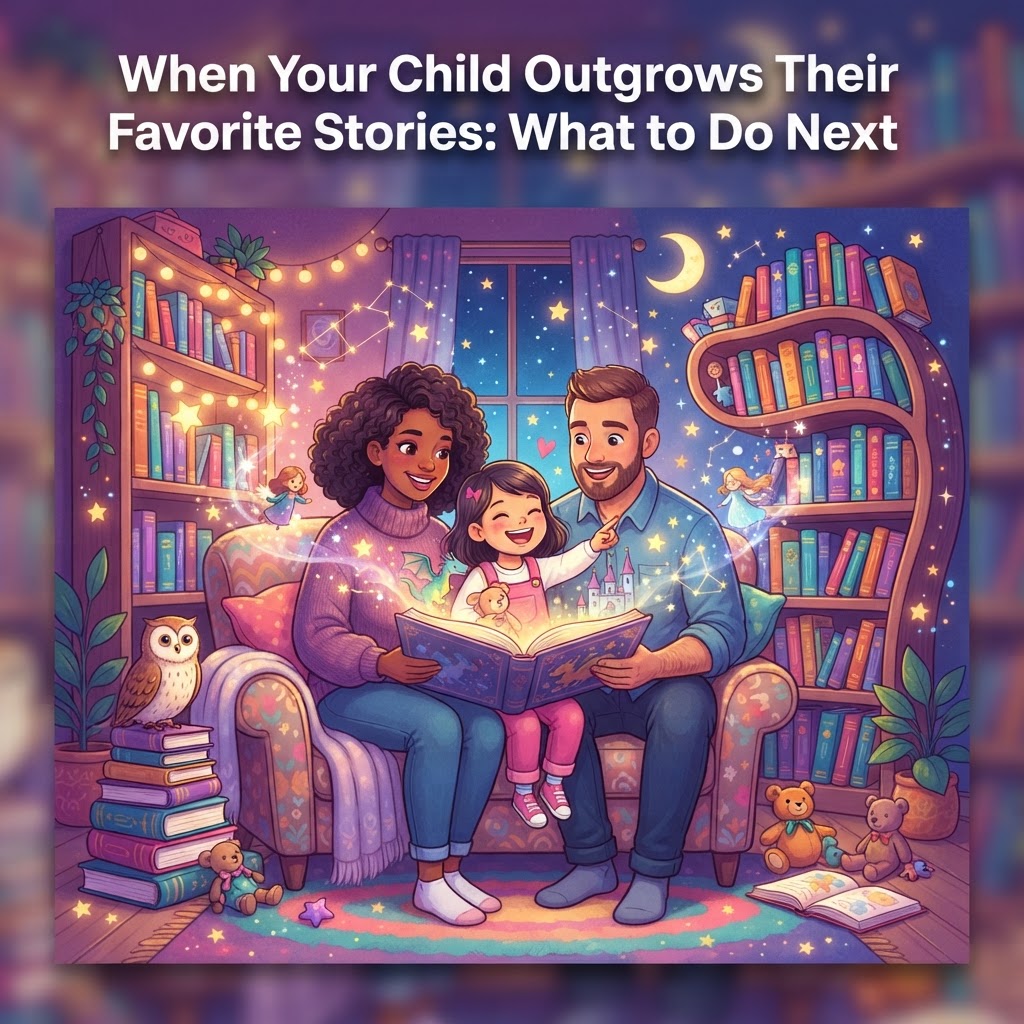
It can feel surprisingly emotional when a child outgrows favorite stories. One day they want the same gentle bunny book for the hundredth time, and the next they roll their eyes and ask for “something bigger.” The good news is that this shift usually signals healthy growth in language, attention, imagination, and emotional understanding. With the right support, a reading level transition can feel exciting rather than abrupt—and it can open the door to richer bedtime routines, deeper conversations, and new kinds of joy.
People Also Ask
Why does my child suddenly not want their favorite bedtime story anymore?
This usually means your child is developing new attention, language, and imagination skills. When kids outgrow stories, they often want fresh plots, stronger characters, or more surprising events than an old favorite can offer.
Is it normal for children to outgrow repetitive books?
Yes, it is completely normal. Repetition is comforting and useful in early childhood, but as children mature, they often seek novelty, challenge, and stories that better match their new thinking skills.
How do I move my child from picture books to longer stories?
Start with illustrated chapter read-alouds, short episodic stories, or personalized tales with familiar themes. A gradual shift works best because it keeps reading enjoyable while building stamina.
What kinds of stories should I offer after simple bedtime books?
Look for stories with slightly richer vocabulary, clearer character motivation, and a beginning-middle-end plot. Animal adventures, friendship stories, mysteries, and imaginative quests are often strong next stories for growing kids.
Why do children outgrow favorite stories?
Children outgrow favorite stories because their brains and interests change. As language, memory, emotional insight, and attention span develop, children naturally seek stories that offer more challenge and novelty.
In the toddler years, repetition supports learning. Hearing the same phrases again and again helps children build vocabulary, understand sequence, and feel secure. Research from child development and literacy organizations consistently shows that repeated read-aloud experiences support early language growth and print awareness.
But growth changes what feels satisfying. A preschooler who once loved naming colors on each page may now want a funny problem to solve. An early elementary child may want suspense, motives, and consequences. So if you are wondering when kids outgrow stories, the answer is: when those stories no longer match the child’s current developmental needs.
This does not mean the old stories were “too babyish” or that your child is rushing ahead. It means reading preferences are evolving, just like play, conversation, and curiosity evolve.
What signs show a child is ready for more complex stories?
A child is often ready for more complex stories when they can follow longer plots, ask deeper questions, and stay engaged for more pages. Readiness usually shows up in behavior before it shows up in formal reading skills.
Common signs include:
- They lose interest in books with very simple plots
- They ask “why” questions about character choices
- They predict what might happen next
- They enjoy stories with a problem and solution
- They can sit through longer read-aloud sessions
- They want “real” adventures, mysteries, or chapter-style storytelling
You may also notice stronger emotional curiosity. A child might ask why a character felt left out or whether a choice was fair. That is a clue they are ready for more layered themes, not just more words.
According to literacy experts at Reading Rockets, strong reading development grows through conversation, vocabulary exposure, and meaningful interaction—not only through decoding skill. In other words, a child can be ready to hear more advanced stories before they can read them independently.
How can parents handle a reading level transition without pressure?
The best way to handle a reading level transition is gradually. Keep the comfort of the bedtime routine while stretching just one element at a time—length, vocabulary, plot, or theme.
Try a “familiar plus one” approach:
- Keep a favorite topic, such as dragons, trucks, or animals
- Add a slightly longer plot
- Introduce one new emotional theme, like bravery or friendship repair
- Read aloud in smaller sections if needed
- Let your child help choose the next book or story style
This approach protects confidence. If a new story feels too advanced, children may resist not because they are not ready, but because the jump was too large. A child who loves animal characters may do well with richer animal stories for children before moving into more text-heavy fantasy or realistic fiction.
It also helps to reread old favorites alongside new ones. Outgrowing a story does not mean abandoning comfort reading. Many children like to alternate: one familiar story, one “big kid” story.
What stories come next at each age and stage?
The next stories for growing kids depend on attention span, language exposure, and emotional maturity, but age can offer a helpful starting point. Think of these as flexible guideposts, not strict rules.
Ages 1-2: What works best?
At this stage, children benefit from rhythm, repetition, naming words, and simple emotional cues. Lullaby-style stories, bedtime routines, and gentle animal tales are ideal.
Look for:
- Predictable patterns
- Real-world objects and actions
- Short, soothing plots
- Strong visual support
Ages 3-4: What changes?
Preschoolers often begin wanting a tiny bit more story. They enjoy humor, simple problems, and cause-and-effect plots.
Good next steps include:
- Repetitive stories with a clear conflict
- Silly adventures
- Stories about friendship, bedtime fears, or trying new things
- Character-driven tales with a beginning, middle, and end
Ages 5-6: What grows here?
This is a major transition period. Many children start wanting richer storytelling, even if they still love pictures and read-aloud support.
Offer:
- Longer picture books
- Early illustrated adventures
- Stories with small twists
- Themes like teamwork, perseverance, and school life
Ages 7-8: What do many children want now?
Children in this range often enjoy chapter-like pacing, stronger world-building, and recurring characters. They may be ready for light mystery, fantasy, or quest formats.
Look for:
- Multi-scene narratives
- Character growth
- Humor with more nuance
- Emotional stakes that still feel safe
Ages 9-10: What often works next?
Older elementary children frequently want more independence, complexity, and deeper themes. They may enjoy epic adventures, moral dilemmas, and stories that reflect their expanding social world.
Helpful resources include story ideas for reading to your 9-year-old, guidance on what makes a great story for a 9-year-old, and tips for reading to your 10-year-old. Parents can also explore 10-year-old developmental milestones and stories and learn what makes a great story for a 10-year-old.
How can you introduce longer stories and new themes successfully?
You can introduce longer stories successfully by pairing novelty with safety. Children are more open to a new kind of narrative when something inside it still feels familiar.
Practical strategies include:
- Read longer stories over several nights
- Pause to recap what happened before
- Choose stories related to existing interests
- Introduce one new theme at a time
- Use expressive read-aloud voices to support attention
New themes might include jealousy, courage, mistakes, responsibility, grief, or identity. These topics do not need to feel heavy if they are presented with warmth and hope. The goal is not to make bedtime intense; it is to widen your child’s emotional and imaginative world.
The National Association for the Education of Young Children has long emphasized developmentally appropriate practice, which includes matching learning experiences to a child’s readiness while keeping them engaging and emotionally supportive.
How can InstaTales help when kids outgrow stories?
InstaTales can help by letting parents adjust story length, tone, vocabulary, and theme as a child grows. That makes it easier to bridge the gap between old favorites and the next developmental stage.
For example, a toddler who once loved sleepy farm lullabies may now want a story where the farm animals solve a mystery. A six-year-old who adored simple bedtime rhymes may now want an adventurous forest quest. With a personalized AI bedtime story generator, you can keep the favorite ingredients while increasing complexity little by little.
This is especially useful during a reading level transition because you are not limited to one fixed book format. Families can try:
- Shorter stories on busy nights
- Longer multi-part adventures on weekends
- Familiar characters in more advanced plots
- Personalized themes based on current interests
If you want to experiment without commitment, the free AI bedtime story generator is a practical way to test what engages your child now. You can also save stories in your story library for re-reading, comparison, or building a new bedtime collection over time.
For families who like structure, story templates and weekly reading challenges can make progression feel fun rather than academic. And if you want more ideas, browse the InstaTales blog for age-specific reading support.
What should parents avoid when a child outgrows favorite stories?
Parents should avoid turning the shift into a test. If a child senses that “bigger books” are about performance or status, reading can quickly lose its warmth.
Try not to:
- Shame a child for liking younger books
- Push stories that are too long or emotionally intense
- Assume reading ability and listening ability are the same
- Replace all comfort books at once
- Focus only on difficulty instead of enjoyment
It is also important not to confuse boredom with readiness all the time. Sometimes a child rejects a story because they are tired, overstimulated, or just not interested in that topic. Pay attention to patterns, not one-off reactions.
The most successful parents stay flexible. They notice what their child returns to, what they skip, and what sparks questions. That observational skill is often more useful than any reading chart.
How do you know if the new story level is a good fit?
A good-fit story stretches your child without losing them. They should be challenged enough to stay curious, but supported enough to stay comfortable and connected.
You likely found the right level if your child:
- Asks to continue tomorrow
- Remembers plot details
- Talks about the characters afterward
- Laughs, predicts, or reacts emotionally
- Wants similar stories again
If they drift away quickly, ask for more pictures, or seem confused through most of the story, scale back just a little. The ideal next step is not the most advanced story they can tolerate. It is the one that makes them want to come back.
Frequently Asked Questions
At what age do children usually outgrow simple picture books?
Many children begin shifting away from very simple picture books between ages 4 and 7, but the timeline varies. Some still enjoy picture books well beyond that age, especially when the stories are emotionally rich or humorous.
What should I read after my child outgrows bedtime baby books?
Move toward stories with a clearer plot, more character development, and slightly longer scenes. Personalized tales, animal adventures, and gentle chapter-style read-alouds are often great next steps.
Can a child outgrow a story emotionally before they outgrow it academically?
Yes. A child may be fully able to understand a simple book but no longer feel interested in it. Emotional and imaginative readiness often drives story preference more than technical reading level.
Should I stop rereading old favorites once my child is ready for more?
No. Old favorites still offer comfort, connection, and confidence. Many children enjoy mixing familiar books with newer, more complex stories during transitions.
Are AI-generated stories good for growing readers?
They can be very useful when adults guide the experience thoughtfully. Personalized stories can help match length, vocabulary, and theme to a child’s current stage, making the transition smoother and more engaging.
Get a new bedtime story every week
Free, personalized, and delivered to your inbox. No spam, ever.
Ready to Create a Personalized Bedtime Story?
Use our free AI bedtime story generator to create a personalized illustrated story for your child in 30 seconds — no credit card needed.
Popular story types:
Maya Rodriguez
Lead Content Editor & Early Literacy Specialist
Maya is a former early childhood educator and literacy specialist with over a decade of experience helping children develop a love of reading. She leads content at InstaTales, where she writes about the science of storytelling, child development, and how families can use personalized AI stories to build literacy and emotional resilience.
instatales.ai