Family Storytelling Tradition: Seasonal Rituals
How to build a family storytelling tradition with seasonal rituals — weekly story nights, seasonal story baskets, and birthday story traditions that last for years.
✦ Key Takeaways
- •A strong **family storytelling tradition** is built through repetition, not perfection; even one weekly **family story night** can create lasting emotional memories for children.
- •**Seasonal story rituals** help children connect stories to the rhythm of the year, which supports memory, anticipation, and family bonding.
- •Birthday stories, grandparent storytelling, and monthly themed prompts make **storytelling traditions for families** easier to sustain because they are anchored to real-life events.
- •Personalized tools like an [AI bedtime story generator](/) can help busy parents create fresh stories quickly and save them in [your story library](/free-ai-bedtime-story-generator) for reuse as family keepsakes.
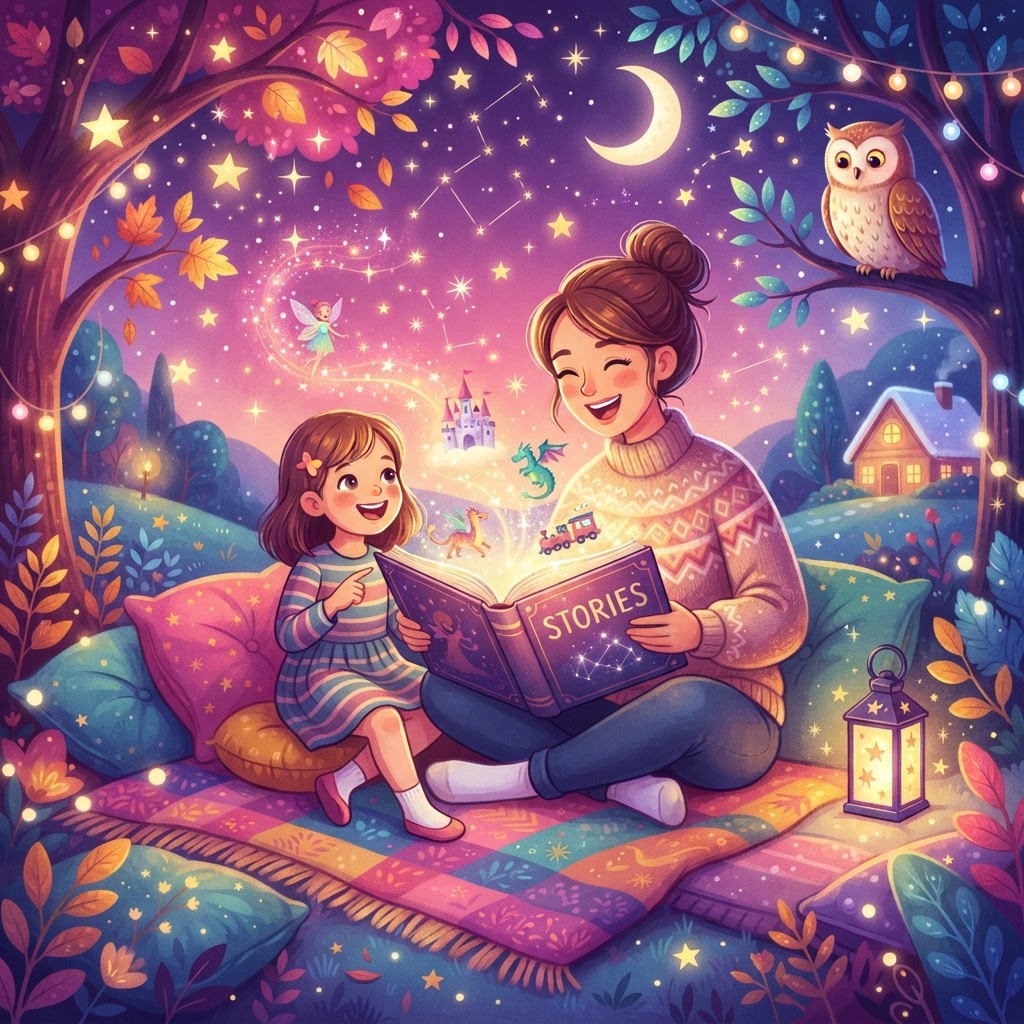
A family storytelling tradition does not need to be complicated to become meaningful. The rituals that last are usually simple, repeated often, and tied to moments children already love — bedtime, birthdays, changing seasons, and visits with grandparents. When families create regular story habits, they build language, memory, belonging, and a shared sense of wonder that children carry for years.
People Also Ask
How do you start a family storytelling tradition?
Start small and repeat one simple ritual, such as telling a story every Friday night or reading a personalized bedtime story every Sunday. Consistency matters more than length, so choose a time your family can realistically keep.
Why are seasonal story rituals good for children?
Seasonal story rituals help children notice patterns in the world and connect stories with familiar experiences like autumn leaves, winter holidays, or summer trips. That predictability can support emotional security and stronger family memories.
What can families do for a weekly story night?
A weekly story night can include a snack, one read-aloud or made-up story, and a short family discussion or drawing activity afterward. Keeping the format simple makes it easier to continue over time.
Can grandparents be part of storytelling traditions?
Yes, grandparents and extended family can share family memories, voice-record stories, or join virtually for special story nights. Their involvement adds identity, history, and a sense of continuity across generations.
Why does a family storytelling tradition matter so much?
A family storytelling tradition helps children feel connected, secure, and known. Shared stories teach language and values, but they also give children a place inside the family narrative: “This is who we are, and this is what we remember together.”
Research supports this. The American Academy of Pediatrics highlights how shared reading and language-rich interactions build early brain development and relationships (AAP). Harvard’s Center on the Developing Child also notes that warm, responsive back-and-forth interactions are foundational for learning and emotional growth (Harvard Center on the Developing Child). Story rituals create exactly that kind of interaction.
In practice, this means storytelling traditions for families do more than entertain. They help children develop vocabulary, listening skills, imagination, and emotional understanding — all while strengthening attachment.
How can families start a weekly family story night?
The easiest way to start a family story night is to choose one repeatable time, one cozy cue, and one simple format. Families are more likely to keep a tradition when it feels easy rather than elaborate.
Try this beginner structure:
- Pick a consistent time, such as Friday after dinner or Sunday before bed
- Add a cue, like candles, cocoa, blankets, or a “story basket”
- Choose one format:
- read a favorite book
- tell a made-up story together
- retell a family memory
- create a personalized story with an AI bedtime story generator
Keep story night short at first — 10 to 20 minutes is enough. Younger children often prefer repetition, so revisiting favorite characters is a strength, not a problem.
To match story themes to social-emotional growth, you can use prompts like courage story ideas for kids or sharing-themed story ideas. These are especially helpful when parents want stories to support behavior and feelings in a natural way.
What are seasonal story rituals and why do they work?
Seasonal story rituals are simple storytelling habits tied to times of year, such as autumn harvest stories, winter wonder tales, spring growth stories, or summer adventure nights. They work because children love predictability, and the changing seasons provide ready-made emotional and sensory anchors.
Seasonal rituals also build anticipation. A child who knows that the first cool night of autumn means apple cider and a woodland story begins to associate storytelling with comfort and family identity.
You can create seasonal story baskets with:
- 2-3 books or printed stories
- one small prop, such as a leaf, shell, ribbon, or snowflake ornament
- a themed blanket or stuffed animal
- simple prompts for family-made stories
If your child loves animal characters, rotating in animal stories for children can make each season feel fresh while keeping a familiar style they already enjoy.
How can parents create seasonal story baskets for each part of the year?
Seasonal story baskets work best when they are visible, simple, and easy to update. You do not need to buy much; many families use library books, homemade prompts, and a few meaningful objects from nature.
Autumn story basket ideas
Autumn stories often feel cozy, reflective, and brave. Include themes like harvest, gratitude, changing leaves, woodland animals, and first-day-of-school courage.
Helpful additions:
- leaf rubbings
- mini pumpkins
- flannel blanket
- prompts about kindness, bravery, or friendship
For children working on confidence, more courage story prompts fit well here.
Winter story basket ideas
Winter invites stories about light, generosity, rest, snow adventures, and family togetherness. This is a natural season for memory-rich storytelling traditions for families.
Helpful additions:
- fairy lights
- paper snowflakes
- warm drink ritual
- stories about giving, patience, and wonder
Spring story basket ideas
Spring stories are ideal for growth, new beginnings, gardens, rain, and baby animals. They pair beautifully with nature walks and observation.
Helpful additions:
- seed packets
- flower petals
- bug magnifier
- stories about trying again or making new friends
Summer story basket ideas
Summer stories can be playful, adventurous, and open-ended. Think camping, oceans, family trips, long daylight, and imagination-led quests.
Helpful additions:
- seashells
- picnic blanket
- flashlight
- stories about teamwork, curiosity, and exploration
What month-by-month story themes can families follow all year?
A month-by-month plan makes a family storytelling tradition much easier to keep. Instead of wondering what to do next, families can return to a simple annual rhythm.
- January: new beginnings, snowy adventures, family hopes
- February: love, friendship, kindness, sharing
- March: rain, growth, tiny acts of courage
- April: gardens, animals, Earth care, discovery
- May: family helpers, gratitude, blooming worlds
- June: sunshine, travel, outdoor imagination
- July: independence, adventure, bravery, teamwork
- August: transitions, confidence, back-to-school feelings
- September: harvest, routines, woodland tales
- October: playful mystery, imagination, costumes, courage
- November: thankfulness, family history, belonging
- December: light, generosity, celebration, memory-making
This is also where digital tools can help. Parents can use story templates for quick seasonal ideas, then save each month’s favorites in your story library to build a reusable annual collection.
How can birthday story traditions become keepsakes?
Birthday story traditions are especially powerful because they center the child as the hero. A birthday story can celebrate who the child is now, what they have learned this year, and what hopes the family holds for the year ahead.
A simple birthday tradition might include:
- one personalized birthday-eve story
- a “look how you’ve grown” family memory story
- a printed or saved digital story added to a yearly collection
- a voice note from a parent or grandparent
Over time, these stories become a record of childhood. Families can create one new tale each year using the free AI bedtime story generator, then organize them in a birthday folder inside your story library.
How can grandparents and extended family join storytelling traditions?
Grandparents and extended family make storytelling traditions richer by adding voice, history, and perspective. Children benefit when they hear stories not only about fantasy worlds, but also about where their family came from and what older relatives remember.
Easy ways to involve extended family include:
- asking grandparents to record a favorite childhood memory
- hosting a monthly video-call story night
- inviting relatives to finish a story prompt with the child
- collecting family sayings, songs, or cultural folktales
- saving shared stories in a family collection
This kind of intergenerational storytelling supports identity development. Organizations like Reading Rockets have long emphasized the role of oral language and meaningful conversation in literacy growth. Storytelling is not “extra” learning — it is core learning wrapped in connection.
Families who want to expand storytelling beyond home can also explore resources on the InstaTales blog or use weekly reading challenges to keep older children engaged.
How does InstaTales help families keep storytelling traditions going?
InstaTales helps families sustain a storytelling habit by making story creation faster, more personal, and easier to revisit. That matters because the biggest challenge for most parents is not knowing storytelling is valuable — it is finding the time and energy to do it consistently.
With InstaTales, families can:
- generate personalized bedtime stories based on a child’s name, interests, or season
- create recurring rituals for family story night
- build themed collections for birthdays, holidays, and summer trips
- save favorites in your story library for re-reading year after year
- find inspiration through the community story gallery
The goal is not to replace family storytelling, but to support it. A personalized story can become the spark for conversation, pretend play, drawing, or memory-making — the things children remember most.
What makes storytelling traditions for families actually last?
The storytelling traditions that last are the ones that fit real family life. They are short enough to repeat, flexible enough to survive busy weeks, and meaningful enough that children begin asking for them by name.
If you want your tradition to stick, remember these principles:
- keep it simple
- tie it to existing routines
- let children help choose themes
- repeat favorite formats
- save stories so they become part of family history
That is how a small weekly ritual becomes a lasting family storytelling tradition. Not through perfection, but through warmth, repetition, and the quiet decision to make room for one more story.
Frequently Asked Questions
What is a family storytelling tradition?
A family storytelling tradition is a repeated ritual where families share stories in a consistent way, such as weekly read-alouds, birthday tales, or seasonal story nights. The key is regularity and shared meaning, not complexity.
How often should a family story night happen?
Once a week is ideal for many families, but even twice a month can work well if it is consistent. Children benefit most from predictable repetition rather than frequency alone.
What age should children start storytelling rituals?
Children can begin listening to storytelling rituals in infancy and become more active participants as toddlers and preschoolers. By school age, many children enjoy helping invent characters, settings, and endings.
How do I make seasonal story rituals feel special?
Add one sensory cue, such as a blanket, snack, song, or basket of themed books and props. These small details signal that the ritual is different from everyday reading time.
Can personalized AI stories be part of storytelling traditions for families?
Yes, personalized AI stories can support storytelling traditions when used thoughtfully. They are especially helpful for busy parents who want fresh, child-centered stories they can save, revisit, and build into lasting family rituals.
Get a new bedtime story every week
Free, personalized, and delivered to your inbox. No spam, ever.
Ready to Create a Personalized Bedtime Story?
Use our free AI bedtime story generator to create a personalized illustrated story for your child in 30 seconds — no credit card needed.
Popular story types:
Maya Rodriguez
Lead Content Editor & Early Literacy Specialist
Maya is a former early childhood educator and literacy specialist with over a decade of experience helping children develop a love of reading. She leads content at InstaTales, where she writes about the science of storytelling, child development, and how families can use personalized AI stories to build literacy and emotional resilience.
instatales.ai