Inuit Stories for Kids: Gentle Arctic Myths
Exciting Inuit stories for kids — gods, heroes, monsters, and adventures from Inuit mythology, retold for young readers.
✦ Key Takeaways
- •Inuit stories for kids are child-friendly retellings of traditional Arctic stories rooted in Inuit oral storytelling.
- •The most memorable figures in Inuit mythology children enjoy are often nature beings, animal spirits, and larger-than-life creatures.
- •Inuit tales are powerful for children because they connect adventure with responsibility.
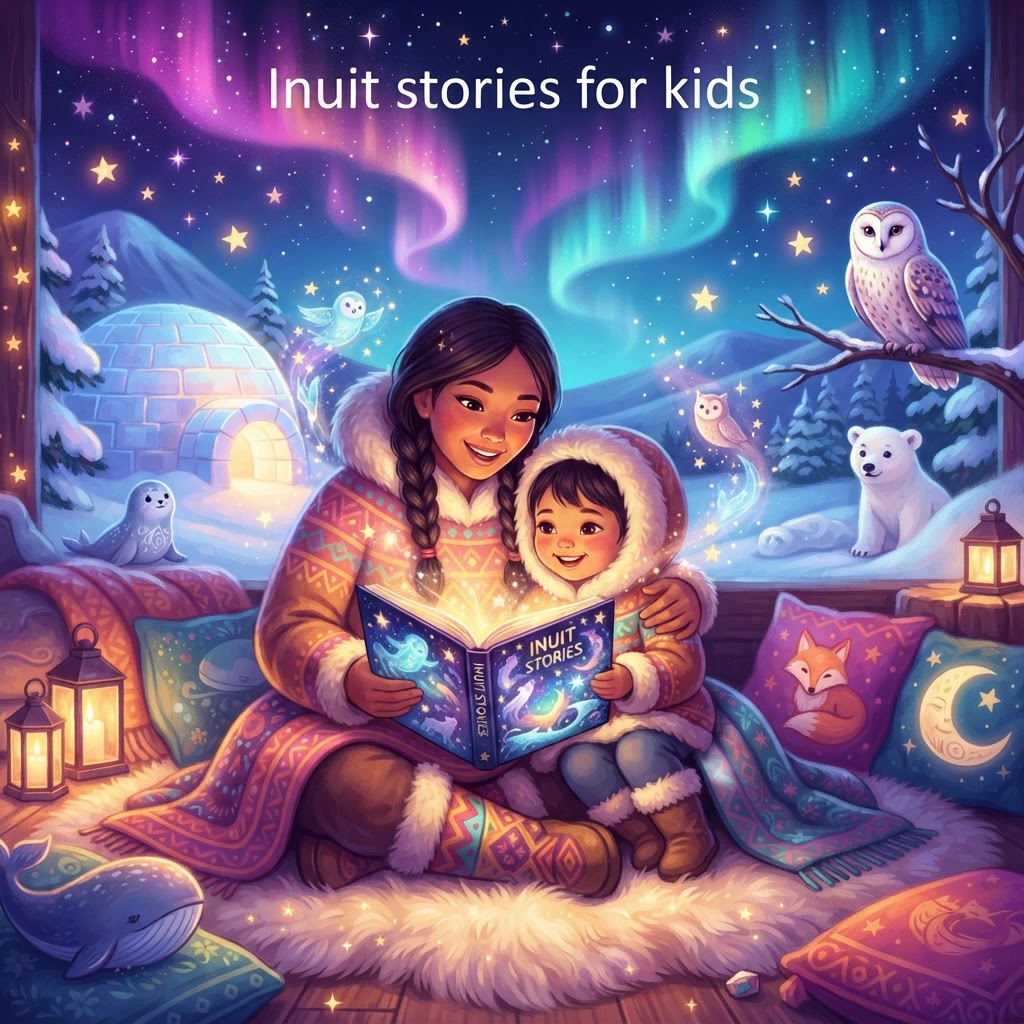
Inuit stories for kids open a door to a world of sea ice, northern lights, animal helpers, brave families, and powerful nature spirits. When these tales are shared with care, they can help children ages 5-8 explore big ideas like courage, respect, survival, and community in a way that still feels cozy and safe at bedtime.
Parents often look for Inuit mythology children can enjoy without the harsh or frightening parts found in some traditional tales. That is a wise approach. Young children learn best from stories that feel meaningful, patterned, and emotionally secure, and research on conversational read-alouds by Grover Whitehurst and guidance from the Harvard Center on the Developing Child both support the value of back-and-forth storytelling for language and memory.
What are Inuit stories for kids?
Inuit stories for kids are child-friendly retellings of traditional Arctic stories rooted in Inuit oral storytelling. The best versions keep the setting, values, and wonder of the originals while softening themes that may be too intense for young listeners.
It helps to know that “Inuit” is not one single culture with one single myth system. Inuit communities across the Arctic have different languages, regional traditions, and story versions. That means there is no one official master list of Inuit tales.
For children, a good retelling usually includes:
- Arctic landscapes like snow, stars, ocean, and ice
- Animal relationships, especially seals, whales, bears, foxes, and birds
- Themes of sharing, listening, patience, and bravery
- A sense that nature is alive, powerful, and worthy of respect
If you want to compare mythology from different cultures, the guides to Mayan myths for young readers and Japanese myths for kids can also help you see how different traditions adapt beautifully for bedtime.
Which characters and beings appear in Inuit mythology for children?
The most memorable figures in Inuit mythology children enjoy are often nature beings, animal spirits, and larger-than-life creatures. For ages 5-8, it is best to introduce them simply and gently, with clear emotional stakes.
Here are a few well-known figures and themes you may see in kids Inuit stories:
- Sedna: Often described as a sea spirit or sea mother connected to marine animals. In child-friendly versions, she works well as a mysterious guardian of ocean life.
- Sila: A spirit or life force linked to weather, sky, breath, and the natural world. For children, Sila can be presented as the wisdom of the Arctic wind.
- The Sun and Moon: In some Inuit traditions, these appear as sibling figures chasing each other across the sky. This can become a simple origin story about day and night.
- Qallupilluit: Sea beings sometimes used as cautionary figures to warn children away from dangerous water. For young readers, they are better softened into “mysterious watchers near unsafe ice.”
- Amarok: A giant wolf-like being from some Arctic traditions. In stories for children, Amarok is best used sparingly and more as a symbol of wild power than fear.
- Animal helpers: Polar bears, ravens, foxes, owls, seals, and whales often carry wisdom, warning, or companionship.
Because older archives may use outdated terms, read carefully and update language respectfully. The University of South Florida’s Lit2Go archive includes older northern traditional texts that can be useful for background, but adults should adapt vocabulary and tone for modern children.
What themes make Inuit tales so powerful for young readers?
Inuit tales are powerful for children because they connect adventure with responsibility. Instead of teaching through lectures, they show that every action matters in a world shaped by weather, animals, and other people.
A few themes appear again and again:
- Respect for nature: Ice, sea, wind, and animals are never just scenery
- Interdependence: People survive by helping one another
- Courage under pressure: Heroes are brave, but rarely reckless
- Listening and humility: Wisdom often comes from elders, dreams, or careful observation
- Transformation: Change can be magical, emotional, or seasonal
These themes work especially well at bedtime because they are emotionally rich without needing fast action all the time. The American Academy of Pediatrics also highlights the value of shared reading routines through HealthyChildren.org, which can help children feel secure while processing new ideas.
Which Inuit story ideas work best for ages 5-8?
The best Inuit stories for kids in this age range are short, vivid, and emotionally clear. They should focus on wonder, problem-solving, and safe suspense rather than danger for shock value.
Here are 7 age-appropriate story ideas:
A child who follows the northern lights
A curious child sees the aurora shimmer and imagines it is guiding lost travelers home. The story can end with the child learning to trust both wonder and family wisdom.
Sedna and the missing seals
In a gentle version of a sea-spirit tale, Sedna notices that the seals are hiding because the ocean has been disrespected. Children can learn that care, gratitude, and apology help restore balance.
The fox who borrowed the moonlight
A white fox wants to help a frightened younger animal cross the snow at night. The tale becomes a playful story about kindness and bravery.
The race between the sun and the moon
This retelling can explain day and night in a rhythmic, memorable way. It works especially well for bedtime because it ends by placing the world back into a comforting cycle.
The child who listened to the wind
A storm is coming, but only one quiet child notices the clues in the air. The lesson is that careful listening is a strength.
The whale who carried songs beneath the ice
A lonely child hears music under the frozen sea and discovers a whale remembering old family songs. This makes a beautiful bedtime story about belonging and memory.
The snow house surprise
A family building a shelter during a long journey finds that every member, even the youngest, has an important job. This is one of the warmest kids Inuit stories for teaching teamwork.
If you want to turn one of these prompts into a custom bedtime tale, you can create your own personalized bedtime story and shape the age, mood, length, and lesson to fit your child.
What should adults adapt when retelling Inuit mythology for children?
Adults should adapt intensity, not identity. Keep the Arctic setting, community values, and spiritual wonder, but soften violence, loss, or punishment so the story feels safe and respectful.
When adapting Inuit mythology children can handle well, try these guidelines:
- Remove graphic scenes, body horror, and revenge plots
- Change terrifying monsters into mysterious or cautionary figures
- Avoid using sacred or powerful beings as silly jokes
- Keep cultural details like snow travel, sea animals, seasonal darkness, and family cooperation
- Use language like “inspired by Inuit storytelling traditions” if you are creating a fresh story rather than retelling a specific traditional one
It also matters to avoid blending all Arctic cultures together. Not every northern story is Inuit, and not every Inuit community tells the same version. When possible, look for Inuit-authored books, museum resources, or educator guides alongside bedtime adaptations.
How can parents and teachers use InstaTales to create Inuit-inspired stories?
Parents and teachers can use InstaTales to make Inuit stories for kids more personal, calmer, and easier to revisit. The key is to start with respect: use Inuit-inspired settings and values, not stereotypes or random “snow magic.”
A strong prompt might include:
- A child’s age
- A gentle bedtime tone
- An Arctic setting
- One clear theme, like sharing or bravery
- A softened myth element, such as a sea guardian or moon spirit
- A comforting ending
For example: “Write a calm bedtime story for a 6-year-old about an Inuit-inspired Arctic village, the northern lights, a wise seal, and a lesson about listening to elders.”
Helpful ways to use InstaTales include:
- Starting with story templates if you want structure
- Saving favorites in your story library for re-reading
- Using InstaTales for teachers to build culture-and-story units
- Exploring more mythology guides on the InstaTales blog
In a classroom, these stories work well for compare-and-contrast lessons too. After reading Arctic tales, children might enjoy exploring other world traditions such as Hindu myths made gentle.
Frequently Asked Questions
Are Inuit stories appropriate for young children?
Yes, many can be adapted beautifully for ages 5-8. The key is choosing or creating versions that keep the wonder and values while removing frightening or graphic elements.
What is the difference between Inuit stories and general Arctic myths?
Inuit stories come from specific Inuit communities and traditions. “Arctic myths” is a broader category that can include many different Indigenous cultures from northern regions.
Is it respectful to create Inuit-inspired bedtime stories?
It can be, if you stay accurate, avoid stereotypes, and do not claim to be telling an authentic traditional story when you are creating something new. Using the phrase “inspired by Inuit storytelling traditions” is often a better choice.
Which Inuit characters are easiest to introduce to children?
Sedna, animal helpers, and sun-and-moon figures are often the simplest starting points. They offer wonder and symbolism without needing a lot of complex background.
How long should bedtime Inuit tales be for ages 5-8?
About 5 to 10 minutes is usually ideal. That length is long enough for atmosphere and meaning but short enough to keep bedtime calm.
Where can I find more myth-inspired stories for children?
You can explore more culture-based story ideas on the InstaTales blog and create custom versions tailored to your child’s age and interests. Personalized stories are especially helpful when you want a gentler tone or a familiar main character.
Ready to Create a Personalized Bedtime Story?
Use our free AI bedtime story generator to create a personalized illustrated story for your child in 30 seconds — no credit card needed.
Popular story types:
Maya Rodriguez
Lead Content Editor & Early Literacy Specialist
Maya is a former early childhood educator and literacy specialist with over a decade of experience helping children develop a love of reading. She leads content at InstaTales, where she writes about the science of storytelling, child development, and how families can use personalized AI stories to build literacy and emotional resilience.
instatales.ai