Benefits of Moral Stories for Kids
Moral stories do more than teach right from wrong. Here's how they shape character, empathy, and decision-making in children.
✦ Key Takeaways
- •Moral stories are important because they turn abstract values into concrete experiences children can understand.
- •Moral stories build character by showing values in action, not just naming them.
- •Moral stories help children develop empathy by inviting them to imagine another person’s feelings, needs, and point of view.
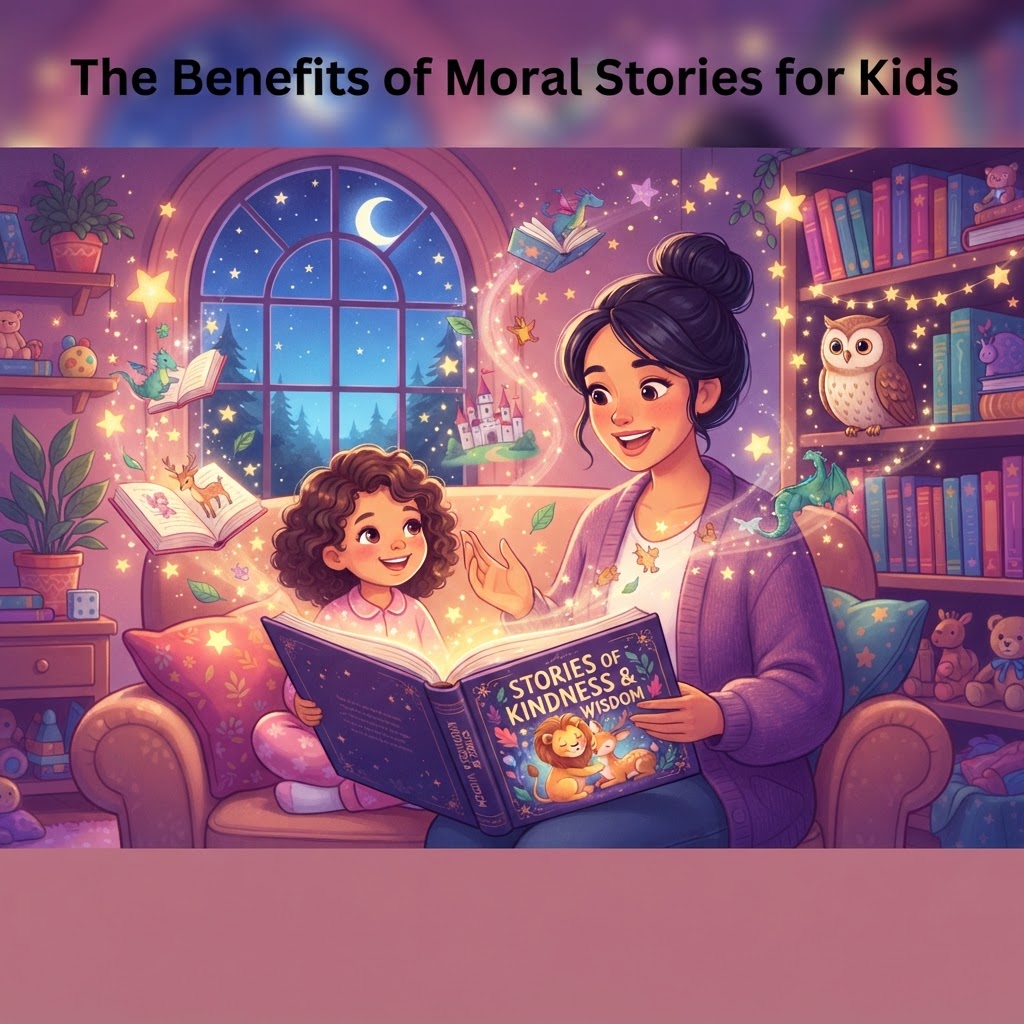
Moral stories do much more than tell children what is right or wrong. At their best, they help kids understand feelings, think about consequences, and practice good choices in a safe, memorable way. That is why the benefits of moral stories go far beyond behavior—they support empathy, self-control, and character growth across childhood.
For parents and teachers, stories can be one of the gentlest tools for teaching values through stories instead of lectures. A child may resist being told, “Be kind,” but they often remember a character who learned kindness the hard way. Shared regularly—especially during read-aloud time or bedtime—moral stories become part of the daily rhythm that shapes how children see themselves and others.
Why are moral stories important for child development?
Moral stories are important because they turn abstract values into concrete experiences children can understand. In the context of moral stories and child development, stories help children connect actions with outcomes, emotions with behavior, and choices with consequences.
Young children do not learn values best through long explanations. They learn through examples, repetition, and guided conversation. A story about honesty, fairness, or perseverance gives them a simple model to follow and a safe space to explore mistakes.
This is one reason bedtime and read-aloud routines matter so much. When stories are shared consistently, children build language, listening, memory, and social understanding at the same time. If you want a broader look at this daily habit, our articles on how bedtime stories support child development and the benefits of reading aloud to children offer helpful context.
How do moral stories build character and values?
Moral stories build character by showing values in action, not just naming them. Children begin to understand what honesty, courage, responsibility, and kindness look like when a character faces a real problem and makes a choice.
Research in character education supports this approach. According to Character.org’s overview of character education, strong character learning includes moral knowing, moral feeling, and moral action. In other words, children need to understand a value, care about it, and practice it.
Stories help with all three:
- They explain a value through plot.
- They humanize a value through emotion.
- They model a value through action.
A good moral story does not simply reward “good” behavior and punish “bad” behavior. It helps children notice motives, relationships, and repair. For example, a story about sharing is more powerful when it shows how another child feels left out, and how the main character fixes the problem.
This is why the benefits of moral stories tend to last longer than a one-time rule reminder. Children remember the emotional journey, not just the lesson at the end.
How do moral stories help children develop empathy?
Moral stories help children develop empathy by inviting them to imagine another person’s feelings, needs, and point of view. That perspective-taking is a core part of social and emotional growth.
When children hear, “How do you think the little bear felt when no one listened?” they begin to practice emotional understanding. Over time, this supports the same social-awareness skills highlighted in CASEL’s framework for social and emotional learning. Empathy is not automatic for young children; it grows through repeated experiences of noticing and naming emotions.
Stories are especially effective because they slow life down. In real life, children may react quickly and miss what someone else is feeling. In a story, adults can pause and ask:
- What is the character feeling?
- Why did they act that way?
- How did their choice affect someone else?
- What could a friend do to help?
This is one reason storytelling is so closely connected to emotional intelligence. If you want to explore that link further, see our guide to emotional intelligence through storytelling.
One important note: children learn empathy best from nuanced stories, not overly simplistic ones. A character who makes a poor choice but then learns, apologizes, or tries again gives children a more realistic model than a “perfect hero” and a “bad villain.”
How do stories strengthen moral reasoning and decision-making?
Stories strengthen moral reasoning because they let children rehearse difficult choices without real-world risk. A child can think through fairness, honesty, peer pressure, or bravery from the safety of the page.
Developmental research has long shown that children’s moral understanding grows in stages. Younger children often focus on rules and outcomes, while older children begin to consider intentions, context, and fairness. Moral stories support that growth by giving children practice in asking, “What should this character do, and why?”
They also support self-regulation. Skills like pausing, thinking ahead, and weighing consequences are closely tied to executive function, which Harvard’s Center on the Developing Child identifies as essential for learning and behavior.
To build moral reasoning, it helps to move beyond “What is the moral?” and ask open questions such as:
- What other choices did the character have?
- Was the choice fair?
- Did the character mean to hurt someone?
- What should happen next?
- Have you ever faced something similar?
This kind of conversation turns a simple story into a thinking exercise. It is one of the clearest examples of teaching values through stories in a way that respects a child’s growing judgment.
How can parents and teachers use moral stories effectively?
Parents and teachers can use moral stories most effectively when they keep them interactive, age-appropriate, and connected to real life. The goal is not to “deliver a lesson” but to guide reflection.
A few practical strategies make a big difference:
- Choose one clear value at a time. For younger children, focus on a single idea like kindness, patience, or truthfulness.
- Keep the conversation short. One or two thoughtful questions often work better than a long discussion.
- Connect the story to daily life. “That reminds me of when you helped your brother yesterday.”
- Re-read favorite stories. Repetition helps children absorb both language and values over time.
- Notice effort, not perfection. Praise moments when children try to apply the lesson.
Personalized storytelling can help, too. A child who is struggling with jealousy, bedtime resistance, or taking turns may respond more strongly to a story that feels close to their own world. Our guide to the benefits of personalized stories for kids explains why children often engage more deeply when they see themselves in the narrative.
For families who want to tailor stories to a specific challenge, you can also create your own personalized bedtime story around values like sharing, courage, or responsibility.
Teachers can use moral stories in circle time, literacy blocks, or classroom meetings. A simple structure works well:
- Read the story.
- Ask one empathy question.
- Ask one choice question.
- Invite children to connect it to class life.
Used this way, moral stories support literacy and social development at the same time.
Moral stories will not teach character on their own. Children still need consistent modeling, warm relationships, and chances to practice values in everyday life. But as part of a caring routine, they are one of the most effective and child-friendly tools we have for building empathy, judgment, and strong inner values.
Frequently Asked Questions
At what age should children start hearing moral stories?
Children can start hearing simple moral stories as toddlers, as long as the message is concrete and age-appropriate. For very young children, stories about kindness, sharing, and helping work best.
What makes a good moral story for kids?
A good moral story has a clear problem, relatable feelings, and a simple lesson shown through action. It should feel engaging rather than preachy, with language that matches the child’s age.
Can moral stories really change behavior?
They can influence behavior, especially when adults talk about the story and connect it to real life. Stories work best as part of a bigger approach that includes modeling, routines, and gentle guidance.
How often should parents read moral stories?
A few times a week is enough to make an impact, especially if stories are re-read and discussed briefly. Regular reading matters more than long sessions.
Are classic fables still useful today?
Yes, many classic fables still teach timeless lessons about honesty, effort, and fairness. They are often most effective when adults help children unpack the meaning instead of assuming the lesson is obvious.
Do personalized stories help teach values better?
They often do, because children pay more attention when the situation feels familiar and relevant. A personalized story can make a value like patience or courage feel practical, not abstract.
Ready to Create a Personalized Bedtime Story?
Use our free AI bedtime story generator to create a personalized illustrated story for your child in 30 seconds — no credit card needed.
Popular story types:
Maya Rodriguez
Lead Content Editor & Early Literacy Specialist
Maya is a former early childhood educator and literacy specialist with over a decade of experience helping children develop a love of reading. She leads content at InstaTales, where she writes about the science of storytelling, child development, and how families can use personalized AI stories to build literacy and emotional resilience.
instatales.ai