Reading Aloud Research: Bedtime Benefits
What the research says about reading aloud at bedtime — vocabulary growth, sleep quality, and bonding, with evidence from child development studies.
✦ Key Takeaways
- •**Frequent shared reading is linked to stronger language development.** Research from the American Academy of Pediatrics and child development experts shows that children who are read to regularly hear more words, build vocabulary faster, and develop early literacy skills that support later reading success.
- •**A predictable bedtime story can help children wind down.** Bedtime routines that include quiet, screen-free activities such as reading are associated with better sleep habits and easier settling at night, according to pediatric and sleep-health guidance.
- •**Shared reading supports emotional connection.** Reading together creates warm, responsive one-on-one interaction, which child development research links to bonding, attention, and social-emotional growth.
- •**Consistency matters more than perfection.** You do not need a long, elaborate session every night; even a brief story before sleep can support **bedtime reading benefits** when it becomes a regular routine.
- •**Tools can reduce parent fatigue without replacing connection.** Personalized stories and audio can help families keep the bedtime reading habit going on nights when adults feel too tired to read.
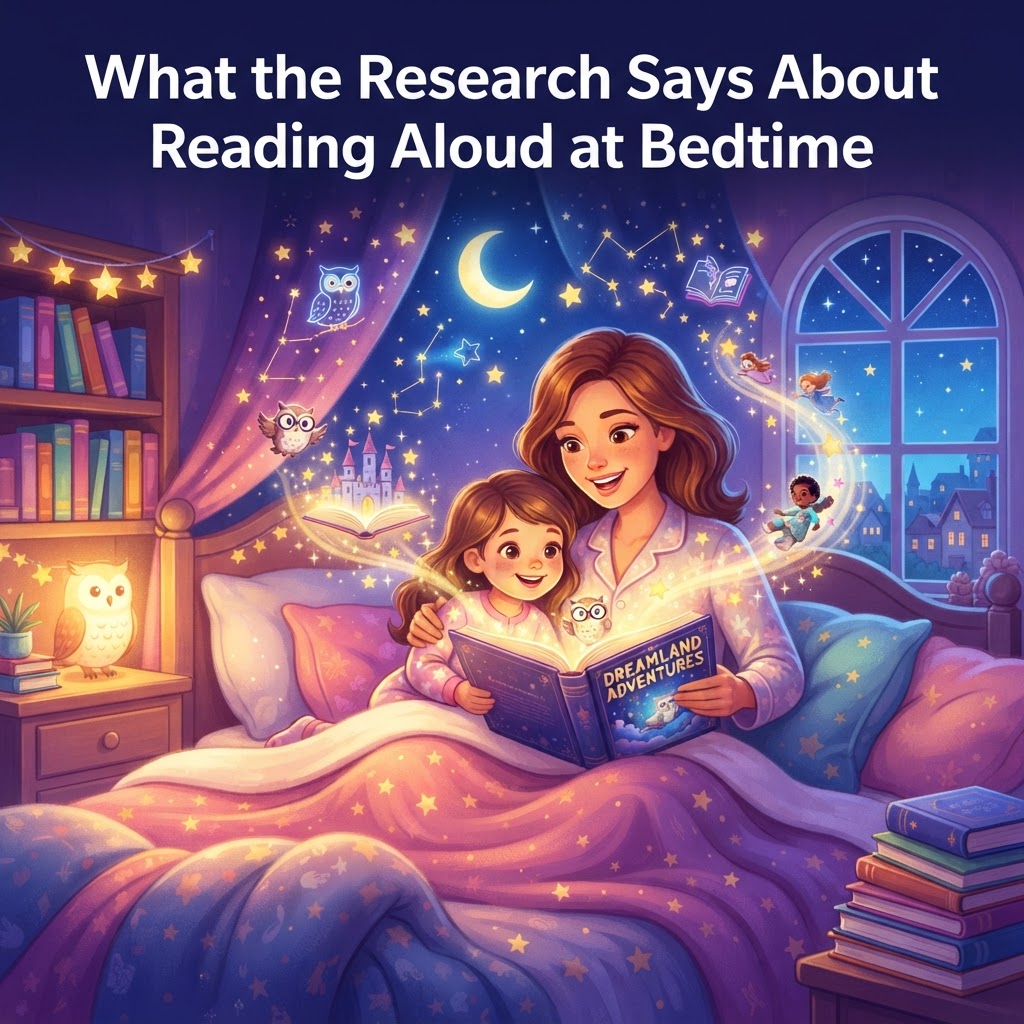
Reading aloud at bedtime is more than a nice family habit. Reading to children research consistently shows that shared reading supports language growth, strengthens parent-child relationships, and can help create a calmer transition to sleep. For parents wondering whether it really matters to read aloud before bed, the evidence says yes: even short, regular story time can make a meaningful difference.
People Also Ask
Is reading aloud before bed good for kids?
Yes. Research suggests that reading aloud at bedtime supports vocabulary, listening skills, and emotional connection while also giving children a calm, predictable routine before sleep. It is one of the simplest high-impact habits families can build.
How often should parents read to their child?
Daily is ideal, but the most important factor is consistency. Even 10 minutes of shared reading on most nights can expose children to rich language and reinforce a positive association with books and stories.
Do bedtime stories help children sleep better?
They can help by reducing stimulation and signaling that bedtime is near. Quiet reading is commonly recommended as part of a calming bedtime routine, especially when it replaces screens or active play right before sleep.
What if I am too tired to read every night?
That is a common challenge. On low-energy nights, shorter stories, audio-supported read-alouds, or an AI bedtime story generator can help preserve the routine without turning bedtime into a struggle.
What does reading aloud research actually show?
Reading aloud research shows that shared reading supports children’s language, literacy, and relationship development from the earliest years. The strongest findings are not about one magical book or one perfect method, but about repeated, responsive, enjoyable reading over time.
One of the most cited policy statements comes from the American Academy of Pediatrics on literacy promotion, which describes reading aloud as an essential part of primary care for children beginning in infancy. The AAP points to evidence that shared reading enriches vocabulary, supports parent-child interaction, and builds a foundation for school readiness.
Researchers also distinguish everyday conversation from book language. Children’s books often include a wider range of words, more complex sentence patterns, and richer descriptions than typical daily speech. That means reading aloud gives children access to language they may not hear elsewhere, especially when adults pause to explain words, ask questions, and connect the story to the child’s life.
How does reading frequency affect vocabulary growth?
The answer is clear: children generally benefit more when reading happens often. Reading to children research consistently links frequent shared reading with stronger vocabulary, oral language, and pre-literacy skills.
A well-known study by Mol and Bus reviewed decades of research and found that print exposure has a substantial impact on vocabulary and broader verbal abilities. In simple terms, the more children are read to and the more they engage with books, the more chances they have to encounter new words in meaningful contexts.
This matters at bedtime because bedtime is one of the easiest daily moments to protect. A short story before sleep can become a reliable source of language input, especially for busy families. If your child loves repeated themes, such as animal adventures, familiar formats like animal stories for children can make it easier to sustain the habit.
For multilingual families, shared reading can also support vocabulary across languages. If that is your goal, this guide to stories in two languages that build vocabulary offers practical ideas grounded in language development.
Can bedtime reading improve sleep quality?
Yes, bedtime reading can support better sleep by helping children shift from activity to rest. The key benefit is not that stories act like medicine, but that they are part of a calming, predictable, low-stimulation bedtime routine.
Sleep experts and pediatric organizations regularly advise families to use quiet routines before bed and limit screens in the evening. The National Institute of Child Health and Human Development notes that consistent bedtime routines help children get the sleep they need, and reading is a strong fit because it is soothing and screen-free. Likewise, guidance from sleep researchers often highlights routine and emotional security as important parts of healthy sleep habits.
There is also good practical logic here. When you read aloud before bed, children are usually sitting or lying close, listening to a steady voice, and focusing on one gentle activity. That lowers stimulation compared with videos, bright lights, or rough play. Over time, the story itself becomes a cue that sleep is next.
If your child is older and wants stories with more depth, choosing age-appropriate material helps keep reading relaxing rather than overstimulating. Parents may find it helpful to browse options for 8-year-olds, 9-year-olds, or 10-year-olds.
Why does shared reading strengthen parent-child bonding?
Shared reading strengthens bonding because it combines attention, closeness, and conversation in one simple activity. In child development terms, it creates a moment of responsive interaction, and those moments matter.
When a parent points to pictures, changes their voice for characters, laughs with a child, or answers a question, the child experiences warm back-and-forth engagement. This kind of responsive exchange is strongly supported in early childhood research. Harvard’s Center on the Developing Child describes these interactions as important for healthy development because children build skills through repeated “serve and return” experiences with caring adults.
Bedtime is especially powerful because it is often the only quiet one-on-one window in a busy day. The story itself matters, but so does the feeling around it: safety, attention, and predictability. That is one reason many families value bedtime reading benefits even after children can read independently.
What if parents are too tired to keep the habit going?
That barrier is real, and families should not feel guilty about it. Many parents want the benefits of reading aloud but simply run out of energy by the end of the day.
The best solution is to make the routine easier, not to give it up. That might mean:
- choosing shorter stories
- re-reading familiar favorites
- using pre-made story templates for faster bedtime picks
- saving go-to stories in your story library for quick access
- using audio narration on especially tired nights
This is where an AI tool can be helpful when used thoughtfully. InstaTales lets parents create personalized stories quickly, which removes the “I’m too tired to think of something” problem. A child can still hear a warm story tailored to their interests, and audio narration can help preserve the soothing rhythm of bedtime when an adult needs support.
For families who want to try it without a commitment, the free AI bedtime story generator can make it easier to keep the ritual going. The goal is not to replace parent presence, but to protect the consistency that research shows matters.
How can families use AI bedtime stories in a research-informed way?
AI stories work best when they support, not replace, shared reading. The research on bedtime reading benefits points to language, routine, and connection, so the ideal use of AI keeps those elements in place.
A simple approach is to treat AI-generated stories as a tool for access and variety:
- Let your child help choose the theme or character.
- Read or listen together rather than handing over a device alone.
- Pause to ask one or two questions about the story.
- Revisit favorite stories to reinforce vocabulary and comprehension.
This is especially useful for children who love personalization. A story about their favorite animal, interest, or challenge can increase engagement and make bedtime easier. If you want more ideas for age-based story choices, the InstaTales blog includes practical reading inspiration for different stages.
How can parents get the most from reading aloud at bedtime?
The research-backed answer is simple: keep it calm, consistent, and interactive. You do not need to perform like a teacher or read for an hour to make bedtime stories worthwhile.
Try these evidence-aligned habits:
- Aim for a regular reading time each night.
- Choose stories that match your child’s age and attention span.
- Talk briefly about pictures, feelings, or new words.
- Re-read favorites without worrying that repetition is “less educational.”
- Keep the environment quiet and screen-free when possible.
Most of all, remember that a positive routine is better than an idealized one. If your child gets a few minutes of warm, focused story time each night, you are already doing something strongly supported by reading aloud research.
Frequently Asked Questions
At what age should you start reading aloud to a child?
You can start in infancy. The American Academy of Pediatrics recommends reading aloud from the earliest months because babies benefit from hearing language, rhythm, and a caregiver’s voice.
Does reading the same bedtime story over and over still help?
Yes. Repetition helps children learn vocabulary, predict story structure, and feel confident participating. Familiar stories can also be especially calming at bedtime.
Is listening to an audio story as good as being read to?
Audio can be helpful, especially when it protects the bedtime routine on tired nights. But shared reading adds extra benefits through conversation, eye contact, and physical closeness, so a mix of both often works best.
How long should bedtime reading last?
There is no perfect length. For many children, 5 to 15 minutes is enough to create a calming routine and deliver meaningful language exposure.
Can older children still benefit from bedtime reading?
Absolutely. Older children still gain vocabulary, comprehension, and bonding benefits from being read to, especially when the stories are age-appropriate and engaging.
Get a new bedtime story every week
Free, personalized, and delivered to your inbox. No spam, ever.
Ready to Create a Personalized Bedtime Story?
Use our free AI bedtime story generator to create a personalized illustrated story for your child in 30 seconds — no credit card needed.
Popular story types:
Maya Rodriguez
Lead Content Editor & Early Literacy Specialist
Maya is a former early childhood educator and literacy specialist with over a decade of experience helping children develop a love of reading. She leads content at InstaTales, where she writes about the science of storytelling, child development, and how families can use personalized AI stories to build literacy and emotional resilience.
instatales.ai