Stories for Kids Emotions: Parent Guide
How stories help children manage big emotions — anxiety, anger, and sadness — with story themes, discussion prompts, and free AI-generated emotional stories.
✦ Key Takeaways
- •**Stories help children regulate emotions by creating emotional distance.** When a child sees a character handle worry, anger, or jealousy, it feels less threatening than talking directly about their own behavior.
- •**The best emotional regulation stories match the feeling to a simple theme and relatable character.** For example, anxious children often respond well to brave-but-worried characters and predictable story patterns.
- •**Discussion after reading matters as much as the story itself.** A few calm questions can help children build self-awareness, empathy, and problem-solving skills.
- •**Social-emotional learning frameworks support story-based learning.** CASEL’s core competencies include self-awareness, self-management, relationship skills, social awareness, and responsible decision-making.
- •**Personalized stories can target a child’s exact challenge.** Parents can use an [AI bedtime story generator](/) or a [free AI bedtime story generator](/free-ai-bedtime-story-generator) to create stories about specific feelings, routines, and coping tools.
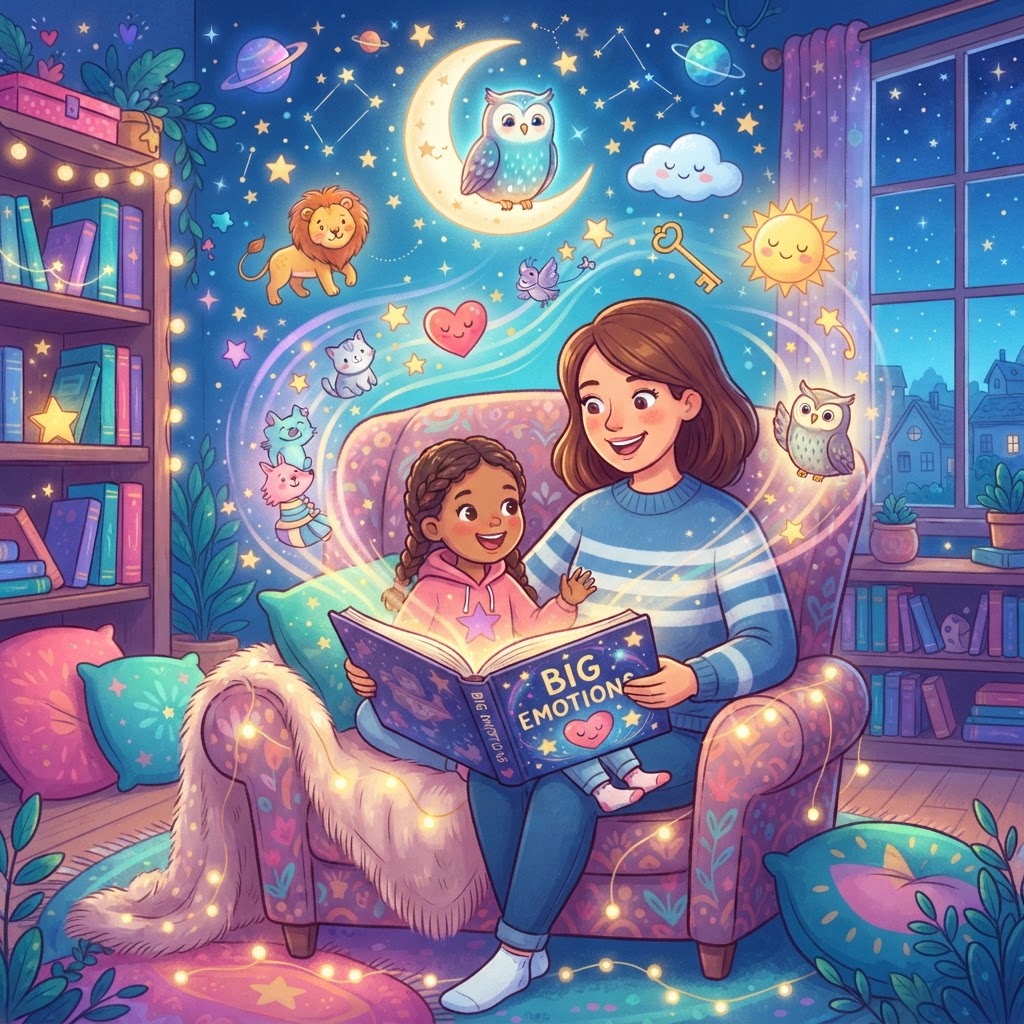
Big feelings can overwhelm children, but the right story can make those feelings feel safer, clearer, and more manageable. Stories for kids emotions work because they give children distance from the problem, language for what they feel, and a model for what coping can look like in real life.
People Also Ask
How do stories help children with big emotions?
Stories help by showing feelings in a safe, indirect way. A child can understand a character’s worry or anger before they are ready to talk about their own.
What kind of stories are best for emotional regulation?
The best emotional regulation stories are simple, reassuring, and specific. They usually include a relatable problem, a caring helper, and one or two coping strategies the child can copy.
Can bedtime stories reduce anxiety in children?
Yes, bedtime stories can support anxiety reduction, especially when they include predictable structure, calming imagery, and gentle problem-solving. A soothing reading routine also helps children’s bodies settle before sleep.
Should I talk about the story after reading?
Yes. Even a short conversation helps children connect the story to real life, name feelings, and practice coping ideas in a low-pressure way.
Why are stories so effective for helping children manage emotions?
Stories are effective because they teach emotional skills without making children feel corrected or exposed. Instead of saying, “Don’t get so angry,” a parent can explore what happened when a character felt angry and what helped them calm down.
This matters because young children are still developing the brain systems involved in impulse control, flexible thinking, and emotional regulation. Research from the Center on the Developing Child at Harvard University shows that these skills develop over time through supportive relationships and repeated practice. Stories provide exactly that: repetition, safety, and guided reflection.
Story-based SEL also aligns with the CASEL framework. When children listen to stories about feelings for kids, they practice:
- Self-awareness: “What am I feeling?”
- Self-management: “What can I do with this feeling?”
- Social awareness: “How does someone else feel?”
- Relationship skills: “How can I repair or connect?”
- Responsible decision-making: “What is a helpful next step?”
In short, big emotions children stories help children name feelings, normalize them, and rehearse coping strategies before they need them in a hard moment.
Which emotions can parents target with specific story themes?
Parents can target almost any common childhood emotion by pairing it with the right story theme, character type, and coping lesson. The key is to choose one emotion at a time and keep the message concrete.
Below are useful pairings for stories for kids emotions:
-
Anxiety
- Theme: Trying something new, facing the unknown, separation, bedtime fears
- Character archetype: A cautious bunny, worried child, or shy explorer
- Lesson: Brave does not mean fearless; small steps help
-
Anger
- Theme: A plan goes wrong, unfairness, conflict with siblings or friends
- Character archetype: A fiery dragon, frustrated builder, or strong-willed child
- Lesson: Feelings are okay; actions need limits
-
Grief or sadness
- Theme: Missing someone, change, loss, moving away
- Character archetype: A lonely bear, child remembering a grandparent, or animal missing a friend
- Lesson: Love continues; sadness can be shared
-
Jealousy
- Theme: New baby, attention shifts, someone else gets a turn or reward
- Character archetype: A proud peacock, older sibling, or friend who feels left out
- Lesson: Big feelings do not make you bad; there is room for everyone
-
Frustration
- Theme: Learning a skill, making mistakes, not winning, slow progress
- Character archetype: A determined turtle, beginner artist, or child learning to ride a bike
- Lesson: Mistakes are part of growth
If your child also struggles with impulsive behavior, stories focused on self-control skills can work alongside emotion-focused reading.
What story themes and questions help with anxiety in children?
For anxiety, the most helpful stories reassure children that fear is normal and manageable. The best stories show a worried character using support, routine, and small acts of courage.
Look for themes like first days, bedtime worries, loud storms, doctor visits, or being apart from a parent. Animal characters can be especially effective because they create emotional distance; many families find comfort in gentle animal stories for children for this reason.
Useful discussion questions:
- What was the character worried might happen?
- Did the worry come true, or was it different?
- What helped the character feel safer?
- What could the character do first, second, and third?
- When do you feel a little like that?
A strong anxiety story often includes:
- A predictable beginning, middle, and ending
- A calm helper figure
- Sensory grounding, breathing, or a comfort object
- Success through one small step, not instant confidence
What kinds of stories help children with anger and frustration?
Stories about anger and frustration work best when they validate the feeling but clearly separate it from hurtful behavior. Children need to hear, “It’s okay to feel mad,” while also learning what safe choices look like.
Stories for anger often involve conflict, disappointment, or unfairness. Stories for frustration usually focus on mistakes, waiting, losing, or struggling with a new skill. These themes overlap, which is why many families also benefit from stories about perseverance and teamwork in everyday challenges.
Useful discussion questions:
- What happened right before the character got upset?
- How could you tell they were angry or frustrated?
- What made things worse?
- What helped them calm their body?
- What could they try next time?
Helpful coping tools to include in emotional regulation stories:
- Taking a break
- Squeezing a pillow or using a “strong body, gentle hands” idea
- Asking for help
- Naming the problem
- Trying again later
The American Academy of Pediatrics also emphasizes helping children learn emotional language and co-regulation rather than relying only on punishment.
How can stories support children through grief, jealousy, and sadness?
Stories can support grief, jealousy, and sadness by making space for feelings that are often hard to discuss directly. They remind children that painful feelings are part of being human and that connection helps healing.
For grief and sadness, choose gentle stories about missing someone, remembering, or adapting to change. Avoid rushed happy endings. Children need stories where sadness is allowed to stay present for a while.
Discussion questions for grief or sadness:
- What did the character miss most?
- How did they remember or honor what they lost?
- Who helped them feel less alone?
- What do you do when you miss someone?
For jealousy, choose stories about fairness, belonging, and attention. These work well when a child is adjusting to siblings, classroom dynamics, or friendship changes. Stories that also teach inclusion and belonging can be especially useful.
Discussion questions for jealousy:
- When did the character start feeling left out?
- What did they wish they had?
- Did they tell the truth about their feelings?
- How did things change when they felt seen?
Stories about repair can also help after emotional outbursts. In those moments, forgiveness stories for kids may offer a gentle next step.
How should parents read and discuss stories about feelings for kids?
Parents should read slowly, pause often, and keep the conversation light. The goal is not to quiz your child but to help them notice feelings, body cues, choices, and support.
A simple three-step approach works well:
- Name: “He looks worried.”
- Normalize: “Lots of kids feel that way sometimes.”
- Guide: “What helped him feel better?”
Keep these best practices in mind:
- Read when your child is calm, not in the middle of a meltdown
- Re-read favorite stories often; repetition builds mastery
- Use the child’s real life gently: “This reminds me of soccer practice”
- Stop if your child seems overwhelmed
- Return to the same coping language across stories
If you want more parent-friendly ideas, the InstaTales blog can help you build a consistent reading routine around social-emotional learning.
How can parents use InstaTales to create stories for specific emotional challenges?
Parents can use InstaTales to generate personalized big emotions children stories that reflect a child’s age, interests, fears, and daily routines. This makes the lesson feel relevant without becoming too intense or preachy.
For example, you might create a story about:
- A 5-year-old who feels worried at preschool drop-off
- A 7-year-old who gets angry when losing games
- A 4-year-old jealous of a new baby
- An 8-year-old grieving the loss of a pet
When using the AI bedtime story generator, include:
- The child’s age
- The emotion you want to address
- A favorite character type or setting
- One coping skill to model
- The tone you want: gentle, funny, reassuring, adventurous
A useful prompt might be: “Create a calm bedtime story for a 6-year-old about a shy fox who feels anxious about school and learns to take deep breaths and ask a teacher for help.”
For fast support, parents can also try the free AI bedtime story generator, or use story templates if they want a ready-made starting point. If your child likes to revisit favorite stories, save them in your story library for easy re-reading.
Teachers and counselors can also adapt this approach in groups through InstaTales for teachers, especially when supporting classroom SEL goals.
What makes a good emotional regulation story for children?
A good emotional regulation story is specific, hopeful, and developmentally appropriate. It does not erase the feeling; it shows the child what to do with it.
Look for these features:
- One clear emotional challenge
- A relatable main character
- Simple emotional language
- Realistic coping strategies
- A supportive adult, friend, or helper
- A gentle ending with growth, not perfection
The best stories about feelings for kids also avoid shame. They do not label the child as “bad” or “too sensitive.” Instead, they reinforce that feelings are normal and skills can be learned with practice.
Frequently Asked Questions
At what age do emotional stories start helping children?
Even toddlers benefit from simple stories about feelings, especially with clear facial expressions, repetition, and soothing language. As children get older, stories can include more complex emotions and problem-solving.
How often should I read emotional regulation stories?
A few times a week is enough to make a difference, especially if you re-read the same story. Repetition helps children remember emotional vocabulary and coping steps.
Can personalized AI stories really support social-emotional learning?
Yes, when they are used thoughtfully. Personalized stories can reflect a child’s exact challenge, which makes SEL lessons feel more concrete and meaningful.
What if my child does not want to talk after the story?
That is okay. Some children process quietly, and the story still helps by building emotional language and familiarity over time.
Are stories enough for serious anxiety or grief?
Stories can be very supportive, but they are not a replacement for professional help when a child is struggling significantly. If emotions are intense, persistent, or affecting daily life, speak with your pediatrician or a child mental health professional.
Get a new bedtime story every week
Free, personalized, and delivered to your inbox. No spam, ever.
Ready to Create a Personalized Bedtime Story?
Use our free AI bedtime story generator to create a personalized illustrated story for your child in 30 seconds — no credit card needed.
Popular story types:
Maya Rodriguez
Lead Content Editor & Early Literacy Specialist
Maya is a former early childhood educator and literacy specialist with over a decade of experience helping children develop a love of reading. She leads content at InstaTales, where she writes about the science of storytelling, child development, and how families can use personalized AI stories to build literacy and emotional resilience.
instatales.ai