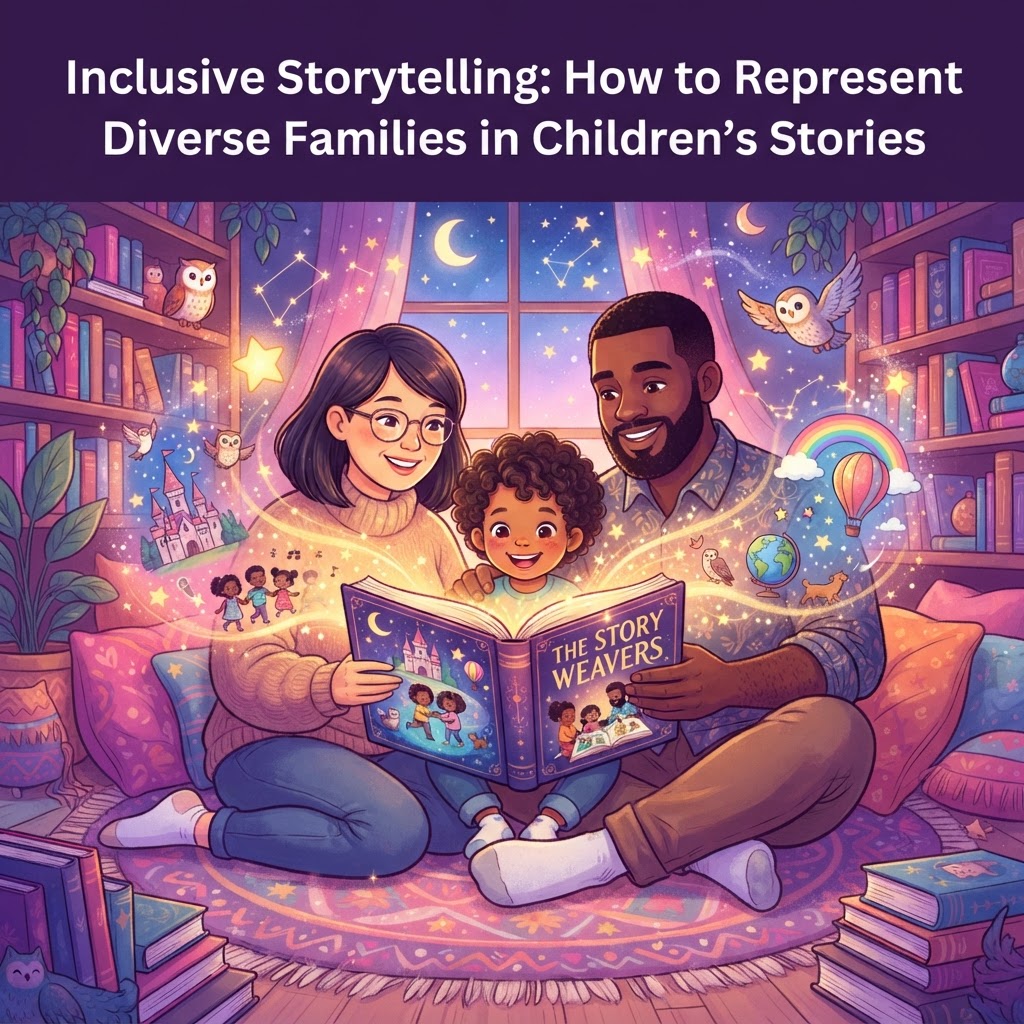
Inclusive Children's Stories About Diverse Families
How to represent diverse families in children's stories — single parents, same-sex parents, blended families, disabilities, and diverse cultures with personalized AI stories.
✦ Key Takeaways
- •**Representation in children's books matters because stories act as both mirrors and windows.** Children need “mirror” stories that reflect their own lives and “window” stories that help them understand others, a framework widely used in literacy education.
- •**Diverse families in stories should be shown as ordinary, loving, and fully developed.** Single-parent, same-sex, blended, adoptive, multigenerational, and foster families should be included naturally rather than treated as a problem to explain.
- •**Inclusive storytelling for kids is strongest when it includes both family diversity and broader identity diversity.** Children also benefit from seeing characters with disabilities, different cultural traditions, varied languages, and many community roles.
- •**Personalized storytelling can deepen representation.** Tools like the [AI bedtime story generator](/) make it easier for families and educators to create stories where a child’s real family, culture, interests, and experiences appear on the page.
- •**Research supports early inclusive reading experiences.** Organizations such as the American Academy of Pediatrics and leading literacy educators emphasize shared reading as a powerful tool for social-emotional learning, language growth, and relationship-building.
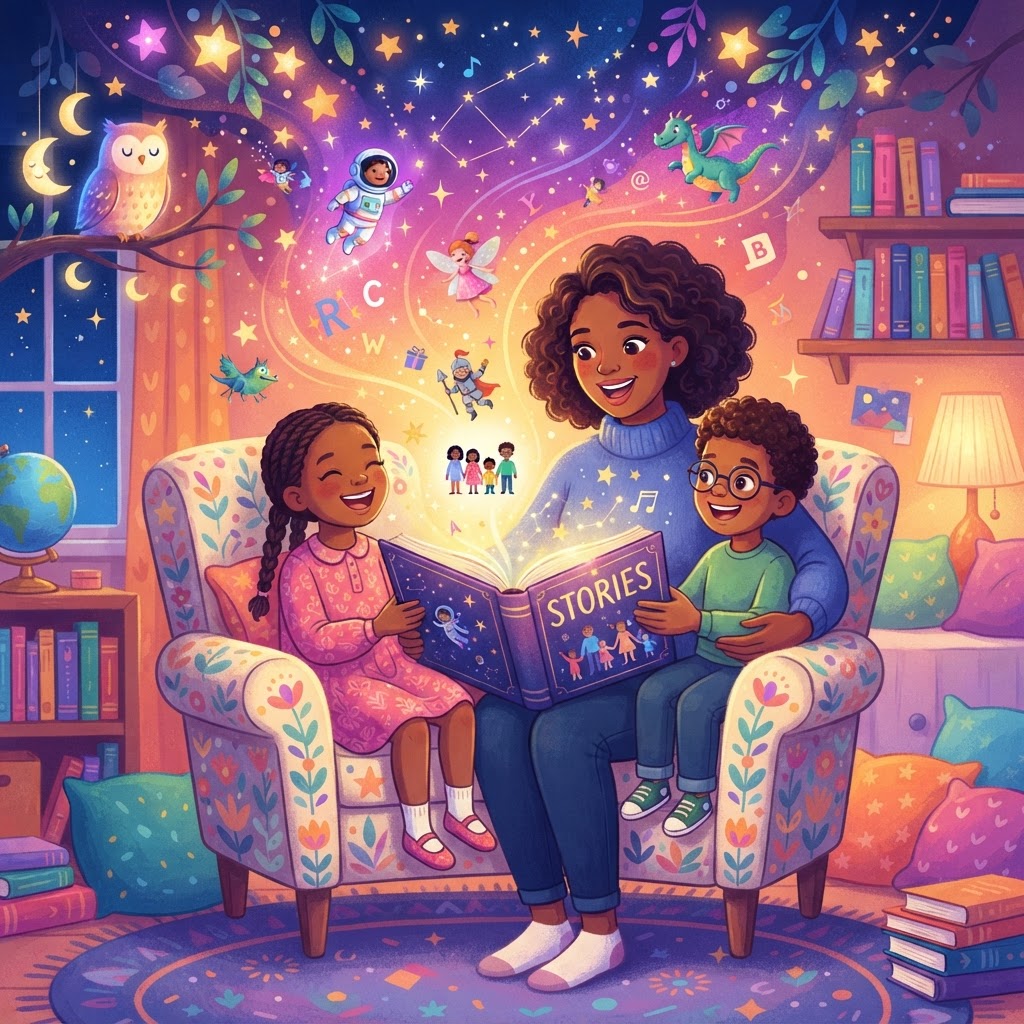
Children notice very early who gets included in stories—and who gets left out. Inclusive children's stories help children feel seen, valued, and curious about people whose lives may look different from their own. For parents and educators, thoughtful storytelling is one of the simplest ways to support empathy, belonging, and healthy identity development.
People Also Ask
Why is representation important in children's stories?
Representation helps children feel that their lives and identities matter. It also teaches children to recognize and respect differences, which supports empathy and inclusion.
What are mirror and window books?
“Mirror” books reflect a child’s own life, family, or identity back to them. “Window” books let children look into other people’s experiences and broaden their understanding of the world.
How can I explain different families to young children?
Use simple, warm language: families can look different, but they are built on love, care, and connection. Books and bedtime stories make these ideas easy for children to understand without turning difference into something unusual.
Can personalized stories improve inclusion?
Yes. Personalized stories let children see their own family structure, appearance, language, and traditions represented directly, which can strengthen belonging and engagement.
Why does representation in children's books matter?
Representation in children's books matters because children build their understanding of themselves and others through stories. When children repeatedly see only one kind of family or one kind of child, they may start to think that is the “normal” standard.
Educator Rudine Sims Bishop’s well-known idea of books as “mirrors, windows, and sliding glass doors” remains central to inclusive literacy. Children need mirrors that reflect their own identities and windows into other lives. This framework is widely used in schools because it supports both identity development and empathy.
Research also supports the broader value of reading together. The American Academy of Pediatrics has long emphasized shared reading as an important part of early development, supporting language, relationships, and learning. Inclusive books extend those benefits by helping children feel recognized while also reducing fear of difference.
For families and classrooms, this means choosing stories that expand the picture of what childhood can look like. If you want more practical ideas, the InstaTales blog and this guide to teaching inclusion through bedtime stories offer useful next steps.
How can you represent diverse families in stories naturally?
The best way to represent diverse families in stories is to make them visible without making them the whole plot. A child can go on an adventure, solve a problem, or fall asleep under the stars—and simply happen to have two moms, a dad and grandma, or a blended family.
When writing or choosing diverse families in stories, keep these principles in mind:
- Let family structure be part of the child’s everyday life.
- Show warmth, routines, humor, and care.
- Avoid making the family seem “different” in a negative or overly explanatory way.
- Give each family member personality, not just a label.
For example, a story about building a blanket fort works just as well if the child lives with one parent. A school-play story can include a stepbrother and stepsister without focusing on “why” the family is blended. Normalizing difference is often more powerful than announcing it.
This approach also helps children understand that family diversity is part of ordinary life. That is the heart of inclusive storytelling for kids.
What family structures should children see in inclusive stories?
Children should see many family structures because real life includes many ways of belonging. Inclusive stories should reflect the families children actually know in their homes, schools, and communities.
Important family structures to include are:
- Single-parent families
- Same-sex parent families
- Blended families
- Adoptive families
- Foster families
- Multigenerational households
- Families with guardians, relatives, or chosen family
The key is respectful, accurate portrayal. A single parent should not automatically be shown as struggling. Same-sex parents do not need to be framed as a special lesson. Adoptive families should be more than adoption narratives alone; they can simply be families having adventures together.
For teachers, this matters especially in classroom reading. Story choices shape whose lives feel visible during group discussions. Resources from Reading Rockets and school literacy programs consistently emphasize the value of diverse, high-quality texts in early reading environments.
If you are selecting stories for group settings, InstaTales for teachers can help educators create stories that better reflect the families in their classrooms.
How should stories include children with disabilities?
Stories should include children with disabilities as full characters, not as symbols of inspiration or pity. The goal is authentic inclusion: children with disabilities should get to be funny, brave, curious, messy, kind, and imaginative like any other character.
Good representation in children's books includes visible and invisible disabilities. A character might use a wheelchair, hearing aids, AAC, or sensory supports. Another may live with autism, ADHD, chronic illness, or a learning difference. These traits can shape their experience without defining their whole identity.
A few practical guidelines help:
- Focus on the child’s agency and personality.
- Use respectful, current language.
- Include accommodations as a normal part of life.
- Avoid “overcoming disability” as the only storyline.
For example, a child using a wheelchair can lead a treasure hunt. A neurodivergent character can notice details others miss and help solve a mystery. Inclusive stories become richer when all children get to participate meaningfully.
The CDC’s child development resources can also help adults better understand varied developmental experiences and support needs.
How can stories reflect diverse cultures and backgrounds respectfully?
Stories can reflect diverse cultures respectfully by moving beyond food, festivals, and stereotypes. Cultural inclusion is strongest when it shows daily life, values, language, relationships, and joy with care and specificity.
That might include:
- Names from many cultures
- Multilingual households
- Clothing, music, or traditions used naturally
- Holidays and routines shown with context
- Settings beyond the most common Western defaults
Respectful inclusion also means avoiding tokenism. Not every culturally diverse character needs to teach a lesson about difference. Sometimes a child who speaks two languages is simply the hero of a dragon story. Sometimes a grandmother’s lullaby in another language is just part of bedtime.
This is where personalized storytelling can help. A child may feel especially connected to a story that includes their home language, a familiar celebration, or family traditions. If your child already loves creature adventures, you can combine cultural representation with fun formats like animal stories for children.
What makes inclusive storytelling for kids feel authentic instead of forced?
Inclusive storytelling for kids feels authentic when diversity is specific, ordinary, and connected to real relationships. It feels forced when characters exist only to fill a checklist.
Authenticity usually comes from three things:
- Specific detail: real routines, language, and emotions
- Balanced characterization: strengths, flaws, interests, and humor
- Story-first writing: the plot still matters
For parents and educators, a useful test is this: if you removed the label, would the character still feel like a real child? Inclusive stories work best when children are fully imagined people.
It also helps to vary the kinds of stories children hear. Not every inclusive book needs to be about identity directly. Adventure, friendship, teamwork, feelings, and imagination all make space for representation. For related ideas, see these stories that teach inclusion to kids and this guide to stories for kids' emotions.
How can parents and educators create more inclusive stories at home or school?
Parents and educators can create more inclusive stories by asking simple, intentional questions before reading or writing. Small choices about names, family roles, settings, and illustrations can make a big difference.
Try asking:
- Who is missing from the stories this child hears most?
- Does this story reflect different family structures?
- Are disabilities and cultures included respectfully?
- Does the child get both mirrors and windows?
- Is diversity shown as ordinary rather than exceptional?
When creating stories, start with what the child knows: home routines, favorite toys, important people, neighborhood places, and family traditions. Then widen the world through friends, classmates, and community members who bring different experiences.
In classrooms, invite children to contribute ideas about characters and celebrations. In families, re-read favorite stories and talk about who appears in them. Shared reflection turns reading into a tool for belonging.
How does InstaTales help families see themselves in stories?
InstaTales helps families see themselves in stories by making personalization easy and flexible. Instead of settling for generic characters, parents and educators can create stories that reflect a child’s real family, interests, and world.
That means you can build stories featuring:
- A child with one parent, two moms, grandparents, or a blended family
- Characters with different appearances, names, and backgrounds
- Familiar cultural settings, traditions, or languages
- Storylines shaped around a child’s needs and interests
This matters because personalized reading often increases engagement. Children are more likely to listen, participate, and ask questions when the story feels close to home. You can also use story templates for quick starts, save favorites in your story library, or try the free AI bedtime story generator if you want to explore story creation without a long setup.
For teachers, personalized stories can also support classroom inclusion, community-building, and discussion prompts. A custom story can help every child feel there is space for them in the reading circle.
Frequently Asked Questions
What is inclusive storytelling for kids?
Inclusive storytelling for kids means creating or choosing stories that reflect many kinds of children, families, abilities, and cultures. It helps children feel seen while also teaching empathy and respect for others.
How do you write diverse families in stories?
Write diverse families as real, loving, everyday families with distinct personalities and routines. Avoid making the family structure the only important thing about them unless it is genuinely central to the story.
Why are mirror and window books important?
Mirror books help children recognize themselves and feel validated. Window books help them understand people with different experiences, which supports empathy and reduces bias.
Can AI help create inclusive children's stories?
Yes, when used thoughtfully, AI can help adults create more personalized and representative stories for children. It works best when parents and educators guide the details to ensure the story is respectful, accurate, and age-appropriate.
What kinds of diversity should children's stories include?
Children’s stories should include diversity in family structure, disability, race, culture, language, and community experience. Strong representation shows this diversity naturally across many kinds of plots, not only in issue-based stories.
Get a new bedtime story every week
Free, personalized, and delivered to your inbox. No spam, ever.
Ready to Create a Personalized Bedtime Story?
Use our free AI bedtime story generator to create a personalized illustrated story for your child in 30 seconds — no credit card needed.
Popular story types:
Maya Rodriguez
Lead Content Editor & Early Literacy Specialist
Maya is a former early childhood educator and literacy specialist with over a decade of experience helping children develop a love of reading. She leads content at InstaTales, where she writes about the science of storytelling, child development, and how families can use personalized AI stories to build literacy and emotional resilience.
instatales.ai